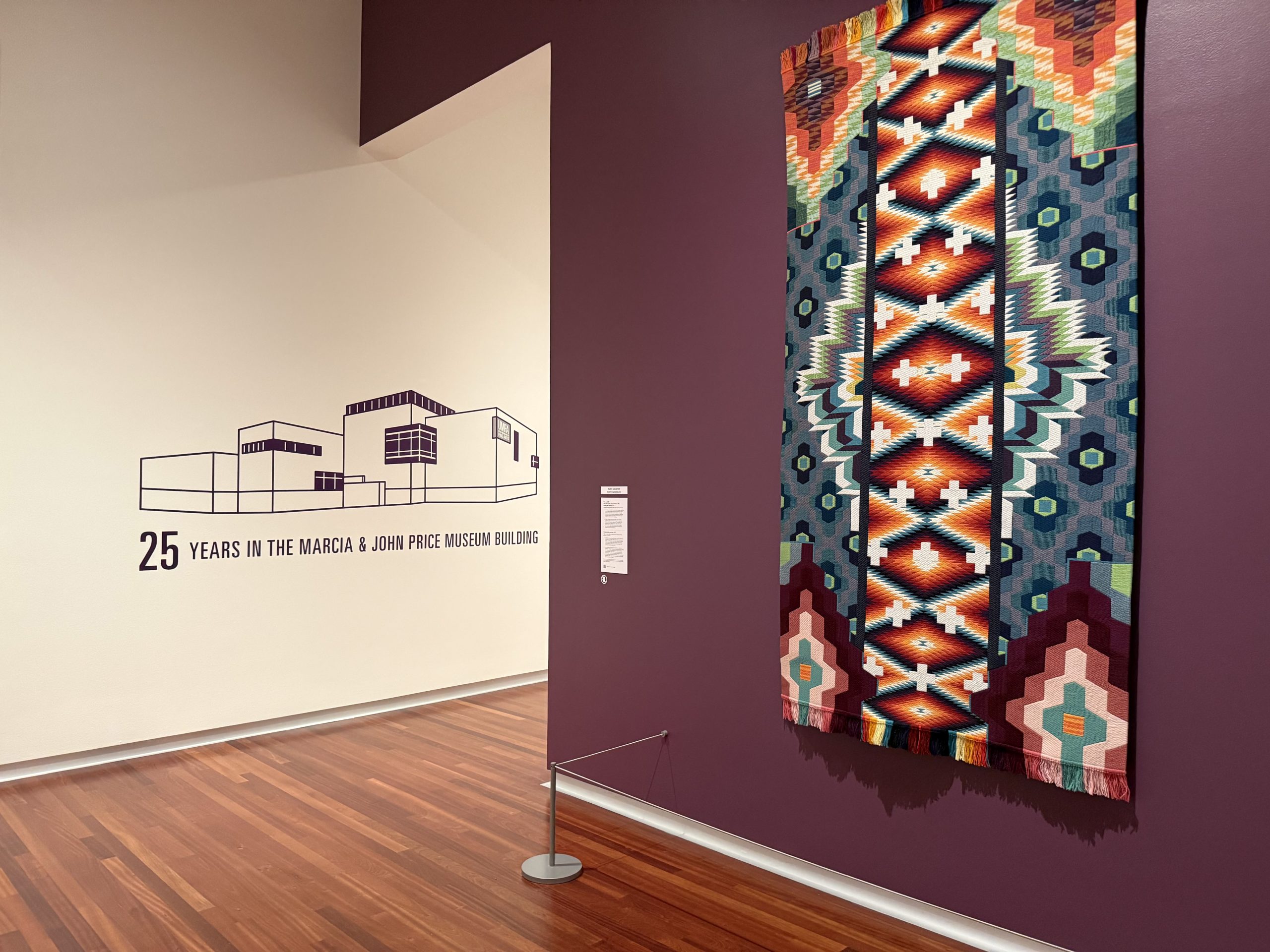
For the Future: Collecting at the UMFA 2001–2026 celebrates 25 years in the Marcia and John Price Museum Building. At right, Melissa Cody’s Scaling the Caverns, 2023.
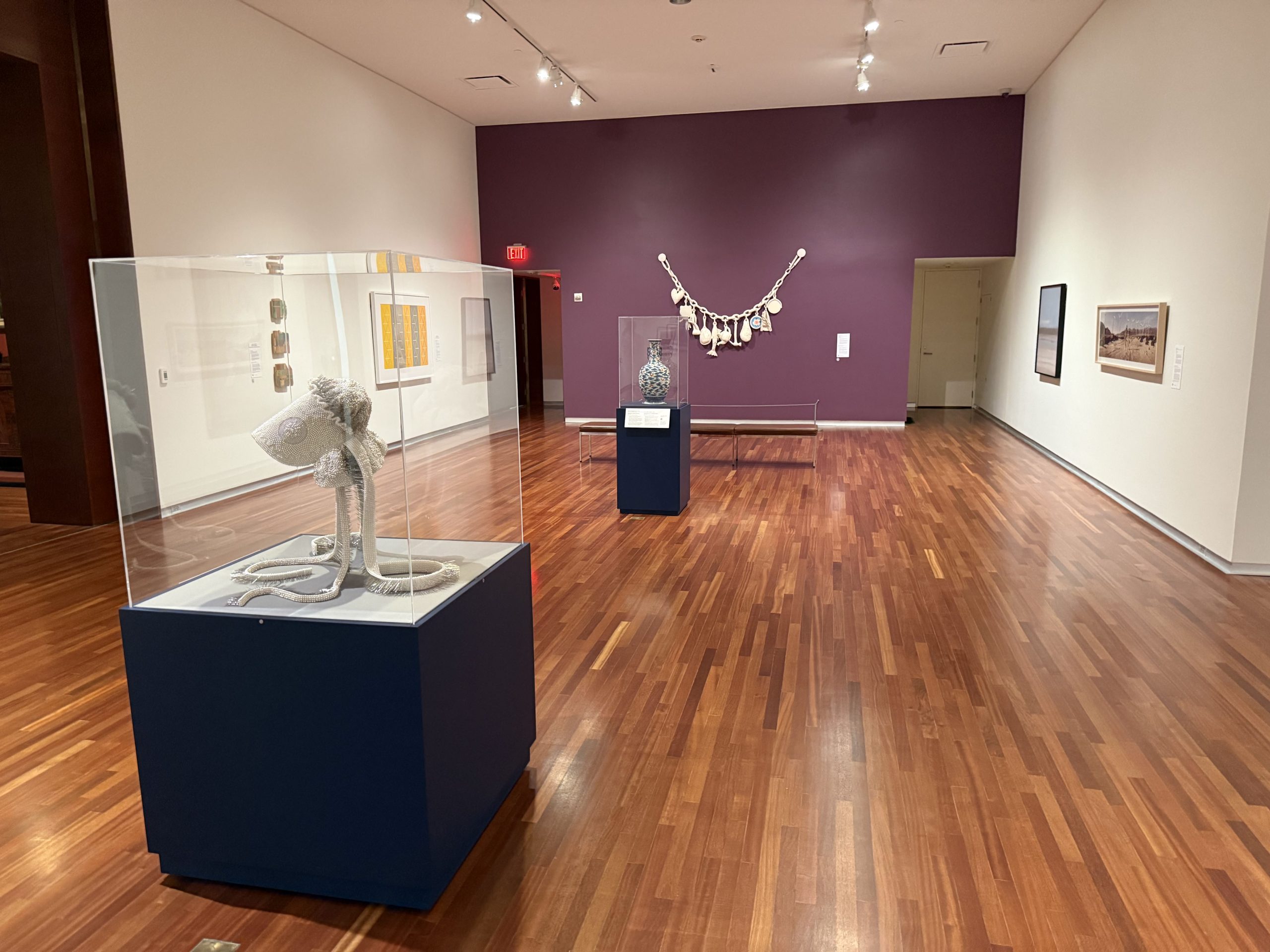
When the Utah Museum of Fine Arts opened in the new Marcia and John Price Museum Building on the University of Utah campus in 2001, it seemed all anyone could talk about was the color. Frank Sanguinetti, the museum’s longtime director and the driving force behind its new home, had been inspired by a visit to an art museum in Spain and decided the walls of the new UMFA should be “Guava Jam.”
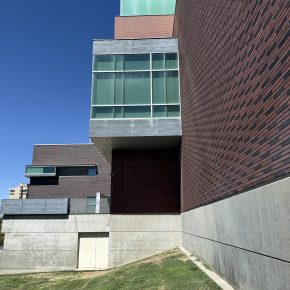
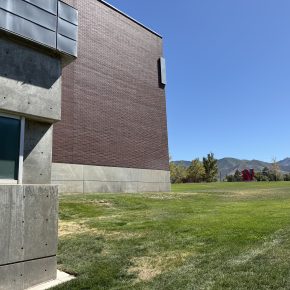
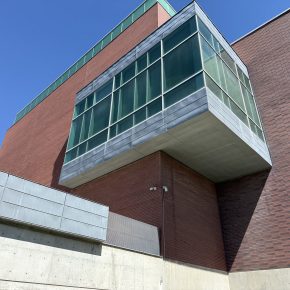
Of course, there was more to talk about. The $18 million, 74,000-square-foot building, designed by Boston’s Machado and Silvetti with Salt Lake City’s Prescott Muir Architects, was a considerable architectural statement. The severity of the five blocklike volumes clad in patterned black and orange brick was deliberate: its massive forms borrowed from the big-box stores, warehouses and strip malls of Salt Lake City’s automobile landscape. Inside, the architects draw on the courtyards, loggias and grand staircases of Venetian Renaissance palaces. A monumental staircase rises through the 55-foot-high central space toward the upstairs galleries and, ultimately, a window framing Mount Olympus. The contrast was deliberate. The new museum more than doubled the exhibition space of its predecessor, to more than 25,000 square feet. Writing in the Deseret News just before the June 2 opening, Dave Gagon called the building “a work of art in and of itself—a 74,000-square-foot work of art.” Architectural organizations seemed to agree: the building had already collected two awards before its doors opened. For years, though, people continued to comment on the color.
Wall colors are easy enough to change. Over the years Guava Jam gave way to deep cranberries, slate blue, purple and rose, a palette of greens running from pastel to teal, and, when the art called for it, the traditional off-white.
-
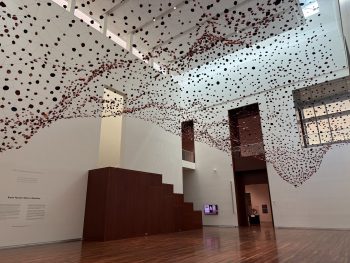
- Onishi Yasuaki, Stone on Boundary. Thousands of copper foils molded from river rocks in Osaka and Salt Lake City fill the UMFA’s Great Hall, responding to a space that has long presented both opportunities and challenges for displaying art.
-
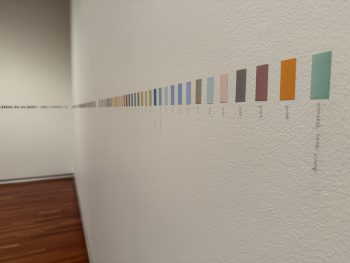
- Spencer Finch, Great Salt Lake and Vicinity: Road to Spiral Jetty South—Railroad Causeway West to Promontory, 2017 (detail). Finch recorded colors encountered while traveling around the Great Salt Lake, translating them into a procession of small Pantone-colored rectangles.
The Great Hall presented a more persistent problem. Its soaring proportions make it a splendid space for receptions and events but a difficult one for art. Even large works can seem diminished by its scale and paintings rarely fare well here. Large-scale installations seem better suited to the space. The current installation, Onishi Yasuaki’s Stone on Boundary, does particularly well. Five thousand copper foils molded from river rocks in Osaka and Salt Lake City are suspended from wires overhead, gathering into formations that suggest mountains, canyons and rock formations. They occupy rather than compete with the hall’s enormous volume.
Another solution the museum came up with was to go small. For Great Salt Lake and Vicinity: Road to Spiral Jetty South—Railroad Causeway West to Promontory, commissioned in 2017, Spencer Finch drove around the Great Salt Lake recording the colors he encountered with Pantone chips and notes, then lined up small rectangles of those colors across the enormous space. A portion of Finch’s installation returns in For the Future: Collecting at the UMFA 2001–2026, an exhibition celebrating the Price Building’s 25th anniversary.
In some respects, For the Future plays like a greatest-hits collection from the museum’s past quarter century. Several works, like Yang Yonglian’s “Prevailing Winds,” will bring to mind whole exhibitions. Chiura Obata is here, too, whose work the museum explored in a major 2018 exhibition, as is Tacita Dean’s JG (offset), inspired by Robert Smithson’s Spiral Jetty. Together they are part of a collection that has grown by 25 percent since the Price Building opened, to more than 22,000 objects spanning some 5,000 years of human creativity.
-
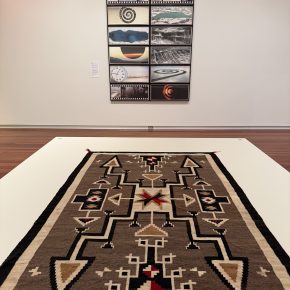
- Installation view of For the Future. A Diné storm-pattern weaving, circa 1950, shown at the UMFA for the first time, with Tacita Dean’s JG (offset), 2013, on the wall beyond.
-

- James T. Harwood, Preparation for Dinner, 1891–92. The painting, the first work by a Utah artist exhibited at the Paris Salon, was recently conserved for its appearance in For the Future.
-
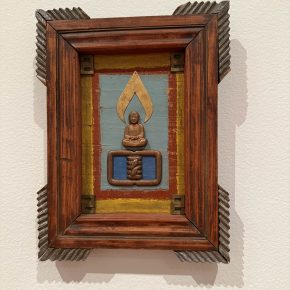
- Betye Saar, Floating Buddha with Coiled Snakes, 1993. Acquired by the UMFA in 2021 through the Phyllis Cannon Wattis Endowment Fund, the assemblage is on view at the museum for the first time.
But For the Future isn’t entirely a reunion. Small placards scattered throughout the exhibition announce RECENT ACQUISITION, FIRST TIME ON VIEW and RECENTLY CONSERVED. Betye Saar’s 1993 assemblage Floating Buddha with Coiled Snakes, acquired in 2021, is being exhibited at the UMFA for the first time, as is a Diné storm-pattern weaving donated in 2018. There is Yayoi Kusama’s Infinity Nets, a rare yellow-on-black example from 1959 that the museum acquired in 2021 and now considers one of the most significant works in its contemporary collection. James T. Harwood’s Preparation for Dinner, painted in 1891–92 and the first work by a Utah artist exhibited at the Paris Salon, has recently undergone conservation. So has Obata’s Outside Topaz, a 1943 watercolor made while the artist was incarcerated at the Topaz camp in Utah.
Other labels point toward where the collection is going. Recent acquisitions include a trio of glossy geometric works by Washington Color School artist Sam Gilliam; Anna Campbell Bliss’s computer-influenced Cornrow; Arleene Correa Valencia’s textile meditation on immigration and family separation; and Melissa Cody’s Scaling the Caverns, a jacquard wool tapestry in which the fourth-generation Diné weaver combines a centuries-old weaving tradition with designs developed digitally.
The labels also reveal something less visible to museum visitors: how such a collection gets built. Gifts, transfers and bequests are always considered. Other works are purchased through funds established specifically for that purpose. Particularly important has been the Phyllis Cannon Wattis Endowment Fund, established in 1997 to acquire modern and contemporary art. It has helped bring into the collection works by Kusama, Saar, Cody, Gilliam, Correa Valencia, Elias Sime and Yang Yongliang, among others.
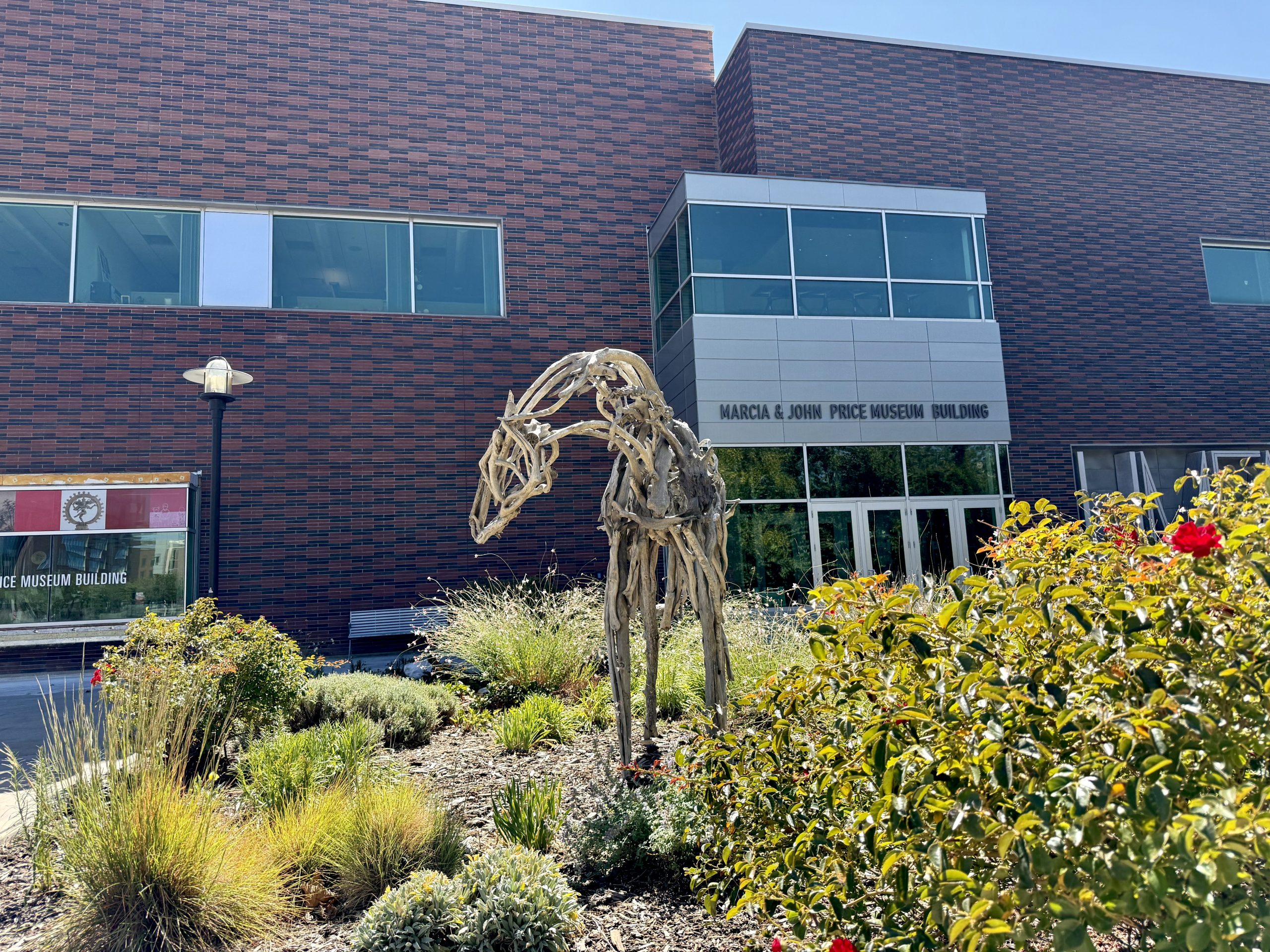
The Marcia and John Price Museum Building, home of the Utah Museum of Fine Arts since 2001. Its patterned brick exterior was designed by Machado and Silvetti with Salt Lake City’s Prescott Muir Architects.
The UMFA traces its collecting roots to 1914, when donated works of art were installed on the fourth floor of the University of Utah’s John R. Park Building. In 1926, Salt Lake businessman Edward Bartlett Wicks substantially expanded those holdings with a gift of 75 American and European paintings, and Utah artist James T. Harwood became the collection’s first curator. The collection became an institution thanks to Utah native Winifred Kimball Hudnut, who had left Utah and spent much of her adult life elsewhere, assembling a collection that included European paintings, French furniture, Chinese jades and tapestries. Her gift was contingent on the formation of the nonprofit organization that became the Utah Museum of Fine Arts. With additional support and promised gifts, the Park Building galleries were renovated and the new museum opened in 1951. Hudnut’s daughter, Natacha Rambova—dancer, Hollywood designer, wife of Rudolph Valentino and, later, Egyptologist—followed with gifts of Egyptian antiquities, helping broaden the young museum into a collection of global art.
As the collection grew, so did the need for somewhere to put it. The museum remained in the Park Building until 1970, when it moved into new galleries adjoining the University’s Art and Architecture Center. Sanguinetti, hired as director in 1967, oversaw that move and the decades of expansion that followed. By 1976 the collection numbered more than 15,000 objects and another wing had already been added.
Eventually that building, too, was outgrown. When Gagon surveyed it in 2001, on the eve of the Price Building’s opening, he found little reason for nostalgia: the old museum, he wrote, had become “drab, dark and dated.”
Planning for its replacement had begun more than a decade earlier, with Sanguinetti leading the effort to secure the building and the support necessary to make it possible. To thank Sanguinetti for his decades of service, Shiva Nataraja (Lord of Dance), a 12th- or 13th-century Chola bronze from present-day India, entered the collection in 2001. In the sculpture, Shiva dances within a ring of fire, simultaneously destroying the universe and bringing it into being again: an endless cycle of endings and beginnings.
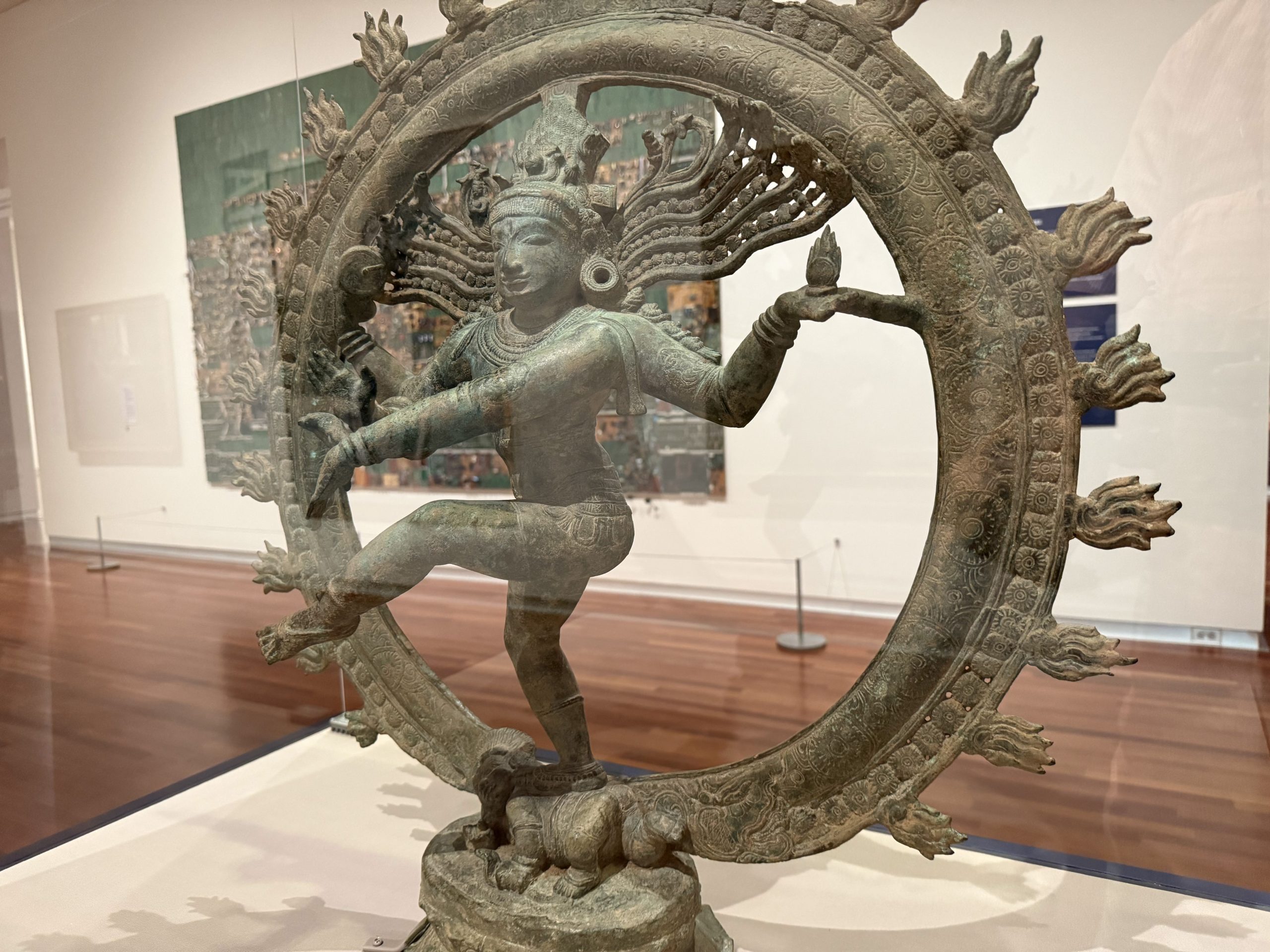
Shiva Nataraja (Lord of Dance), 12th–13th century. The Chola bronze entered the UMFA collection in 2001 as a gift commemorating longtime director Frank Sanguinetti and his role in bringing the Price Museum Building to fruition.
For the Future: Collecting at the UMFA 2001–2026, Utah Museum of Fine Arts, Salt Lake City, through Jan. 3, 2027.
All images courtesy of the author.

The founder of Artists of Utah and editor of its online magazine, 15 Bytes, Shawn Rossiter has undergraduate degrees in English, French and Italian Literature and studied Comparative Literature in graduate school before pursuing a career in art.
Categories: Exhibition Reviews | Visual Arts