
Material, located at 2970 South West Temple in South Salt Lake, celebrated three year in business this month.
How do you cultivate and sustain a thriving arts economy when you aren’t located in a major global art city? It is a question many art institutions and organizations are asking, especially at a time when the art world is wavering and feels uncertain. Material, a local art organization based in South Salt Lake, has made that question central to its mission.
Material was founded in 2023 by longtime studio mates and friends Jorge Rojas and Colour Maisch. “We created Material because we felt there was room for a different kind of art space; one that was artist-led and just as rooted in community as in exhibitions,” they say.
It began as a place where Rojas and Maisch could make their own work while addressing a need they saw. Material was envisioned as a community-centered space where exhibitions, performances, conversations and events could coexist, fostering meaningful engagement between artists and the public.
Even the name reflects that philosophy. Material refers not only to the physical materials artists use, but also to the idea that materials carry history, labor, culture and memory. “At Material, we often talk about how the space itself is like a material—something that can be shaped and molded to meet the evolving needs of our community.”

Material founders Jorge Rojas (left) and Colour Maisch, with Molly Heller (right). Image courtesy of Material.
Now, as the gallery marks its third anniversary, Material itself is being reshaped. Maisch has stepped away to focus on her artistic practice and family, while Rojas is continuing the gallery’s next chapter in partnership with Molly Heller. Together, they are expanding exhibitions, public programming and collaborations while introducing a new shop offering original artworks, handmade objects and gifts at more accessible price points.
Heller brings experience as director of Heartland Collective and as an associate professor at the University of Utah’s School of Dance, with a background in choreography, performance, curation and education. “Colour and Jorge have created such a strong foundation in Material’s first three years,” Heller says. “I hope to honor what has been established and am excited to contribute to curating even more cross-disciplinary art experiences that continue to strengthen South Salt Lake as an arts and cultural destination.”
From the beginning, Material has championed emerging and mid-career artists, presenting work by local, national and international artists while emphasizing cultural exchange, social engagement and creative risk-taking. But Rojas and Heller see the gallery as more than an exhibition venue. They describe it as infrastructure for artists: a place to experiment, build relationships, find audiences and create new opportunities.
Material is hardly alone in that effort. Material points to a growing network of artist-led organizations and independent spaces in Utah, including Sister, FICE, 801 Salon, Vis, Sugar Space, Medium Studio, The Gala, Art Factory, Poor Yorick Studios, Books & Supply and Mono Tape Club. Artists and art students are also organizing small galleries and pop-up exhibitions in apartments, garages, backyards and other unexpected places, including Arcade on Stadium and 99.9 Gallery.
“It reminds us that a building doesn’t define a meaningful art space; it’s created by people who care enough to make one.” For Material, these developments suggest a broader shift in how galleries might operate. “We’re also seeing a shift away from the traditional white cube gallery model that’s only open for exhibitions,” they say. “That model has become increasingly difficult to sustain, and we’re seeing many galleries around the country close their doors.”

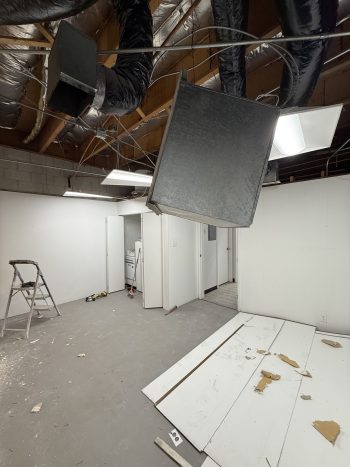


After three years, Material has torn down walls and ripped out ceilings to expand their programming space. Images courtesy of Material.
In response, they see artists developing hybrid spaces that might combine galleries with coffee shops, frame shops, listening or performance spaces, bookstores, studios or community gathering places. Such models can help with financial sustainability while also bringing contemporary art into everyday life. “To us, that’s the future of Utah’s arts community: a growing network of independent, community-driven spaces that support one another, experiment with new models, and make art more accessible. The stronger that ecosystem becomes, the more opportunities there are for artists to stay here, build sustainable careers, and contribute to a vibrant cultural life that benefits everyone.”
Early on, Rojas and Maisch made a conscious decision not to offer artists exclusive representation. As artists themselves, they felt such a relationship only works when a gallery has the resources to support every aspect of an artist’s career, and they did not want to make promises they could not fully deliver. At the same time, Material sees cultivating local collectors as essential to sustaining artists and building a sustainable arts community. When people collect locally, they directly support artists who live and work here and help create a culture where artists feel they can build careers in Utah.
Rojas and Heller want to break down the idea that collecting is reserved for the wealthy or for experts. “One of the biggest misconceptions is that buying and collecting art is only for wealthy people or experts,” they say. “The truth is that anyone can buy and collect art. It might be someone buying their first small print, a young person investing in their first original painting, or a longtime patron building a significant collection.”

At the front of the space, where Jorge Rojas’ studio space was formerly located, Material has opened The Shop at Material. Image by Zachary Norman.
That philosophy is behind The Shop at Material, the gallery’s first dedicated retail space. The Shop features a curated selection of original artworks, artist editions, publications and zines by artists Rojas and Heller admire. “It’s an extension of our mission to make contemporary art more accessible while creating another platform to support artists and connect audiences with their work.” As Material continues to evolve, they remain committed to listening closely to artists and the community. They want to identify gaps, respond to needs and create initiatives that meaningfully support diverse creative practices.
With a newly renovated gallery and the addition of The Shop at Material, Material has expanded what is possible within the space, offering greater flexibility in how they present exhibitions and engage with different communities. The gallery has also expanded beyond exhibitions and sales, offering consulting, art advising and installation, as well as helping connect businesses, designers and developers with original artwork.
Meanwhile, Heller’s arrival is broadening Material’s multidisciplinary programming. Performance, live music, film, book readings and artist-led conversations are becoming increasingly important parts of the mix. This next chapter allows them to balance pop-up events, including a partnership with Design Week 2026, with recurring programs that build continuity, such as Yardwork Presents, a live music series facilitated by Chaz Prymek.
-
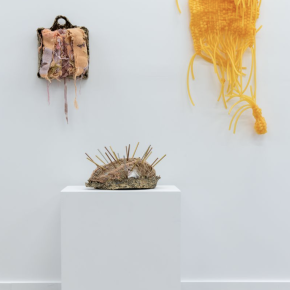
- Works by Elise Drake: “Scout,” “Chewy Noodle,” “Parasite”
-
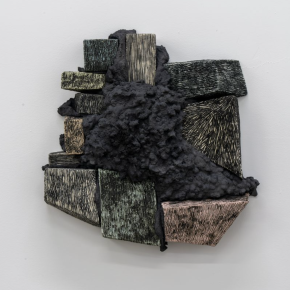
- Fawn Krieger // 57, 2022 Fired clay, underglaze, concrete, vermiculite, pumice, pigment 15.75 x 16 x 3.5 in
-
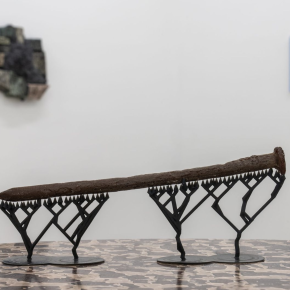
- Jacob Riddle, “Degenerative Renovation,” 2026 Mixed media 24 x 24 x 48 in
Material’s next chapter begins with After the Unmaking: New Ground, opening in conjunction with Material’s grand reopening. The group exhibition considers what might emerge after familiar political, economic and social systems begin to break down. “Rather than dwelling on collapse or nostalgia, the exhibition asks a hopeful question: What new possibilities can emerge from the ruins? It doesn’t offer easy answers, but it invites us to imagine new ways of living, creating, and connecting.”
The exhibition is guest-curated by local artist, performer and educator Moses Williams. “Moses has an incredible eye for multidisciplinary work and brings a wealth of curatorial experience through his leadership of the Gittins Gallery at the University of Utah. He’s also brought together an outstanding group of nationally and internationally recognized artists, including Fawn Krieger, David Onri Anderson, Jacob Riddle, Rion Lambert, Elise Drake, Isabella Covert and local artist Kiera Ohrn. We think it’s going to be one of our strongest exhibitions yet.”
For Rojas and Heller, the changes underway at Material remain connected to the ideas on which the gallery was founded: that an arts space can itself be treated as material, continually reshaped in response to artists and the community around it. “We’ve always wanted the gallery to be a place where people feel comfortable walking in, whether they’re longtime collectors, practicing artists, students, or someone who’s never stepped into a gallery before,” they say. “You don’t need any special knowledge of contemporary art to belong here, just curiosity and a willingness to engage.”
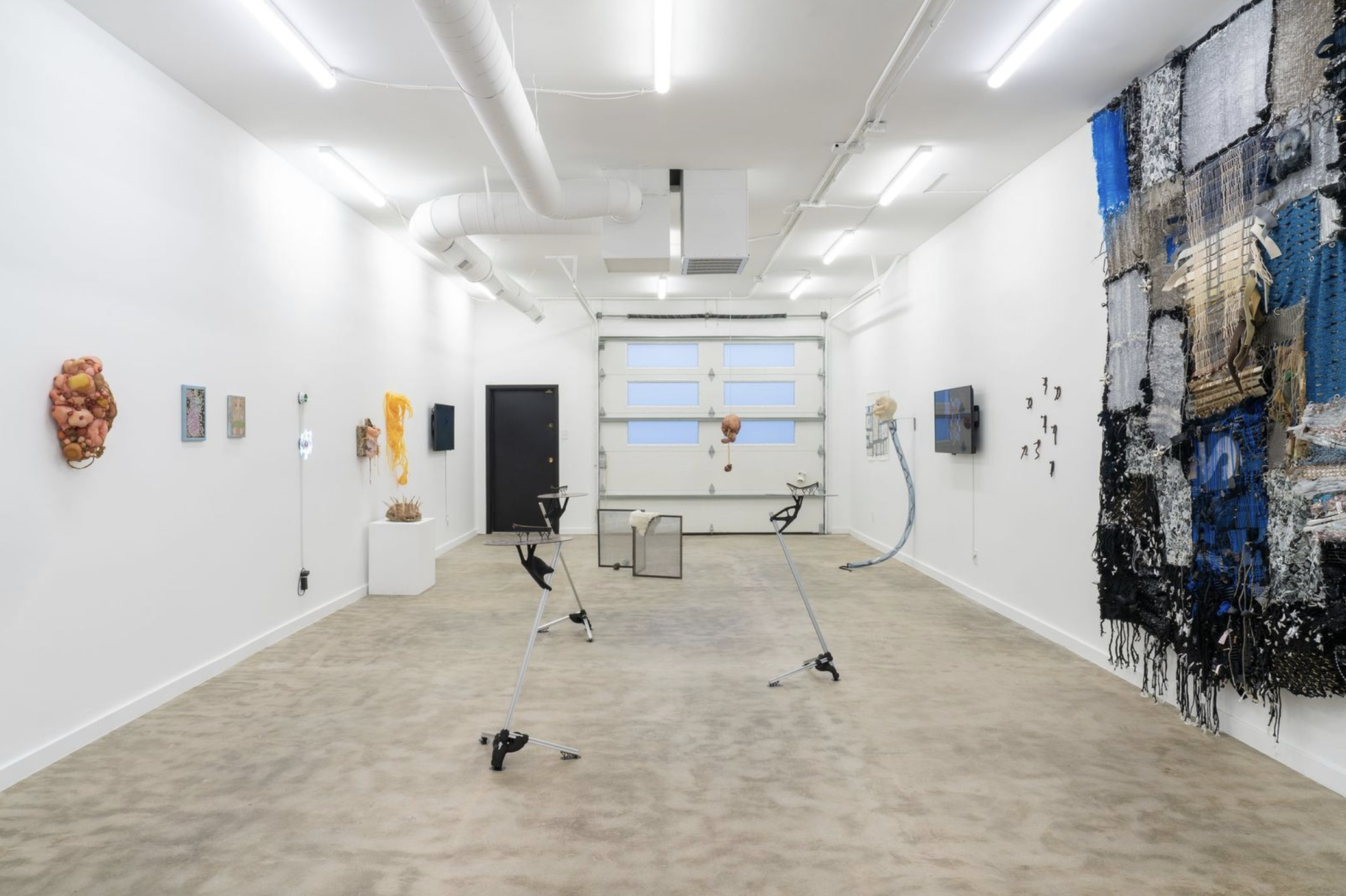
After the Unmaking, curated by Moses Williams, inaugurates the new Material. Image by Zachary Norman.
After the Unmaking: New Ground, Material, South Salt Lake, through October 9.
Kasey Lou Lindley is an arts professional with formal training in fine arts, holding a BFA from Ringling College of Art and Design and an MFA from the University of Connecticut. She has written about contemporary arts and culture for Sarasota Visual Art and Art at Bay.
Categories: Gallery Spotlights | Visual Arts