
by Nan Ellin. Photos by Shalee Cooper.
“We don’t want another Gateway” is the common refrain echoed by those who live, work, and play in the Granary District. Almost everyone interviewed by a group of University of Utah students over the past year concurred that the success of the district itself, as well as the value it brings to the region, relies upon protecting and enhancing its unique qualities. Instead of beginning with a “tabula rasa” — a clean (or literally, erased) slate, as Gateway did, it is essential to recognize these gems and polish them. Rather than raze what is there to start anew, we need to raise up from what already exists.
What are the gemstones of the Granary District?
The most vibrant are the people who live and work in the Granary District.|1| The arts,|2| music and design communities provide manifold gems including the Pickle Factory, Artspace Commons, Bad Dog Arts (for children 7-12), Vita Brevis and Captain Captain art studios, independent music venue Kilby Court, street art, recording studios and rehearsal spaces, the adaptively reused apartments by Eric Steffensen as well as his own home/studio, soon-to-arrive Atlas Architecture Studio and NoBrow Coffee House, Luminous Animation Studios, Art & Frame shop, camera supply store PictureLine, the Classic Car Museum, and screen-printer SpiltInk. Other businesses include Level Nine Sports in a respectfully-restored warehouse, Chic and Unique vintage store, Expert Tailors, Zion Upholstery, and Donna Bella Milan salon in an old fire station. Treasured gems are food purveyors such as Ruby Snap Bakery renowned for its fresh-baked cookies, El Viroleño that serves the best pupuserías in town, and Frida Bistro renowned valley-wide for sophisticated Mexican cuisine. And the district is home to the Red Lotus Buddhist Temple, manufacturers, produce wholesalers, autoshops, a number of non-profit organizations, and a community garden (in progress) at Artspace Commons.
 Everyone agrees we must ensure that current residents and businesses in the Granary District are not displaced. As Trish McBride, a designer at the Pickle Factory, told Keri Williams: “I don’t want to see it gentrified. Gentrification takes the luster out of the dirt.”
The buildings are also gems. More than half are older than 50 years, thereby eligible for historic designation, and two are listed on the National Register of Historic Places: Silver Brothers’ Iron Works Office|14| and Warehouse (550 W. 700 South, currently Safe Haven)|15| and the Fifth Ward Meetinghouse (740 S. 300 West, currently the Buddhist Temple).|16| The unique quality of the Granary District owes in large part to this diverse stock of warehousing, manufacturing, industrial, and office buildings that benefited from the railroad traversing the area.
Another important gem is the location of the Granary District that offers striking mountain views foregrounded by skyline, as well as valued and valuable proximity to freeways and downtown SLC.|17| The 900 West TRAX station adds an additional gem, providing access to public transportation as well as ideal opportunities for transit-oriented development.|18|
Those we interviewed mentioned a number of other assets such as the “quality of light, calmness, affordability,” and “creative vibe” of the area, along with “the sense that anything is possible.” According to resident Shannon McCallum-Law, “This is a suburban rehab center — people come here to recover from suburbia” (interviewed by Keri Williams).
Several groups of people have been offering more gems through dedicating significant time, energy, insight, creativity, and other resources to the Granary District. One of these is the Kentlands Initiative convened by James Alfandre and Christian Harrison to “crowdsource” the Granary District’s future (http://granarydistrict.org). According to this group of over 300 residents, local businesses and others, “The Granary District is a diverse neighborhood with diverse neighbors. It’s both out of the way and in the middle of it all. . . .The Granary District has always been a productive place, and its brightest future is as a haven for makers — people with dirty hands, big ideas, and warm hearts. It’s gritty, diverse, and grounded.” The Kentlands Initiative has been hosting regular public meetings to gather input from as many as possible, collectively advance ideas, and build support for them. In April, they hosted a weeklong charrette (a collaborative session to solve a design problem) in a Granary District warehouse to develop a community vision for the neighborhood and are currently following up to realize this vision.
The Redevelopment Agency (RDA) of SLC created the Granary District Project Area in 1999, providing a mechanism for redeveloping the area through tax increment financing (TIF). In tandem with the City of Salt Lake, the RDA has been working to bring a streetcar to 400 West and 700 South, allow accessory dwelling units and cottage housing, support business and employment development, and engage in strategic planning. Almost an entire city block that served for 70 years as a parking lot for the City’s fleet of cars and trucks offers a 10-acre gem, an opportunity to create a tremendous amenity. This and other vacant lots throughout the district could be transformed into parks, food truck courts, outdoor recreational areas, renewable energy stations, and much more. Likewise, vacant buildings offer opportunities for adaptive reuse, providing housing, shops, schools, gyms, or whatever else might benefit the community.
In addition, six classes from the College of Architecture + Planning at the University of Utah, comprising almost 100 students, turned their gaze to the Granary District this past year. These students have been providing a range of resources including community surveys, research on the social and architectural history of the neighborhood, comparative crime data for the district and other neighborhoods, analysis of soil contamination and remediation recommendations, translation of charrette materials into Spanish and engaging the Spanish-speaking community, and investigating best possibilities from similar districts around the globe regarding integrating nature into the city, maintaining affordability, and introducing renewable energy systems. Students also proposed a range of urban design, landscape, and arts and culture proposals. Sam Katz produced a short video homage to the district, honoring its gems. With Mayor Becker, the College hosted the Mayor’s Symposium in the Rico’s warehouse in February, bringing together a range of local experts on the district, including Frida Bistro owner Jorge Fierro, as well as experts from out of town to instruct, incite, and inspire creative and inclusive approaches to building upon existing assets in the district.
A group of architects and planners at VCBO Architecture has been working on a booklet highlighting “the beautiful side of what is the Granary District in an effort to partner with others passionate about seeing this place become something special” (Greg Walker of VCBO). In partnership with the Kentlands Initiative and SLC Green Drinks, the AIA Utah Young Architects Forum — which includes artists and planners as well as architects — will be hosting Sustain the Granary during the June 15 Gallery Stroll, an event that includes a “Jane’s Walk” to showcase existing buildings and promote good design for the district generally (meeting at 6 p.m. at Artspace Commons, look for our June 11 Daily Bytes post for more info).
Finally, the City of Salt Lake formed a Granary District Coordination Committee to unite all who have a stake in the district’s future. This committee performs the critical role of weaving together all of the efforts described above as well as others, preventing us from working at cross-purposes or duplicating efforts, keeping all apprised of city regulations while heeding recommendations for adjusting these, and learning from each other to inform decision-making and facilitate implementation.
Whether residents, local business owners and employees, city officials, developers, architects, planners, or visitors to the area, a consensus prevails that the special qualities of the Granary District should not be forsaken. Instead, we begin with a tabula plena, or full slate, by collectively prospecting for existing gems and creatively polishing them, adorning this neighborhood with urban jewels for the benefit of all.
-
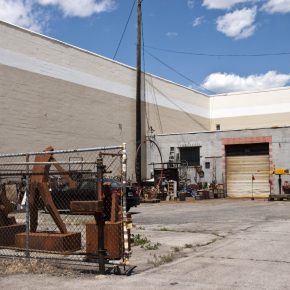
- Artist studios in the Granary District
-
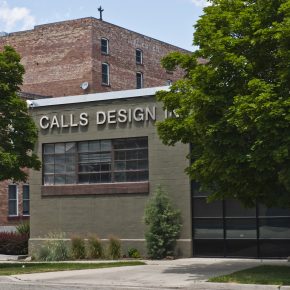
- Callis Design
-
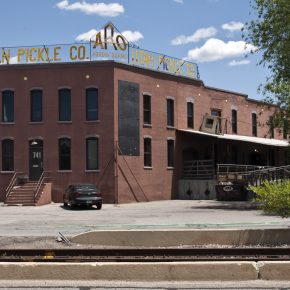
- The Pickle Co.
-
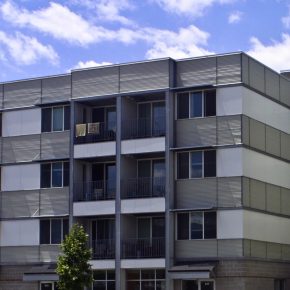
- Artspace Commons
-
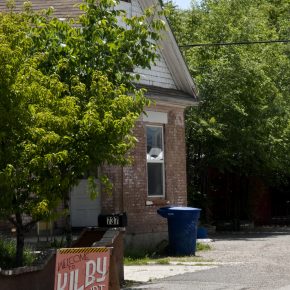
- Kilby Court
-

- Street Art by Trent Call
-
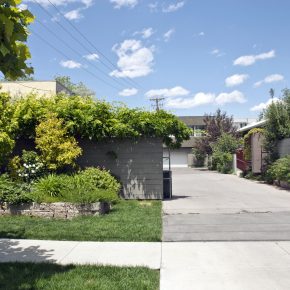
- Apartments in the Granary District
-
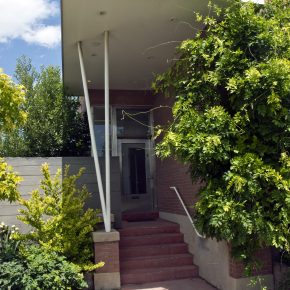
- Studio of Eric Steffensen
-
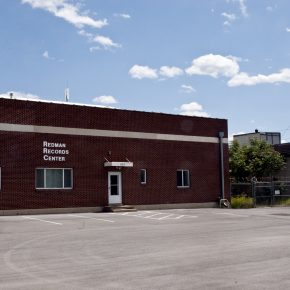
- Redman Records
-
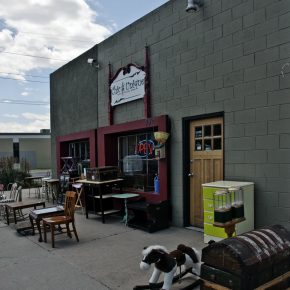
- Chic and Unique Boutique
-
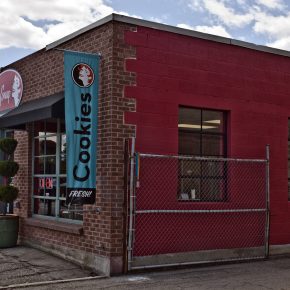
- Ruby Snap Bakery
-
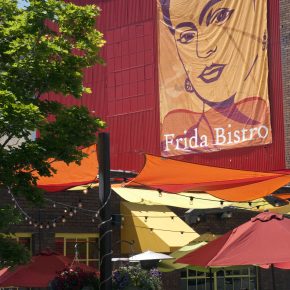
- Frida Bistro
-
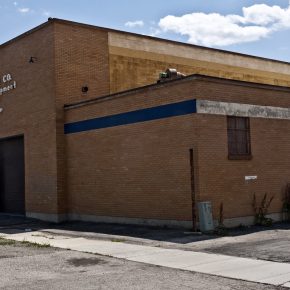
- Silver Brothers Iron Works
-
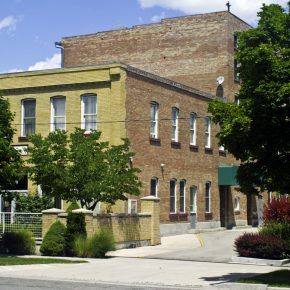
- Silver Brothers Iron Works Warehouse, currently Safe Haven
-
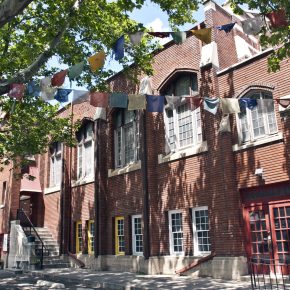
- Fifth Ward Meetinghouse, currently Red Lotus Buddhist Temple
-
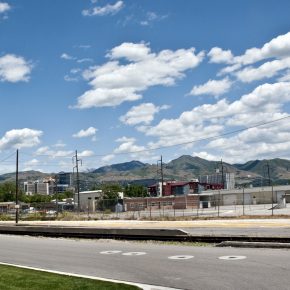
- View of the Wasatch Front from the Granary District
-
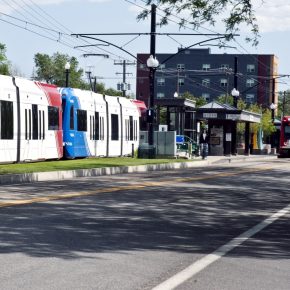
- View of the 900 West Trax Station
-
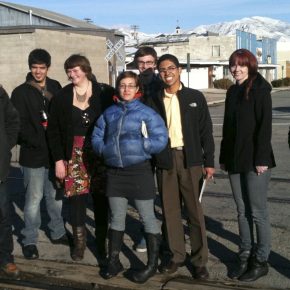
- Students from the College of Architecture + Planning at the University of Utah investigating the Granary District

UTAH’S ART MAGAZINE SINCE 2001, 15 Bytes is published by Artists of Utah, a 501 (c) 3 non-profit organization headquartered in Salt Lake City, Utah.
Categories: Architecture & Design