
Including architecture in a painting is always a great way to create interest and hold the viewer’s attention. Additionally, some sort of manmade structure in nature is usually an engaging subject. The important thing is to look for an interesting pattern of light and shadow, as you would with any composition. Structures can range from the simple inclusion of a shed or barn in a rural landscape to a full-blown cityscape that features very little natural elements. Either way, it is the light that breathes life into any subject, whether it be indoors or out.
One of the usual problems associated with the addition of architectural elements is the tendency of the beginning painter to view the physical structure as a separate entity from the rest of the natural elements in the picture and, consequently, tighten up when rendering that part. It’s important to try for an overall feeling throughout the picture plane so that each subset of the painting acts in accordance with the good of the whole. This is a gestalt thinking process that must be adhered to in order for the painting to hold together as a unit.

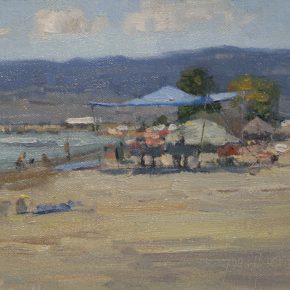

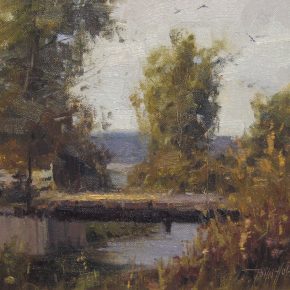


Let’s use a barn as an example. How does one paint a barn convincingly and at the same time make it hold its place in the picture plane so that it works as a unified element in the composition? First of all, realize that it is an important participant in your painting, but not so important that it requires a kid glove handling or special treatment with regard to technique. The technique applied should be the same general technique used throughout the painting. In other words, if the general handling of the painting is loose and fluid, don’t switch to a pointillist paint application to render the barn.
Your first consideration should be the value of the barn in relation to the things around it. It is these relationships that will give it a sense of reality even more than the details of the wood and metal surfaces. Once the general value and coloration of the barn walls and roof are laid in with a thin application of paint, it’s a short leap to apply thick paint to finish the process. Details such as boards and metal roof should be suggested rather than delineated in a tight fashion. It’s important not to tighten up here, paint with gusto and don’t be afraid to overlap edges; it’s the artistic merging of these edged that will give your painting that painterly quality so desirable in this type of work. A few dark and light accents, a hard edge here and there and a softening of other select edges will finish off your efforts to create a barn that is both interesting and believable. Just remember to have fun and go for it, you have nothing to lose but a few daubs of paint and a little canvas.

All images courtesy of John Hughes

UTAH’S ART MAGAZINE SINCE 2001, 15 Bytes is published by Artists of Utah, a 501 (c) 3 non-profit organization headquartered in Salt Lake City, Utah.
Categories: Hints 'n' Tips | Visual Arts