
When Lee Cowan asks if he can paint your portrait you won’t have to worry about what clothes to wear, whether you need to lose weight, or if you’re having a bad hair. You won’t even have to show up at his studio. But that doesn’t mean the process will be easy. For you, or for him.
You’ll have to fill out a worksheet consisting of one long column (record of event) and four smaller ones (time, duration, impact, summed term). The instructions for the worksheet make the project feel more like a medical procedure than an aesthetic one: “Record every experience you have within a 24-hour period. Include positive, negative as well as nocturnal events to the best of your ability. Dreams, if retained, and effect, may be recorded. Record the event being as descriptive as you can. List the time the event took place and its duration. Using a scale of 1-10, 1 being low impact and 10 being high impact, describe the impact this event had on you. Finally, please sum up the event in a descriptive term or terms from the list provided. At the bottom of this worksheet, sum up your 24 hours in one or two descriptive terms that describe the period as a whole. Use additional worksheets as needed.”
Accompanying the worksheet is a vocabulary of over 200 terms — nouns and adjectives — describing a gamut of emotional states from aggression to relief, and jealousy to vitality. The commitment Cowan asks from his subjects can be daunting, which makes sitting still in a chair for a couple of hours at a time seem relatively painless. The seeming tediousness of the project and the dryness of its presentation are belied, however, by the results — what Cowan calls his 24 Hour Portraits, ‘color field’ paintings filled with shimmering blocks of hazy color that pulse and hum.
Cowan, former owner of Cowan Gallery in Springville and now a professor at Utah Valley University, began this series of portraits as part of his MFA thesis. Early in his artistic career Cowan’s interest in color theory led him to investigate color profiling in psychological studies. When he took the profiling tests multiple times and found significant variances he realized the profiling system itself wasn’t necessarily flawed, it was simply giving an unexpected result. Rather than giving the subject a color profile based on their absolute self, the color profile was telling them something about who they were right then. What they ate for breakfast, who they had last spoken to on the phone, how bad the traffic was on the way to the exam — all this influenced how they were feeling that day and determined their color preferences.
Cowan decided to create a model that would allow him to create color portraits based on people’s experiences over a 24-hour period. The square format of the works is a carryover from the original personality tests, where color choices were presented in square cards. Time of day determines placement of the squares, duration of the experience the size, and the terms that subject uses to describe the experience the color.


Cowan says engaging in this process can be daunting for some. If the amount of attention required to take note of one’s state of being from one moment to the next isn’t enough of a burden, apprehension about sharing personal and potentially embarrassing experiences can make some balk. Cowan counsels his “sitters” to take it easy. He says to jot down the moments quickly, as you go about the day, and come back to them in more detail at the end of the period. And if something embarrassing happens, all anyone will see of it is a color.
People have been surprised when they see the results, Cowan says. “Wow, I didn’t think I looked like that,” they will remark. “Well, you did that day,” he’ll tell them, “but another day you might look different.” As proof of the point, Cowan has done a number of self-portraits, none of which looks the same.
Others are as surprised as much by the process as by the result. When Jason Lanegan, an artist and BYU professor, engaged in the project he remarked, “I had no idea how I really spent my 24 hours until I filled this out. And it alarmed me.”
The 24 Hour Portraits offer the possibility of almost limitless variations. A “sitter” could choose to have portrayed a momentous occasion, or a mundane one. A patron — one either very narcissistic or very masochistic — could commission a portrait every day for a year and have an entire suite of different works. For one pair of paintings, Cowan and his father kept the worksheets during the same period of time to see what their respective portraits would look like. One patron did something similar with her two daughters and has hung all three works together.

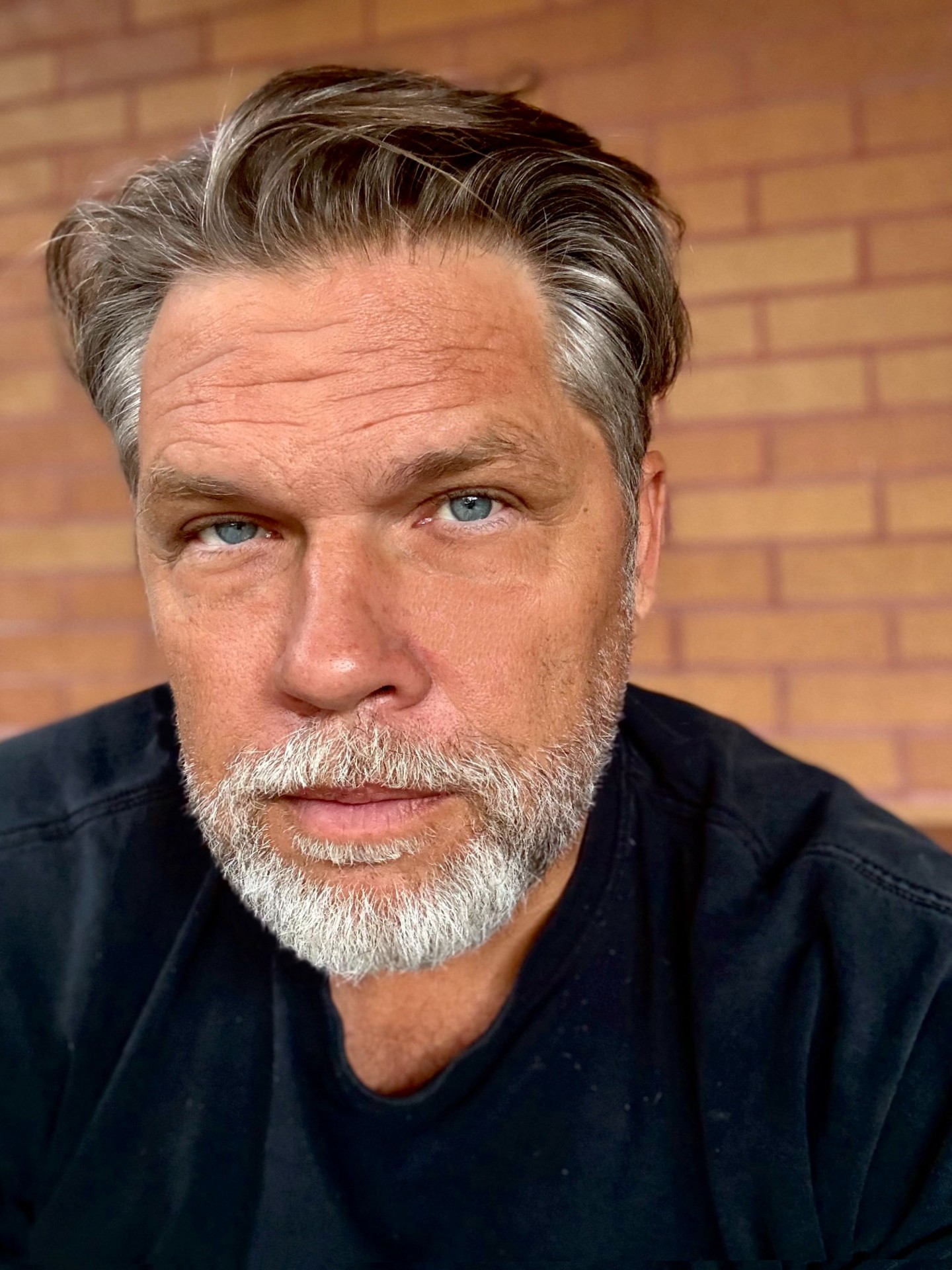
The founder of Artists of Utah and editor of its online magazine, 15 Bytes, Shawn Rossiter has undergraduate degrees in English, French and Italian Literature and studied Comparative Literature in graduate school before pursuing a career in art.
Categories: Exhibition Reviews | Visual Arts