
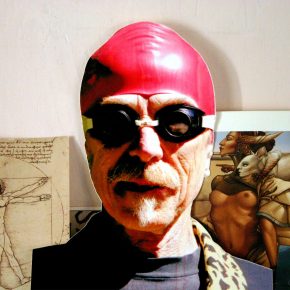
Jim Williams among his works
There are many “key moments” in Jim Williams’ life: his childhood discovery of a knack for remodeling his midwestern family home; his decision to study architecture with Bruce Gof, the legendary student of Frank Lloyd Wright who surpassed his teacher in flights of sheer fancy; his foray into domesticity in a former polygamist house in the Salt Lake Avenues neighborhood, where he lived with wife and children; his decision to study art and become a painter; his determination to return here in 1971, to fix up and sell his former home; the evolution of that much-modified structure into a combination atelier and gallery. In fact, aside from the acknowledgement in his paintings, drawings, sculptures, collages, and what-nots of the aesthetic trends that swirled about him in post-WWII America, perhaps the most lasting trace of Jim Williams’ formative years is his commitment to the principle, often intoned with gravity in what became known as the Sixties, that today is the first day of the rest of our lives. Every moment that could be seen as the summary of ones past can, with enough vigor and joie de vivre, just as well be taken for the beginning of the future waiting to emerge from the melding of memory and imagination.
Williams and his current collaborators have a phrase for it: “the beginning of now.” It’s also the title of their book, a labor of love and respect, including a volume of photographs by Tj Nelson and another of text by Cara Despain, both bound and slipcased together by Mary Toscano. In a sense the book came into being to formalize and make more accessible the rare personal tours that have hitherto been the only way for strangers to experience Jimmie’s. A shared desire to give the book a proper start led, in turn, to the decision to extract—to borrow in as intact a manner as possible—a few of the more accessible, free-standing parts of the elaborately interconnected, multimedia composition and self-portrait that his house has become, and create from them an installation that will be on view at the Westgate Lofts in June. The exhibition will foster the book, which in turn introduces the house.
-
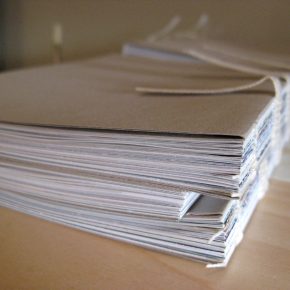
- the beginning of now, a book on the work of Jim Williams
-
- Works by Jim Williams
-
- T-shirts by Jim Williams
For an apparently reclusive, admittedly shy man, Jim Williams brings together a remarkable network of creative collaborators. Visitors to Jimmie’s, in any of its formats, will encounter ceramic sculptor and collaborative myth-maker Jim Stewart, whose masks are everywhere throughout the house and whose shared project, which they call the “post-apocalyptic series,” includes some of the few portable artworks to be found in an environment where nothing is clutter and each consciously-placed bit of memorabilia plays a deliberate role. Then there are the often-spontaneous larks of “Tom, Dick, and Harry,” an artistic triumverate of three friends: Don Andrews, Williams, and Marc Rogers. More recently, Willisams was joined by studio assistant Andrew Callis, a young artist who supplements his primary task of executing Williams’ plans with self-appointed roles as archivist and interlocutor. Beyond these immediate collaborators lies a web of influences and friends like Tom Deaver, a childhood friend who moved to Japan to make bamboo flutes, and Frank McEntire, the Salt Lake-based sculptor whose lively, humorous use of found objects echo his own approach, while pointing to different uses for the same resources.
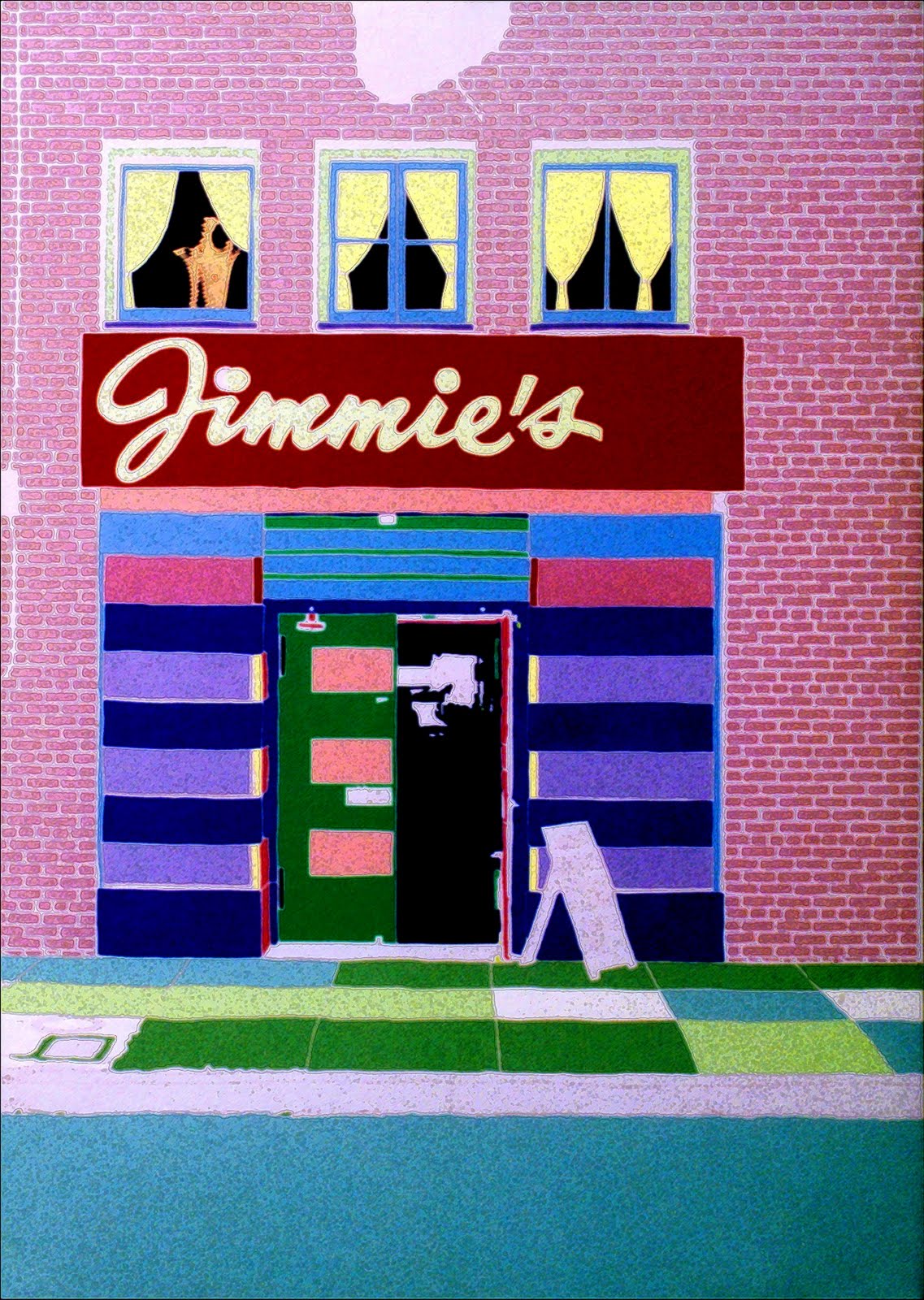
Jimmie’s, an exhibit and book about Utah artist Jim Williams
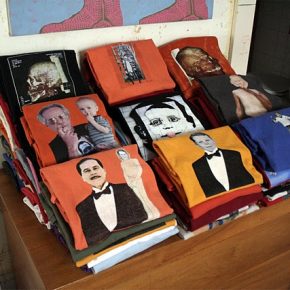
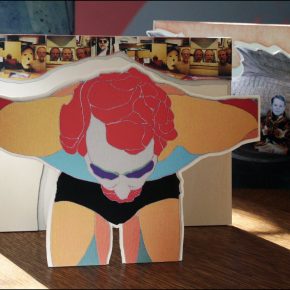
If Jim Williams’ autobiographical magnum opus is instinctively private, introspective, inward-turning, his media are contrastingly outgoing and populist. Standing out among his encyclopedic array of self-expressive forms are two of the most modern and ubiquitous: postcards and t-shirts. The former is Everyman’s artwork: a vessel for conveying one person’s memories to another, specific audience, but almost certain to touch others as well. The t-shirt is also a kind of miniature billboard, with the added symbolism that places its maximum density, its primal content, right over the wearer’s heart. But then Williams, a prolific creator of t-shirts, needed to invent alternative ways of sharing, even inventing a combination cardboard box and picture frame that allows him to hang them on the wall like paintings.
In an age where too much art has given in to spectacle, to the impersonal, extravagant display of anonymous concepts and would-be universal vistas that end up little more than mechanized glimpses, Jim Williams’ kind of exploration-in-depth of modern life from a single, but by no means narrow, point of view feels like a breath of fresh air from an open window. If every portrait is a self-portrait, it’s equally true that every self-portrait is a mirror in which to study our own appearance. The concept of the artist includes the assumption that a sensitive witness will intuitively select the things that will continue to matter. Everyone involved in the beginning of now deserves thanks for making this remarkable testimony and un-monumental monument accessible. We owe it to ourselves to see it.
-
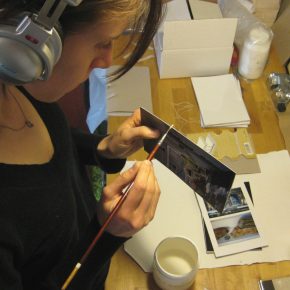
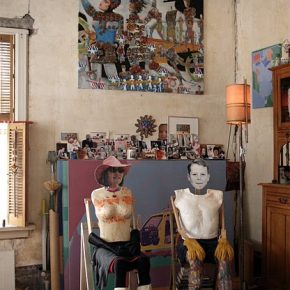
- Mary Toscano works on the begginning of now

Categories: Exhibition Reviews | Visual Arts