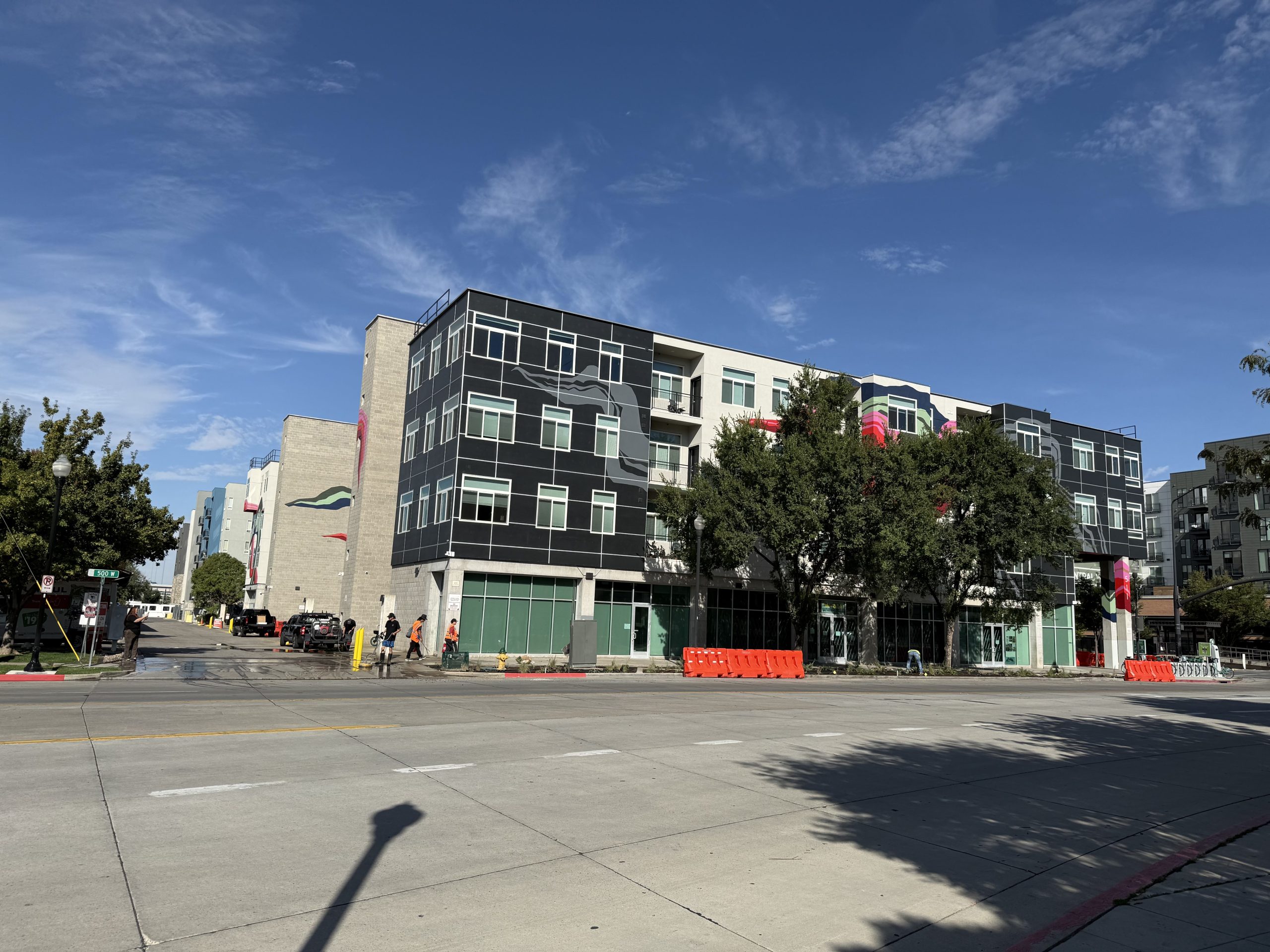
The newly renovated Norbridge Court at 511 W. 200 South. Originally opened as the Artspace Bridge Projects in 2001, the mixed-use development is entering a new chapter 25 years later.
If you’re a newcomer to Salt Lake City’s art scene—say, sometime in the past decade—you may have no idea that this stretch of 500 West was once one of the most vibrant corners of the city’s cultural landscape.
It began 25 years ago. Downtown was looking west, where The Gateway opened in November 2001, promising a new mixed-use experience combining residential towers with restaurants, shops and movie theaters. Across the street, Artspace—a scrappy nonprofit founded by artists in 1980 to create affordable places for artists and arts organizations to live and work—was pursuing a different kind of mixed-use development.
In 2001, Artspace completed the Bridge Projects at 511 West 200 South, its first ground-up development. Designed by Prescott Muir Architects, the building combined 62 affordable apartments with 20,000 square feet of commercial space at street level. Terry Hurst and Ruby Chacón opened Mestizo Coffeehouse, which soon evolved into the Mestizo Institute of Culture and Arts. At the project’s most prominent corner, behind walls of glass, was a 4,400-square-foot exhibition space with movable walls. Patrick Hoagland opened the Artspace Forum Gallery there in April 2002.
15 Bytes was barely a year old when we visited the new gallery that July. “Remember when ‘West Second South’ was considered the seedy part of town?” the article began. With The Gateway going up across the street, we noted, there was suddenly “more and more to do and see there, especially for art lovers.”
The neighborhood was still a work in progress. Our article encouraged readers to ignore the torn-up roads and construction cones and head west anyway. Something was beginning to happen.
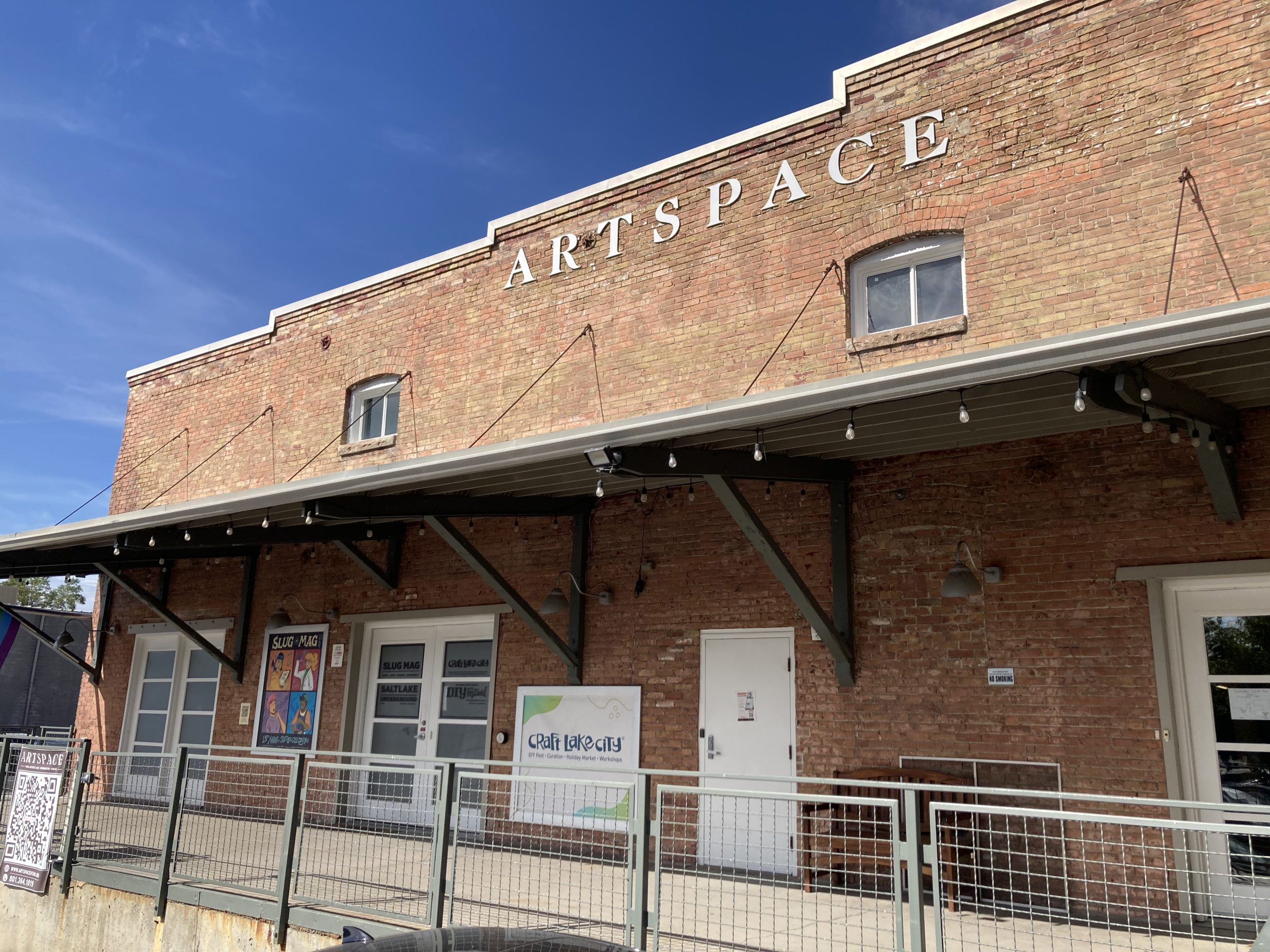
Artspace City Center, immediately south of Norbridge Court, opened in 2006 in a former ZCMI warehouse. Once home to several public-facing arts spaces, the building now houses organizations including SLUG Magazine and Craft Lake City.
Five years later, Artspace doubled down. Immediately south of the Bridge Projects stood a long brick warehouse built in 1905 for ZCMI, with an interior rail line once used to unload merchandise. Artspace converted the 62,000-square-foot building into City Center, with 18 affordable artist live/work townhouses and more than 20,000 square feet of commercial space.
Art Access moved from its original space at Pierpont and opened two gallery spaces in one of City Center’s prominent street-facing spaces; the Utah Arts Festival operated a gallery in the other. Tanner Frames anchored the rear. Palmers Gallery opened in the Bridge Projects in 2005 before moving a block south to the Salt Lake Design Center; in June 2007, IAO Gallery opened in the space Palmers had vacated. And across the street was the Rio Grande Depot, home to the state-run Rio Gallery.
By the middle of the decade, the concentration of art spaces in this part of downtown had become remarkable. On Gallery Stroll nights, when Gallery Stroll itself was in its heyday, you could actually stroll—park once and spend much of the evening on foot. Start at Palmers, walk a block north to the Rio, cross 500 West to Artspace and find several more galleries within the complex. When you were finished looking at art, you could get something to eat at the Rio Grande Cafe or wander over to The Gateway.
For a time, this stretch of the city offered something Salt Lake has struggled to create: an arts district.
The decline began slowly. The Road Home had long been part of the neighborhood. People experiencing homelessness and those seeking the shelter’s services shared these blocks with artists, gallery-goers and Gateway shoppers throughout much of the district’s cultural heyday. But as Salt Lake City’s homelessness crisis intensified, the character of the neighborhood changed. Encampments grew. Fences went up. It became increasingly difficult to stroll.

A new mural by Salt Lake City muralists Smock and Roll wraps Norbridge Court, drawing on the ridgelines and rocky terrain of the surrounding landscape.
The institutions began to disperse. There had been early exits: in 2008, Hoagland moved his gallery to Sugar House and Mestizo left for North Temple. Spy Hop took over the Artspace Forum space but eventually departed for its purpose-built home in Central Ninth. Tanner Frames, facing rising rents, decamped for 800 South. Art Access stayed, but in the wake of the pandemic greatly reduced its footprint and gave up its street-facing gallery. The Utah Arts Festival left as well. Then the March 2020 earthquake damaged the Rio Grande Depot, closing the Rio Gallery. It remains shuttered more than six years later.
Across the street, The Gateway underwent its own transformation. The outdoor shopping center that was supposed to pull downtown westward struggled as traditional brick-and-mortar retail declined. Empty storefronts forced the development to repeatedly rethink its character. Before you really knew it was happening, the reasons to walk this stretch of 500 West disappeared.
Now Artspace is betting on the corner again.
The organization has rechristened the Bridge Projects as Norbridge Court and is nearing completion of a renovation begun in June 2025. The building’s 62 apartments have been substantially renovated, with new layouts, kitchens, bathrooms and other upgrades, while the commercial spaces below are being remade for a new generation of tenants.
The most visible change is outside. A brightly colored mural by Salt Lake City muralists Smock and Roll now wraps around the building, its abstract forms drawn from the ridgelines and rocky terrain surrounding the city. An interior courtyard on the south side of the building, still under construction, is shifting from parking to a community-oriented gathering space. Artspace is also looking again at what happens at street level. There are already reasons to linger. Under the Umbrella Bookstore, a queer bookstore and community space, and the adjoining Umbrella Café occupy commercial space at Norbridge. Now contemporary art is returning as well.
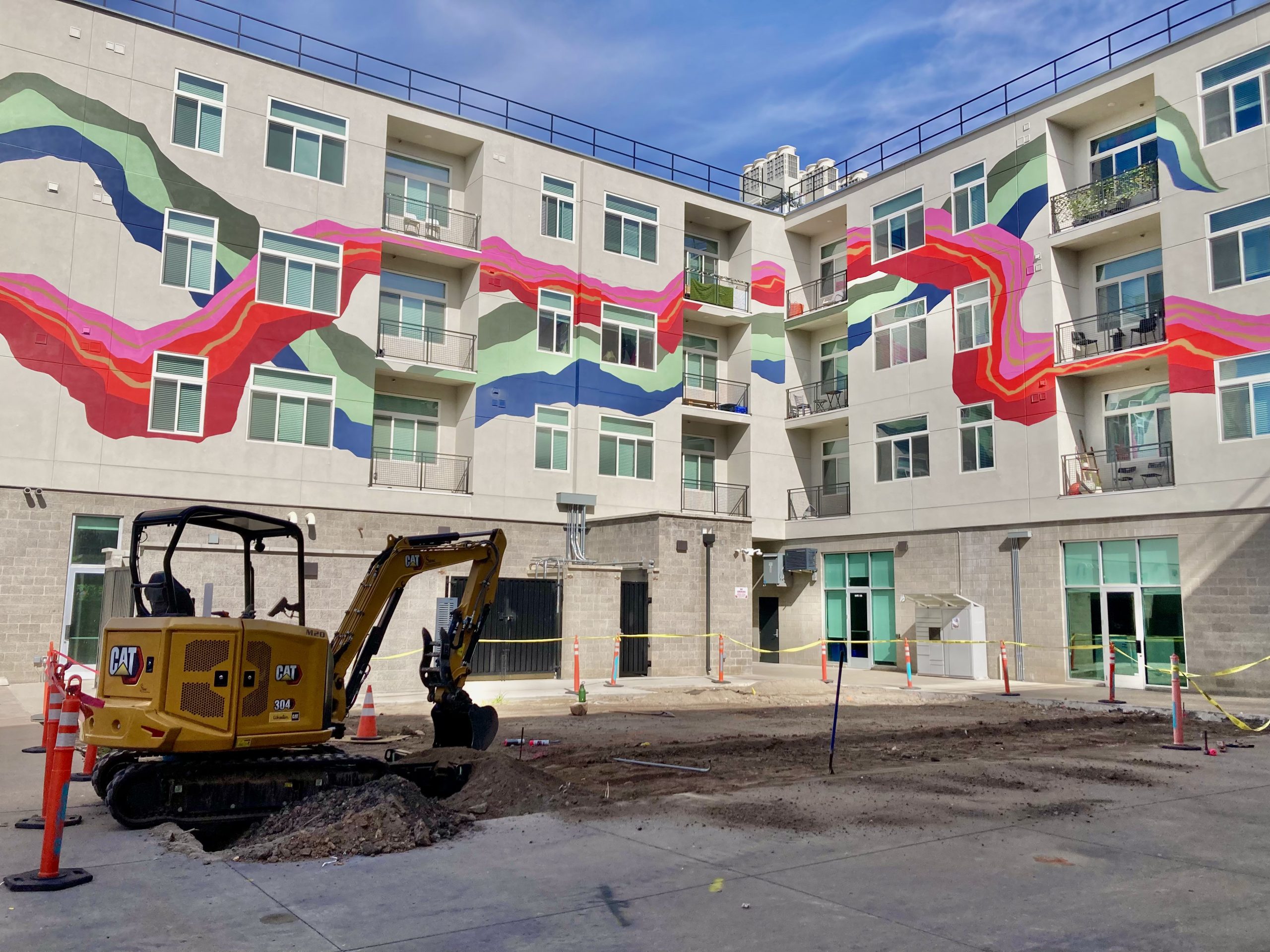
The interior courtyard at Norbridge Court remains under construction ahead of the building’s grand opening. Formerly used for parking, the courtyard is being transformed into a community gathering space.
Craft Lake City, the nonprofit founded by Angela H. Brown in 2009 and best known for its annual DIY Festival, is partnering with Artspace to launch Craft Lake City Contemporary, a quarterly series of pop-up exhibitions devoted to Utah artists. Each exhibition will be organized by a different local artist-curator. “We’re excited to help create a new space for local artists and contemporary art through this partnership with Artspace,” Brown says. “Each quarterly exhibition will offer audiences a chance to discover new artists and experience work from Utah’s creative scene.”
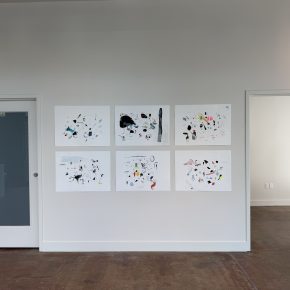
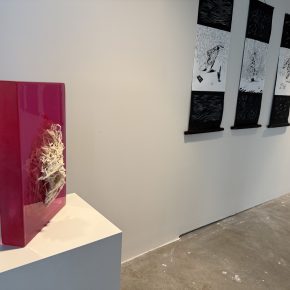
The inaugural exhibition, Rarely Named, is curated by Nancy Rivera and brings together nearly 50 works by Madison Colvin, Katelyn Field Garcia, Allison Joy McKinney, Jiyoun Lee-Lodge, Anna Laurie Mackay, Lu Wei, Colour Maisch, Aimee Odum, Wren Ross and Kamila Stice. Rivera describes the exhibition as an exploration of “practices of attention”—repetitive, embodied and ritualistic ways of making through which the artists investigate identity and meaning. The L-shaped exhibition space and adjoining alcoves serve the exhibition well, letting works breath while speaking with each other.
Rarely Named opens Sept. 2 (3 pm – 7 pm) as part of the grand opening and ribbon cutting for Norbridge Court. The exhibit will remain open for private viewings through Sept. 12. Andrew Alba will curate the Craft Lake Contemporary’s next exhibition, Nov. 20, followed by exhibitions organized by Erik Linton on March 19, 2027, and Derek Mellus on June 18. During the rest of the year, the space will be available to tenants to rent for events.

Installation view of Rarely Named, the inaugural Craft Lake City Contemporary exhibition at Norbridge Court. Curated by Nancy E. Rivera, the exhibition brings together nearly 50 works by 10 Utah artists exploring what Rivera calls “practices of attention.”

For Artspace, the exhibitions are part of a larger effort to bring activity back to the neighborhood. “Bringing together local artists, curators and audiences is a great way to activate this new space and celebrate the depth and diversity of Utah’s contemporary art community,” says Cindy Franke, Artspace’s vice president.
Art Access, one of the organizations that helped make this stretch of 500 West an arts destination during its earlier heyday, is also coming back. It has been raising funds for a new gallery and workshop in Suite 130, facing 200 South. It will be considerably smaller than Art Access’s former City Center gallery, but contemporary art will once again be visible from a storefront.
The picture next door at Artspace City Center is different. The building remains occupied, but the public-facing arts spaces that once made it such an important stop on Gallery Stroll have largely disappeared. Craft Lake City and SLUG Magazine work there, but their offices and production spaces aren’t galleries; little of their activity is visible through the windows. TURN Community Services is moving into the former Utah Arts Festival gallery, most recently occupied by the bicycle shop that has now moved next door into the former Artspace Forum space.
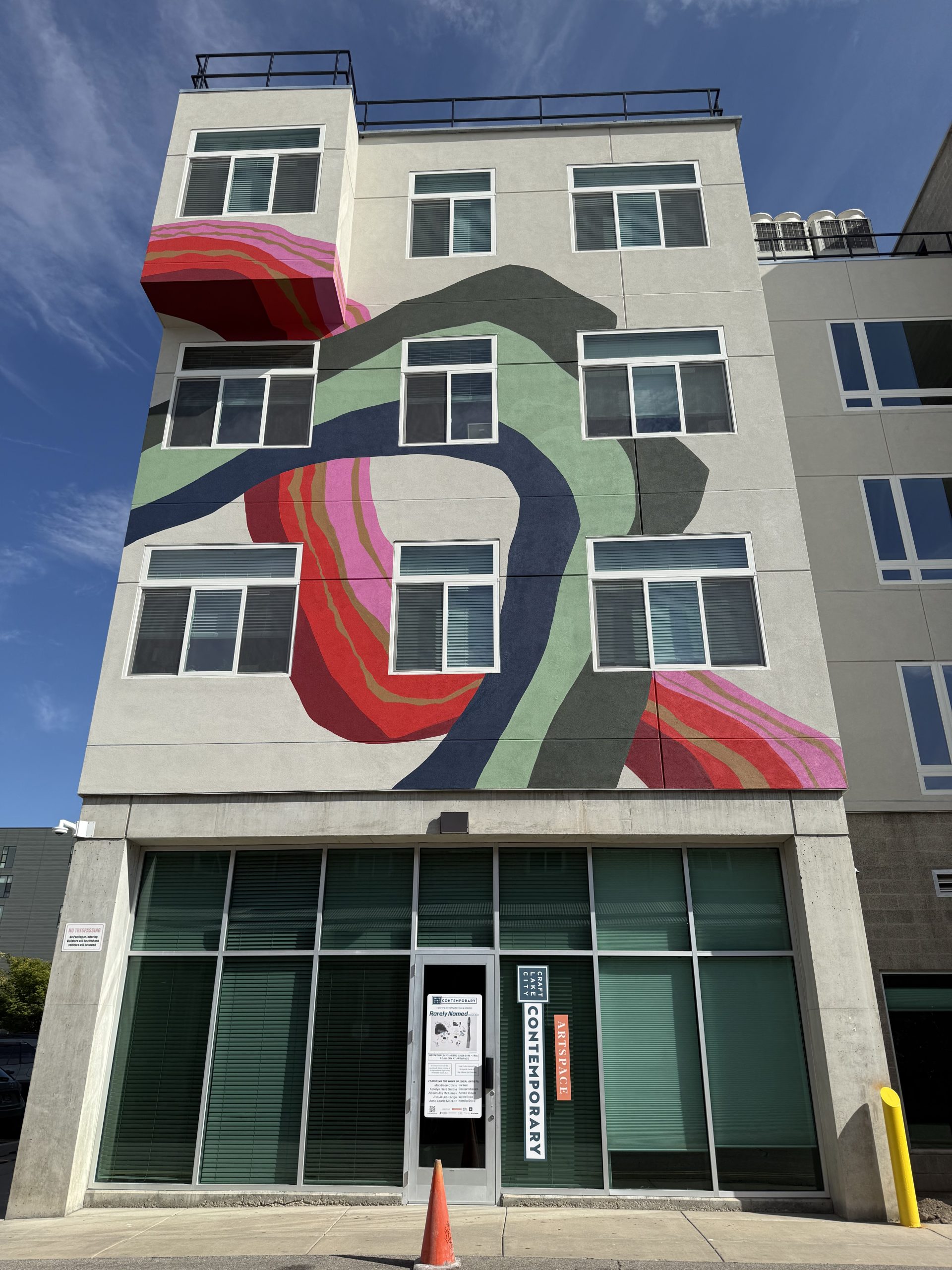
On the southwest corner, The Gallery at Artspace hosts the new Craft Lake City Contemporary exhibition series.
This current moment is both encouraging and bittersweet: a cultural ecosystem is easier to lose than to reconstruct and one active building is not an arts district. The Rio Gallery remains shuttered. Palmers is long gone. City Center no longer presents a row of galleries to the street. What was once a place to park and stroll will be, for the most part, a place to park, visit and leave. And even that might be only four times a year, rather than once a month.
But one can hope. Like in 2001, this could be the start of something. The Gateway, with the Urban Arts Gallery, is nearby. The redesign of the Delta Center and surrounding properties, and its promise of connecting the west side of downtown may stretch as far as 500 West. Norbridge Court itself has been a construction site, wrapped in orange barricades for a year so we haven’t really seen the renovated building functioning as a place yet.
Twenty-five years ago, when 15 Bytes first visited this building, the streets outside were torn up and construction cones were everywhere. We told readers to ignore them and come west anyway. Something was beginning to happen.
Maybe something is again.
The founder of Artists of Utah and editor of its online magazine, 15 Bytes, Shawn Rossiter has undergraduate degrees in English, French and Italian Literature and studied Comparative Literature in graduate school before pursuing a career in art.
Categories: Gallery Spotlights | Visual Arts