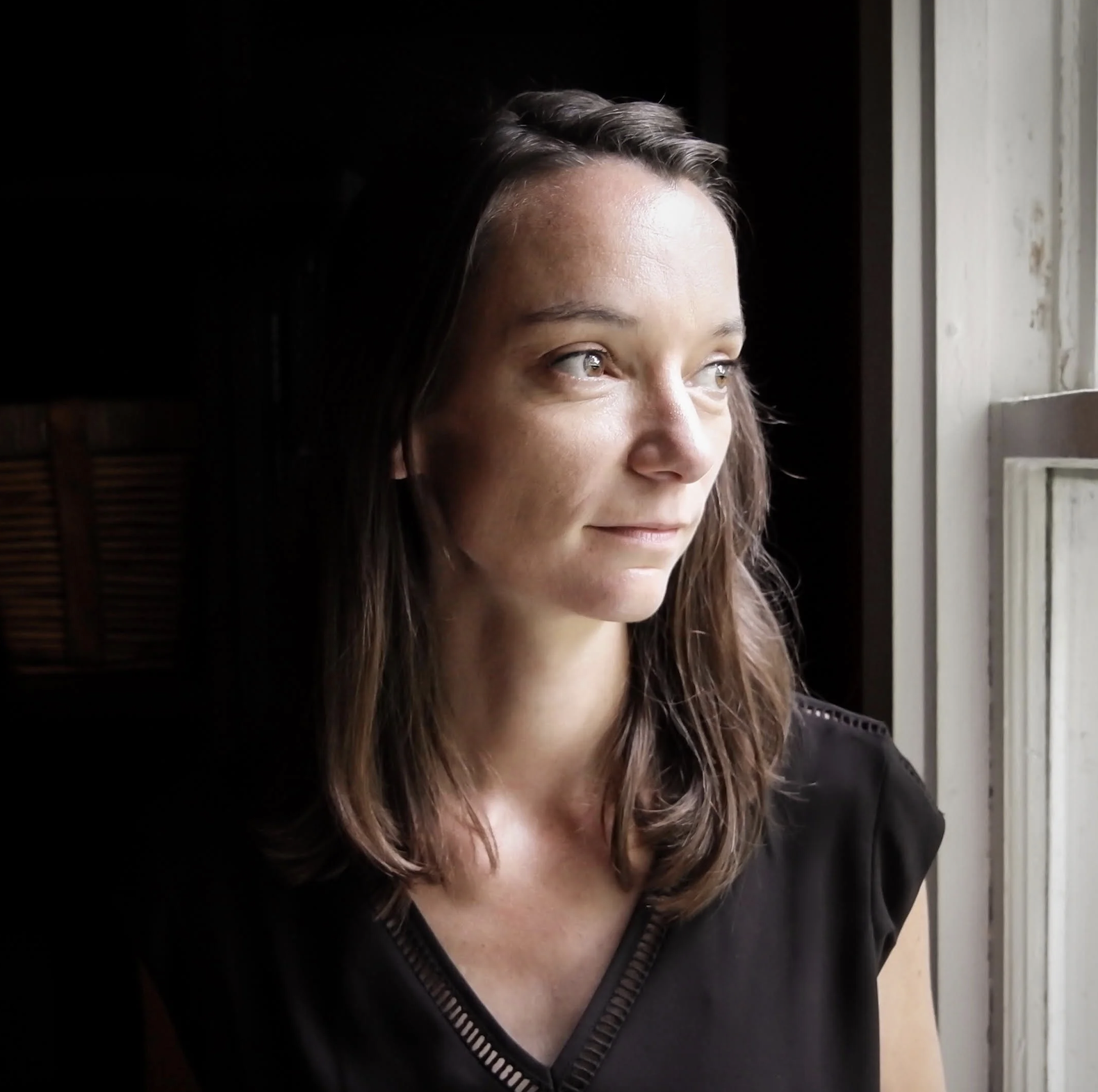
 Amber Caron, who has taught at Utah State University since 2019, is a recent recipient of a Utah Artist Fellowship which recognizes her exceptionalism in the field of literature at a pivotal point in her career. “Getting the Fellowship now—with my first book out and my second book underway—is pretty astonishing and humbling,” Caron says. “It feels like both a recognition of the work that I’ve completed and an investment in my next project.
Caron was chosen by judge, Lia Purpura, and was having lunch with her colleague and friend, Jennifer Sinor—who had convinced her to apply—when she received notification that she had won the fellowship. Lunch turned into a celebration. In her citation, Purpura’s wrote, “I was instantly drawn in by Amber Caron’s clean-as-bone language and by her fiercely observed characters, each of whom are engaged in “listening for the world beneath the surface” of seemingly normal events, and in trying to make sense of unexpected drives and changes in others. The tempo and clarity of her writing is stunning.”
 Earth Tides, Listening for the World Beneath the Surface
Here’s what our mother told us that summer: beneath our feet was a world of water. Tunnels and tubes ten feet down, thirty feet down, some even further, all bending and merging into rivers and streams.
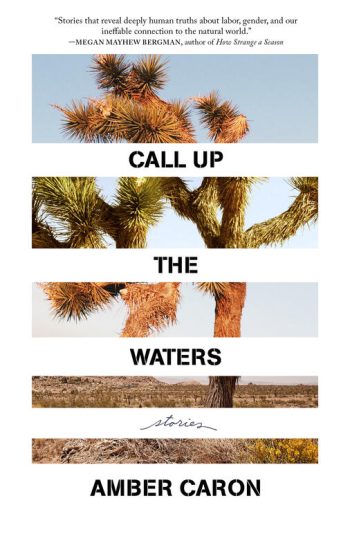
The title story in Amber Caron’s collection, Call Up the Waters, makes the declaration that there is, just below our feet, a wellspring, a source to quench our thirsts. It is a prescient story of our times here in the parched west. Perhaps even a story told in real time. The mother, in some vein of vanity or of mere passing fancy believes she can dowse water in a drought ravaged Colorado. Her son and daughter push back on her talent out of embarrassment if not actual fear that their mother will actually bring floods.
I worried she’d call up the waters and they wouldn’t stop. They’d keep rising and rising, and we’d be left with a waterlogged home, a drowned cemetery, a rusted skeleton of a car, a church with bells that chimed when the waters were rough.
The settings for many of the stories in Call Up the Waters are far flung: coast-to-coast, Alaska, Hawaii, and points in the middle. In the middle spaces we follow a crew of “Shovelbums,” the rag-tag group of misfits who are “…evaluating potential sites and updating existing ones for the National Register of Historic Places.” It seems a futile job as more often than not their days are filled with remembrances of past excursions and failing to find lost souls. They compile a continuing “Shit List”:
“Rattlesnakes,” Mike said.
“I think desert centipedes are worse,” Calvin said.
“Bark Scorpions,” said Brooke.
“The goddamn sun,” Trina said.
There is a deaf character, named Jill, in “The Handler,” the first story in the collection. Jill is the daughter of a dog-sledder named Brent bound for Alaska and the Iditarod. He hires Leslie, a woman of a certain age with certain baggage, to be the handler of the dogs:
Mars, Frost, McGee, Bandit, Minnow, Tip Empire, Stewpot, Pluto. Back of the property was the Scooby-Doo litter: Velma, Scooby, Shaggy, Daphne. Next to them, the pianists: Billy Joel, Elton John.
Jill, just thirteen, lives in silence amongst all the howling and barking and uneasy tension between her father, an uneasy past, and Leslie who is running from but also clinging to a dying relationship.
Uneasy relations are a common theme in Caron’s collection, and they often involve parent child dynamics.
In “Barn Burning,” an indulgent father allows his daughters and all their friends to engage in risky behavior with a calamitous end that disrupts fragile, budding friendships. And, a barn burns to the ground.
A mother in “Sea Women” gets a call from the US Coast Guard sharing a message of “a woman’s voice screaming for help, screaming that her boat is sinking,” presumably from a cell phone in her daughter, Elsie’s, name. The mother doesn’t think it’s Elsie’s voice, “but she knows she is always a step or two behind” her daughter’s globe-trotting movements. A mother’s niggling doubt takes her on a guilty dive of Elsie’s boxed possessions searching for secrets.
On her thirteenth birthday in “Fixed Blade” a drunken father takes his daughter ice-fishing when they should be finishing up a side job for desperately needed money. Later, she leaves her father passed out in the truck and wanders even further into a grown-up life that is coming at her far too quickly.
And in possibly the most affecting story of the collection, “What the Birds Knew,” a freshly divorced father lives with regrets for the selfish exploitation of his six-year-old daughter’s fever.
If this were the worst of it, if this were all I did that day—used my daughter’s fevered body to warm those eggs—then maybe I could, all these years later, finally forgive myself.
It does get worse. Many years later father and daughter reunite in a coffee shop for some small measure of reconciliation.
It’s then that I notice all the noise around us. The woman to my right, who is dragging her spoon along the bottom of her soup bowl. On the other side of us, a man in a black suit shouts into his computer about high international shipping rates. The music coming from the speakers above us is much too loud for this small café. Across the room, someone steams milk, slams the espresso arm against the trash can, calls for her coworker to bring more beans.
In the common chaos of a café two narratives emerge: a daughter’s fanciful memory and a father’s pained truth.
Caron has in this quiet but emotionally-charged collection cut through the noise, over and over again, with careful narration of the precarious lives of the wounded and imposers alike. Call Up the Waters does more than just offer the promise of the slake of thirst, it is a mapping of a world beneath the surface and the water and all the struggling souls. A condition Caron conjures perhaps simply as “Earth tides.”
Call Up the Waters
Amber Caron
Milkweed Editions
208 pp.
$18

Categories: Book Reviews | Literary Arts