Utah has a well-deserved reputation in the film world: sunshine and scenery make the state a prime location to film and Utah is also a great place to watch movies. We’re not just talking about ten days in January, when Park City’s restaurant tables and theatre seats are taken up by the world’s glitterati, because the number of film festivals taking root throughout the state demonstrates that Utah’s hunger for independent film can’t be satisfied solely by Sundance and its satellites.
Utah is home to more than a dozen film festivals. There’s the well-tested — like tiny Bicknell’s campy festival devoted to beautfully bad “B” films, which has been around for almost two decades — as well as many newcomers that claim screens in locations across the state: Zion Canyon provides a majestic setting for the Red Rock Film Festival, and nearby Dixie State hosts a festival in the area devoted to documentary film; Orem hosts the LDS Film Festival and Cedar City the Thunderbird Film Festival; in northern Utah, Ogden has Foursite while Logan takes its turn hosting film aficionados in the spring.
The capitol city certainly contributes to this cinematic stew. With the Broadway and Tower theatres featuring seven screens devoted year-round to foreign and art-house films, Salt Lake rivals the offerings of many of the country’s larger cities; this is further enhanced by the documentary films the Utah Film Center screens in community locales, as well as its Damn These Heels and Tumbleweeds film festivals. Add to that the Utah Arts Festival’s Fear No Film Festival, and the international and independent scene that trickles down to the valley during Sundance and you would think Salt Lakers would be content by the cinematic offerings.
-
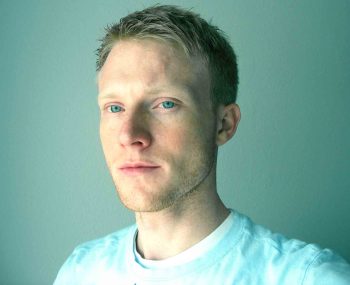
- Chris Bradshaw
-
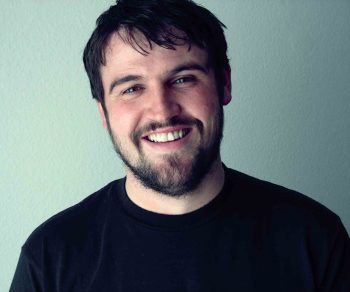
- Matt Whitaker
Chris Bradshaw and Matt Whittaker weren’t content, however, and in 2009 they began the Salt Lake City Film Festival. Whittaker had just finished a degree in film production, and Bradshaw was already establishing himself in the film world when they decided to give the city its own international film festival. While they recognized the importance of serving the broader community, Whittaker says their real purpose “was to discover great films/filmmakers and figure out new ways of getting them distributed.”
Drawing up plans for the first year Bradshaw and Whittaker expected the festival to be a one-day event, at the City Library. By March of 2009, however, the project had swelled to three days, two locations, over 100 submissions and a ten-member staff. And it has only continued to grow. Four years later it is a four-day event housed in four venues (The Tower Theater, The Broadway Theater, The Post Theater, and Brewvies Cinema Pub), and selections are culled from over four hundred entries.
“We run entirely on the goodwill of our (all-volunteer) staff,” Whittaker says. “And this is no every-other-weekend type work. This can be a 15-20 hour per week commitment. So, with no pay, I’m really grateful that our staff is willing to do what they do.”
The response from the public has been equally as important. “Sincerely, as cheesy as it sounds and as difficult as this can be, a receptive audience reminds me why I do it; it validates our efforts and makes it very clear that this is a good thing for the community and the individual filmmaker.”
While the festival is international, receiving entries from places like Taiwan and Jerusalem, it is also very local. To keep things fresh, Whittaker says, they won’t allow films that have previously premiered in the state: so if you’ve already seen it at Sundance, you won’t see it here. And they also look for films by local talent, or connected to local issues. This year they will be opening the festival with a documentary film called Duck Beach to Eternity, which deals with the exploits of young, single Mormon men and woman who travel to Duck Beach, North Carolina for spring break. “Without giving too much away, the film was directed by an ex-Mormon, a current Mormon, and a non-Mormon which gives it a refreshing non-bias feeling,” says Whittaker. “It shows the beauty and contradictions of this event without forcing an agenda on either side.”

Duck Beach to Eternity

Must Come Down
Another movie of local interest is Kenny Riches’ Must Come Down, a feature-length film shot in Salt Lake last year. Must Come Down tells the story of Holly (played by local Ashely Burch) and Ashley (Salt Lake’s David Fetzer), two twenty-somethings going through the pangs of late late adolescence. Ashley, who has just quit his job, is obsessed with his childhood home, camping out on the bus stop across the street to watch the new occupants as he plans a nostalgia-driven break-in. Holly, recently split with and fired by her restaurant-manager boyfriend, joins up with Ashley for a series of strange misadventures bathed in the glow of fleeting youth aching with the pains of growing up.
 Riches is well-known in the local arts community, for his roles in Kayo Gallery, the GARFO gallery, and for his own exhibition history. He left earlier this year for Miami. Since the movie itself is about returning home (in a stroke of luck, the current owners of Riches’ own childhood home let him use their house in the film), it is appropriate that the upcoming screening will be a sort of homecoming for Riches.
With the growing success of the Salt Lake City Film Festival, independent film seems to have found another solid home in our state.

UTAH’S ART MAGAZINE SINCE 2001, 15 Bytes is published by Artists of Utah, a 501 (c) 3 non-profit organization headquartered in Salt Lake City, Utah.
Categories: Film