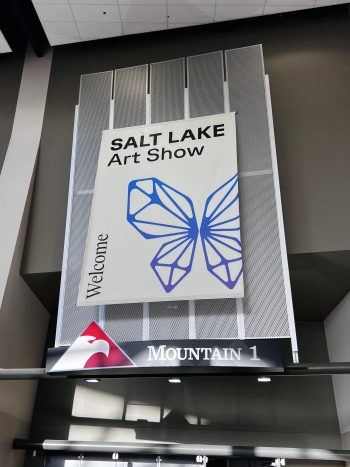
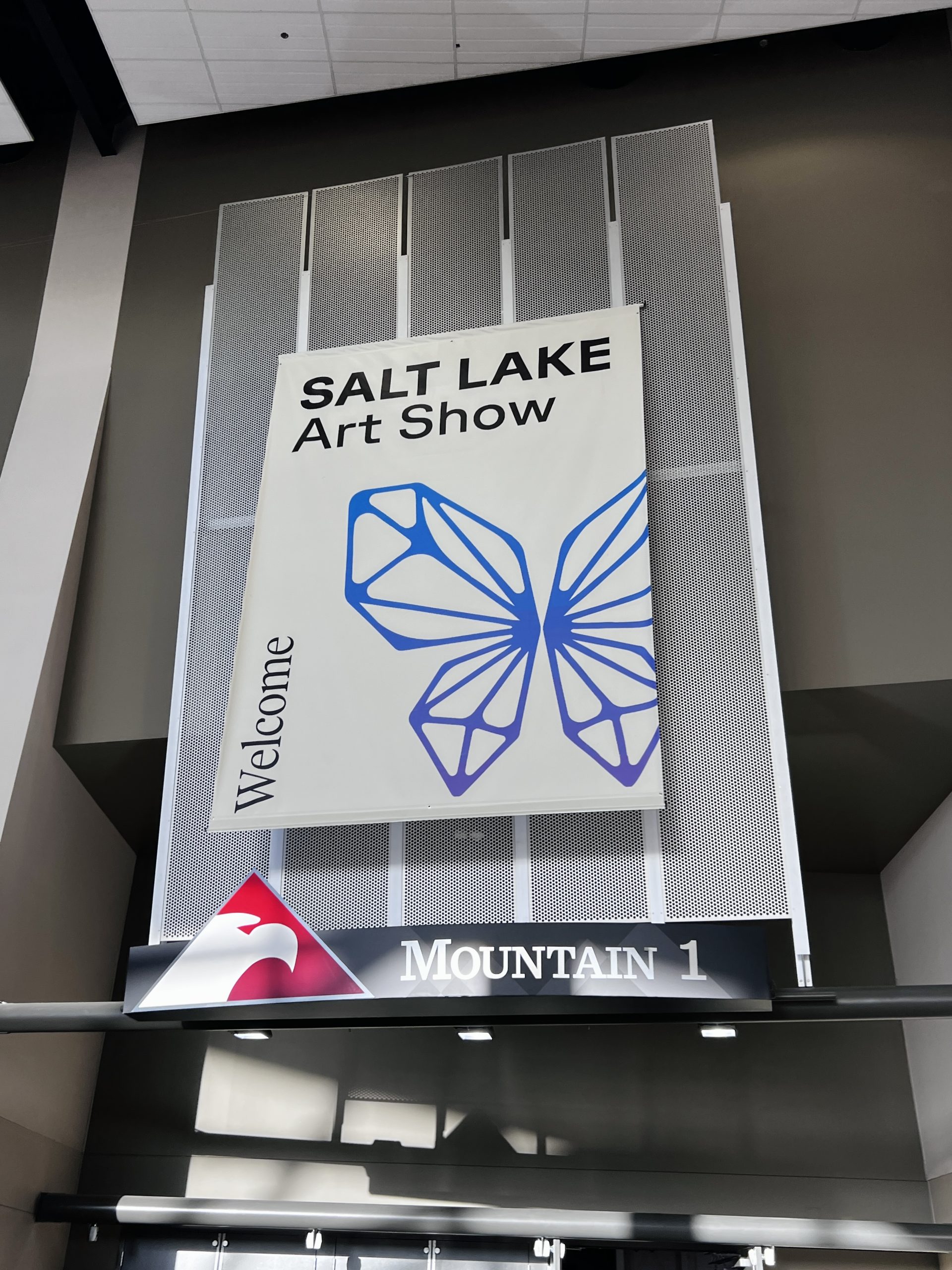
 When Briana Dolan and Kevin O’Keefe opened the doors of the Mountain America Exposition Center in Sandy on May 14th, they were testing a thesis. Salt Lake City, they had argued for the better part of a year, was ready for a serious, national-caliber fine art fair. The inaugural Salt Lake Art Show, which ran May 14–17, was the experiment.
Attendance came in around 3,800, short of their goal of 5,000. But O’Keefe pointed to a different number: in Reno, roughly one in ten visitors was the kind of person who might walk out with a piece. At SLAS, he estimated it closer to one in two. The crowd was dressed differently than the typical arts festival crowd—more suits and glittering dresses than sandals and REI fleece. Several artists described the atmosphere as closer to a museum opening. Whether that’s an asset or a limitation depends on what you came for.
“Better temperature, worse music,” said Kim Martinez, who represented the University of Utah’s booth, of the comparison to an arts festival. It’s a fair summary of the tradeoffs. Salt Lake has a robust outdoor arts festival culture, and some attendees may have arrived with those expectations. What they found was more restrained: carefully presented booths, sparse food, minimal drink. Performances were part of the programming but not the pull. One visitor who had attended the Reno fair noted the difference in atmosphere — in Nevada, people circulate with a drink in hand. This felt more Utah than Nevada.
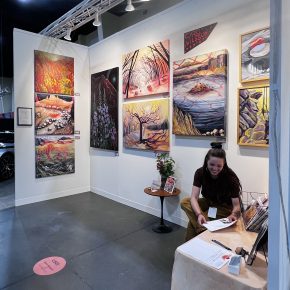
For some artists, that was a good fit. “I think this clientele is closer to the type of people my work would interest than what you find at the arts festivals,” said Laura Erekson, a local artist who participated. It was also easier: Erekson creates large-scale relief paintings, as well as sculptures, and cleaning out the embedded dust and dirt after a festival can be a chore. Molly O’Mara, a painter who has done the Reno fair as well, put it more directly: “I’d rather invest in something like this than in four or five art festivals.” O’Mara didn’t make sales at Reno on the day of the show but followed up with multiple sales to designers and collectors afterward. At SLAS, she received gallery representation from a Park City gallery based on pre-show publicity alone.
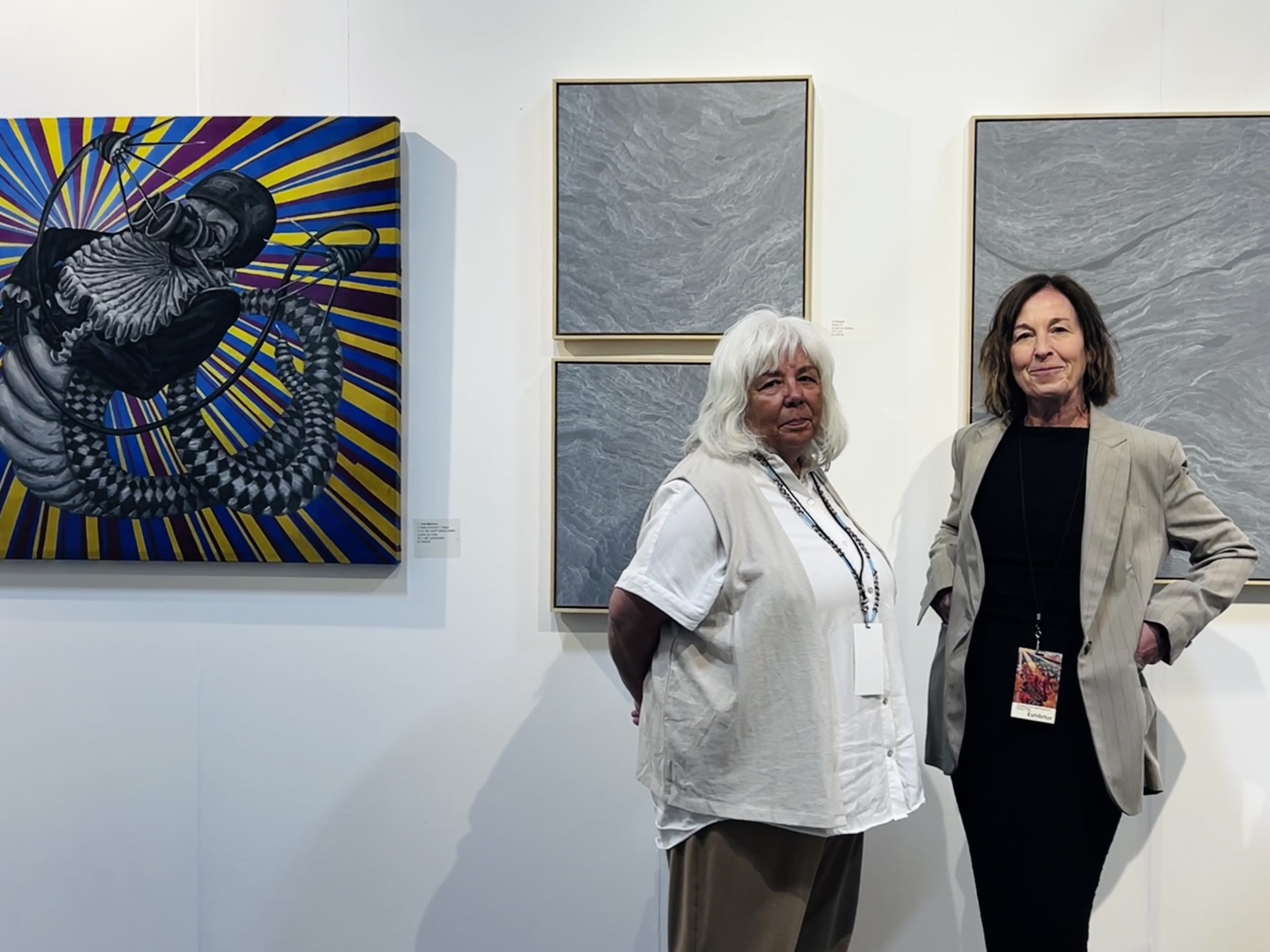
V. Kim Martinez (left) and Al Denyer at the University of Utah’s booth.
The presentation quality drew consistent comment from artists and visitors alike. Part of what that reflects is the format itself — an art fair booth is more about a curated statement than stocked inventory: there’s no back room. As local artist Nuha Moretz put it, you’re not really there for volume of sales; you’re presenting yourself and building relationships. Al Denyer, also at the University of Utah booth, did sell two pieces to an out-of-state buyer. Others came away without sales but with connections to interior designers they expect to hear from.
Behind the scenes it was harder than the floor suggested. The organizers went in short-staffed, rental equipment caused problems, and electrical issues ran through the first days of setup. “It was one fire after another from the start,” Dolan said. Student workers from the University of Utah absorbed a lot of it—Dolan described them as “incredibly generous with their time and willingness to jump into every active fire”—and exhibitors stepped in where they could. One Reno-based exhibitor, Andrew Pellisier, spent close to two days helping work through the electrical problems.
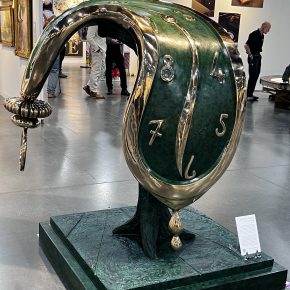
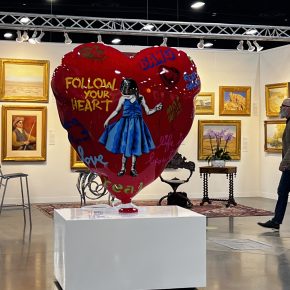
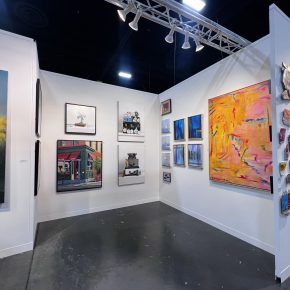
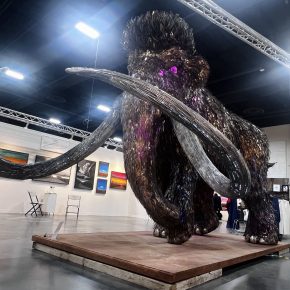
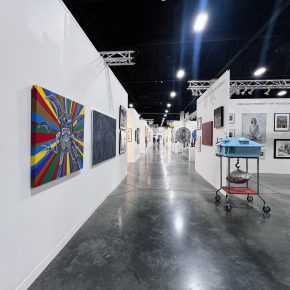
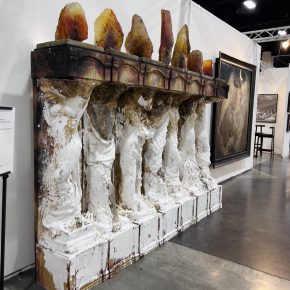
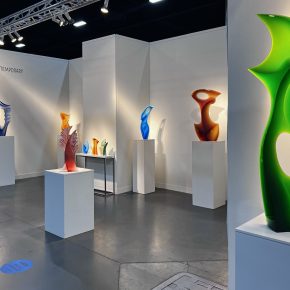
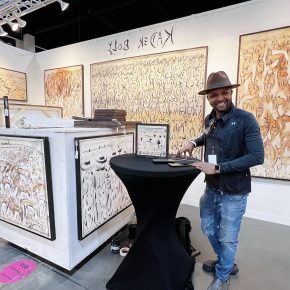
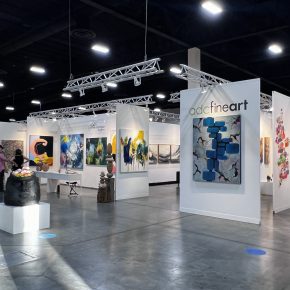
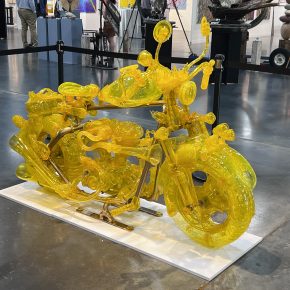
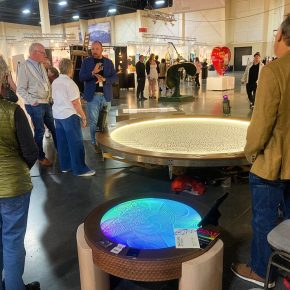
A few moments rose above the logistics. Micah Christensen of Anthony’s Fine Art & Antiques bought out an entire exhibitor’s booth on the first day. On Saturday, the line ran out the expo center doors. A Salvador Dalí work reportedly sold for $1.6 million. (The transaction was still in process, but if sales tax is collected on that it would represent a great return for the local economy).
SLAS arrived with a partner they hadn’t expected and that most arts audiences hadn’t heard of: X5, a platform positioning Salt Lake as a convergence point for creators, technologists, and capital. The connection came together quickly, Dolan said — almost by chance, though the alignment on fundamentals felt immediate. O’Keefe credited the X5 network with raising the quality of the buyer pool, describing it as a community of people with billionaire friends, there to look seriously at work.
X5 operates in the orbit of AI, robotics, and data infrastructure. What that eventually means for the show’s character is unclear (but we don’t imagine they’ll be holding the next one in Box Elder County). Whether the local arts community finds itself at the center of that vision or at its edges is a question the next few years will answer.
For now, what the first Salt Lake Art Show established is there is an audience here for this kind of event: people showed up, and enough of the people who participated would do it again. As Dolan framed it, the inaugural year was a question. The answer, she said, was a resounding yes—even if the follow-up questions are just getting started.
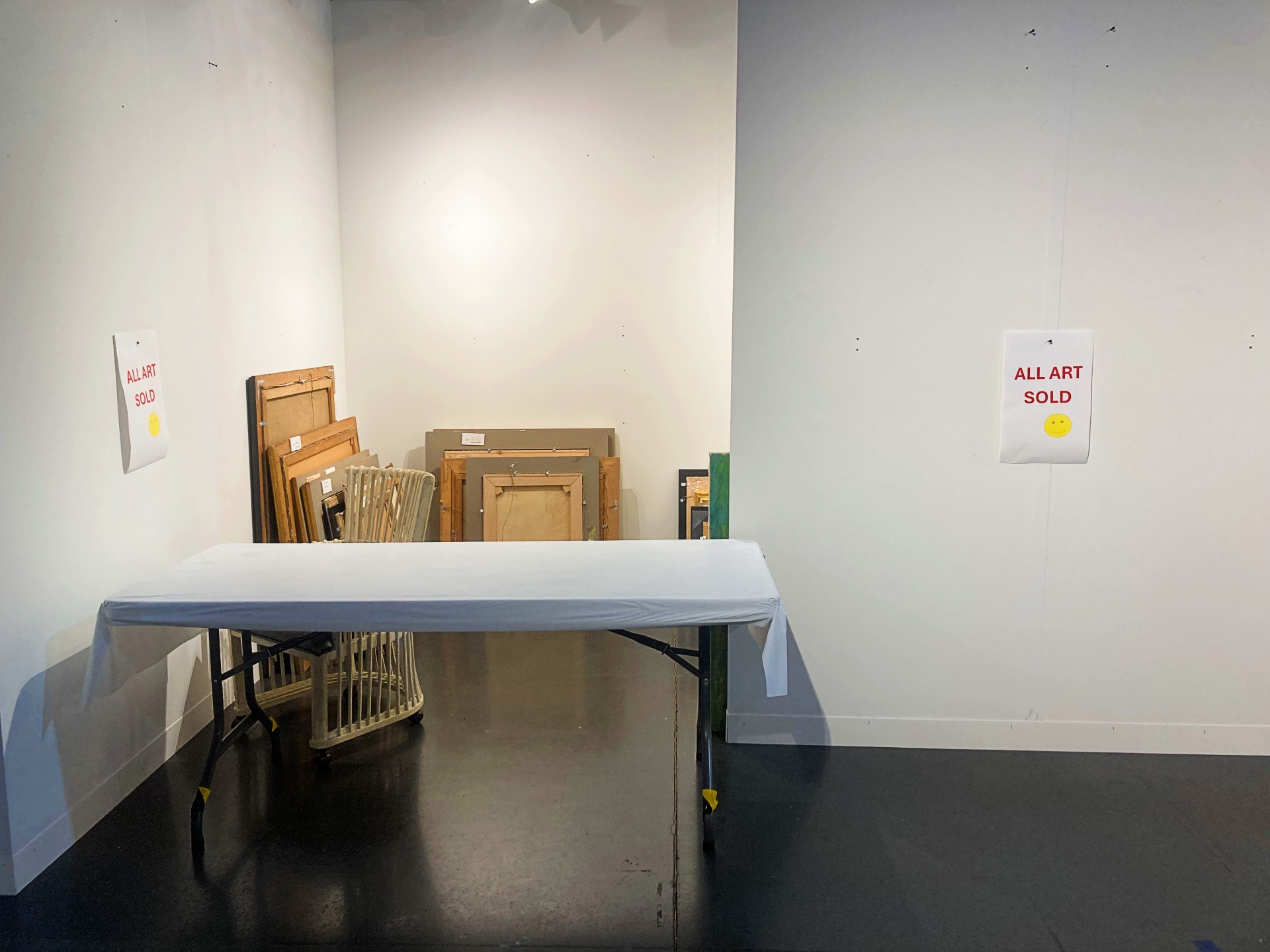
All the work at the booth of John Dillon Fillmore (Santa Fe) was purchased by Anthony’s Antiques on opening night.
The Salt Lake Art Show will return in Fall 2027 as part of the X5 Global Convergence Platform. Information at saltlakeartshow.com.
Images by Ben Childress.
DID YOU ENJOY THIS ARTICLE?
Help make more like it possible.
VENMO us a donation at artistsofutah

Or use PayPal to MAKE A DONATION.
15 Bytes is published by Artists of Utah, a 501 (c) 3 tax-exempt nonprofit.

The founder of Artists of Utah and editor of its online magazine, 15 Bytes, Shawn Rossiter has undergraduate degrees in English, French and Italian Literature and studied Comparative Literature in graduate school before pursuing a career in art.
Categories: Exhibition Reviews | Visual Arts