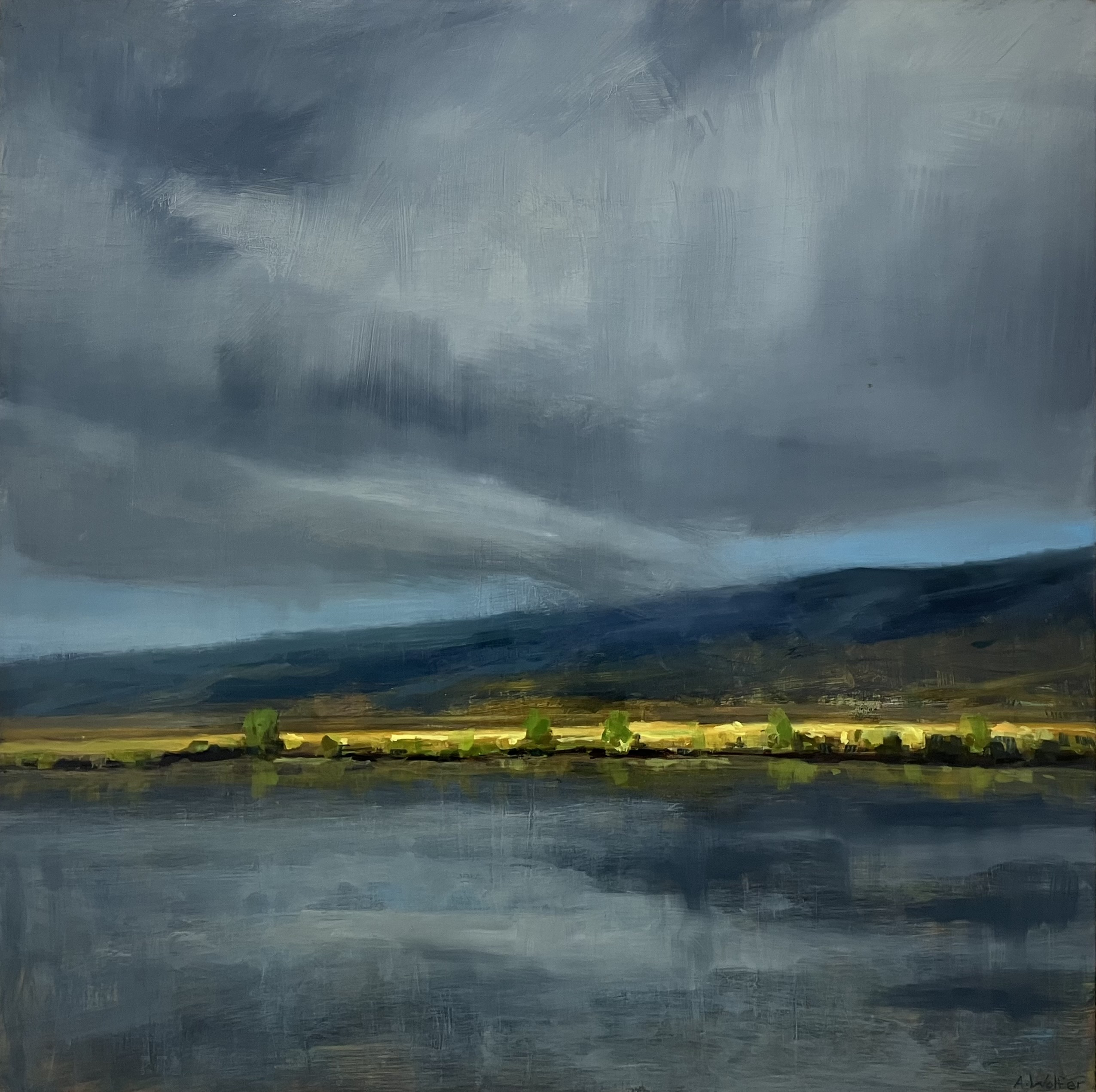
Anne Wolfer, “Thread of Light,” 30×30 in.
“My paintings stem from an innate desire to express something words cannot,” says Anne Wolfer in her artist statement. The challenge to those who write about visual art may never have been more succinctly stated. Then again, the unmistakable differences between the way she represents the visible world and how every other artist does so, offer an opportunity to wrap a few sentences around what she sets out to make visible to the mind’s eye, and how we might share it with the mind’s ear.
Consider this: a familiar photograph by Ansel Adams depicts a boulder field that extends across the entire visual field, from nearly touching the camera at its bottom to the remote distance at the top. What makes this picture stand out is that every one of those round stones is perfectly in focus. It’s not something that can be done with a cell phone or even a top-of-the-line SLR. It requires a view camera. But the important thing is that it achieves a frequent goal of photography—to find a way to represent the hard-edged intransigence of the natural world, its unyielding determination to be what it is, as it is.
But the world Anne Wolfer presents could scarcely be more different. She sees a world forever in flux. Even her fields and mountains are in motion, alive in time. Specificity is essential to how she achieves this—this crop, or in any event, this season’s growth. Today’s sky. A pasture saturated with rainfall that reflects the sky through newly green growth, but which as spring turns to summer will dry some and and turn a brilliant yellow.
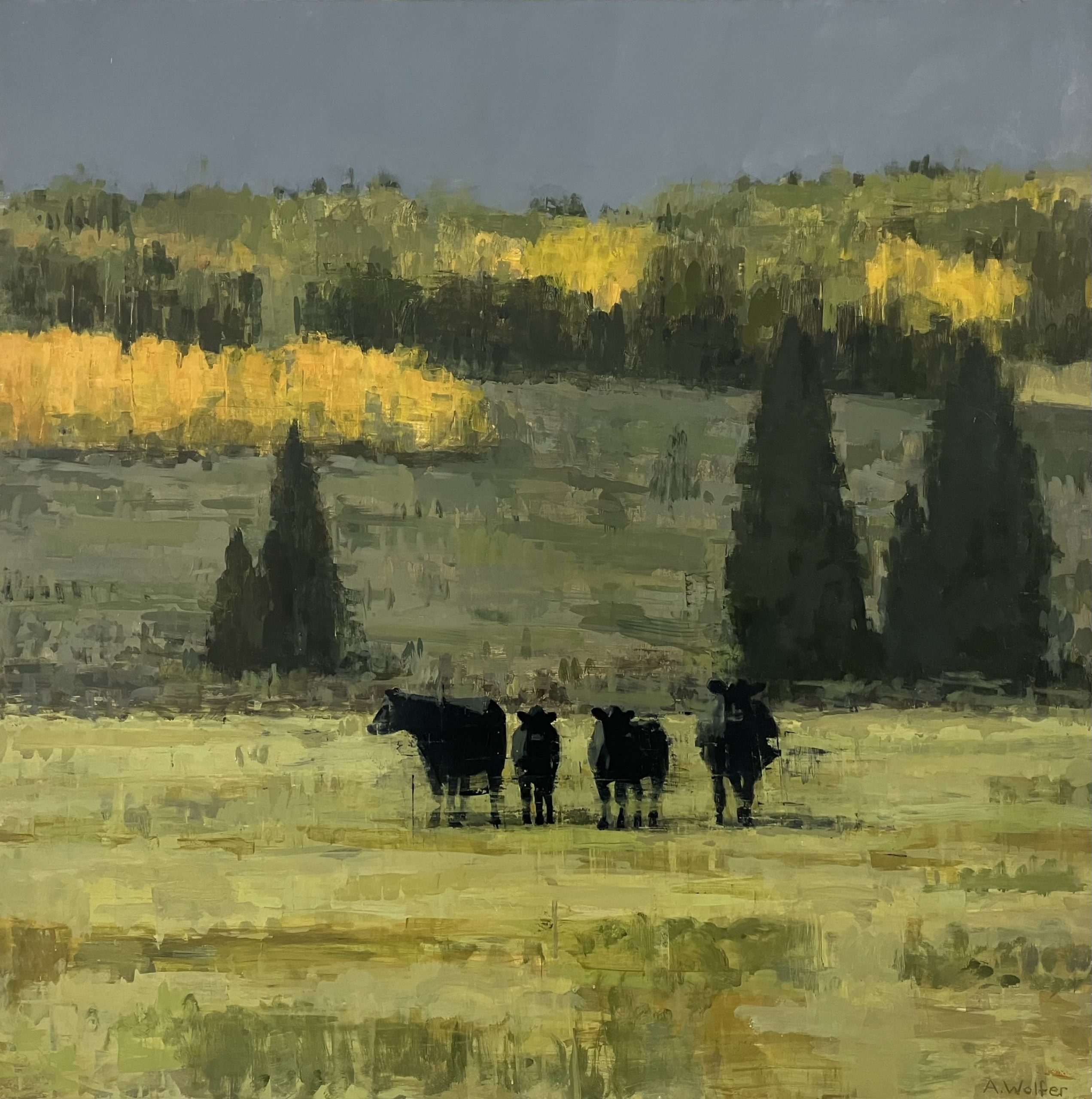
Anne Wolfer, “Gathering,” 30×30 in.
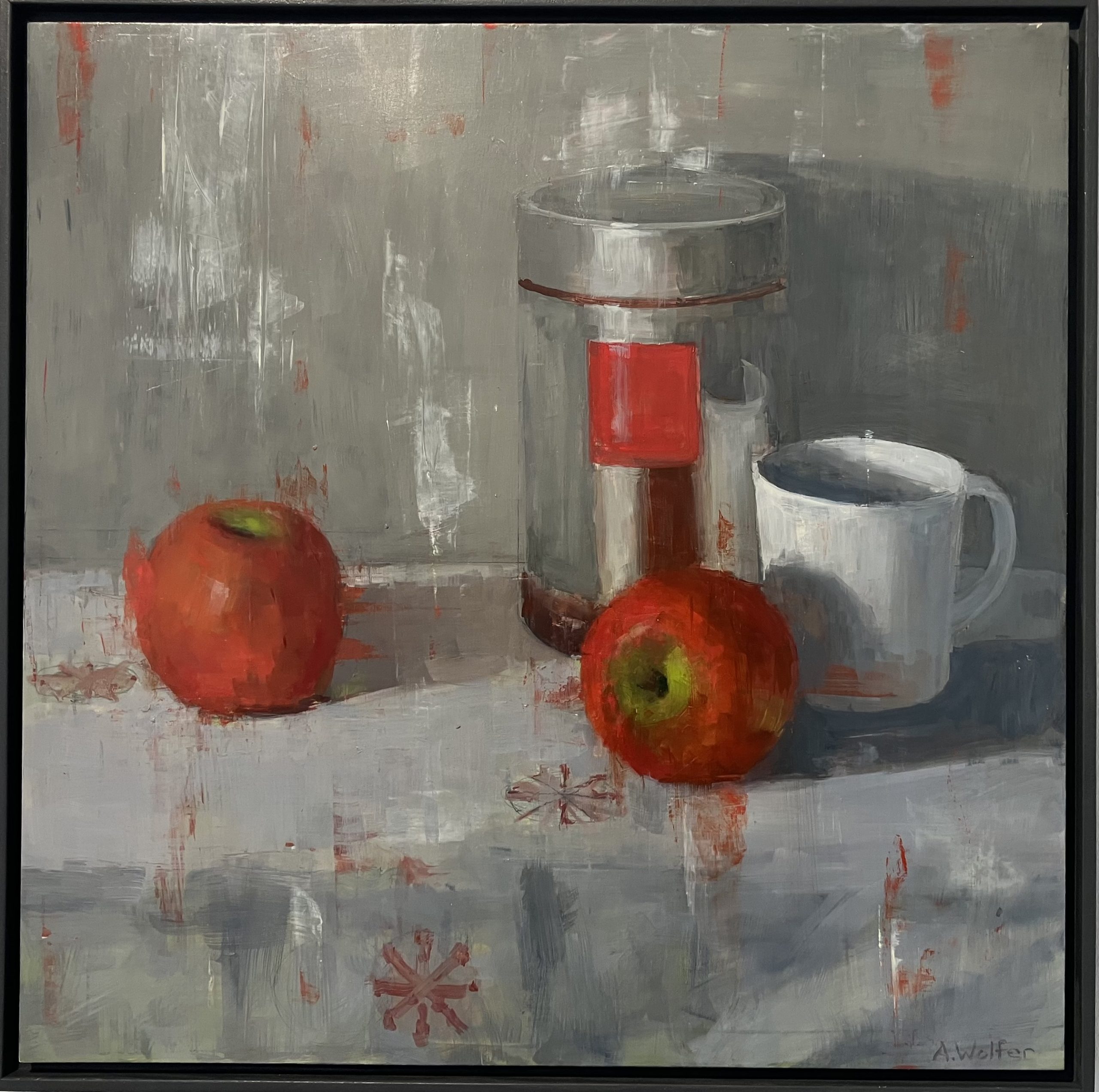
Anne Wolfer, “More Than Apples,” 18×18 in.
There’s a line in the musical Oklahoma! that says “All the cattle are standing like statues,” and that’s often how they’re painted. Wolfer’s cattle don’t just stand; they gather, because they’re alive and that’s what living creatures generally do. Similarly, her vivid darkness isn’t just out there; it’s upon us. This incessant trembling of nature, punctuated as it is from time to time by cataclysms, invites the painter to present another traditional way of observing its presence: the still life. In “Moca w/ still life,” there are an espresso pot, a coffee cup, a lemon in a bowl, and a pear. Seeming as immobile as eternity, yet (and to the frustration of someone who likes their coffee hot) each of these things would be perfect as a symbol not of permanence, but of the brevity of perfection. Or for that matter, of anything.
And here’s the thing. That stunning view of the weather retreating over a freshly renewed pasture, or the ribbon of light that seems to sever the land, or the snowfall–dusted distance … Stand still for a moment and take them in, because they won’t last long, and despite the repetitious ways of nature, they will never come again just as they are now. That Anne Wolfer sees this reality in them might be deduced from her titles: “Shoulder Season,” “Open Pasture,” “Thread of Light,” “Moving On,” “Gathering,” “Drive By.” But of course much more will be found in her ever-active brush, with which she “deconstructs” her subjects even as she presents them to her viewers for their pleasure. While she delights in small and subtle details, like the reflection of the sky off wet ground, she may shred a mountain with clouds or conceal as much with light as she reveals. And, of course, when the moments in life she captures are gone, they will still remain for us to see, in her art.
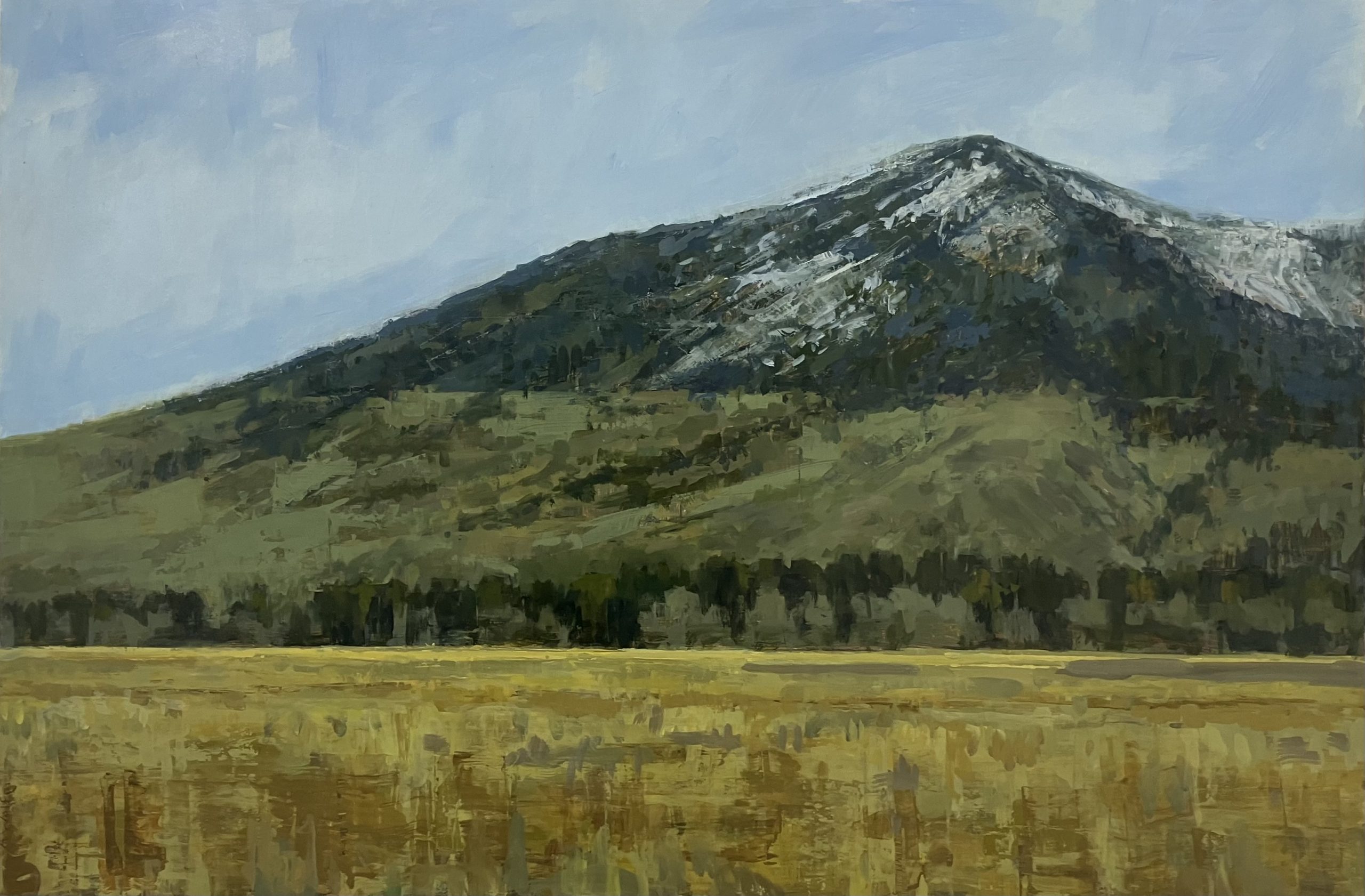
Anne Wolfer, “Shoulder Season”
Trent Call and Anne Wolfer, 15th Street Gallery, Salt Lake City, through Apr. 30.
DID YOU ENJOY THIS ARTICLE?
Help make more like it possible.
VENMO us a donation at artistsofutah

Or use PayPal to MAKE A DONATION.
15 Bytes is published by Artists of Utah, a 501 (c) 3 tax-exempt nonprofit.

Geoff Wichert objects to the term critic. He would rather be thought of as a advocate on behalf of those he writes about.
Categories: Exhibition Reviews | Visual Arts