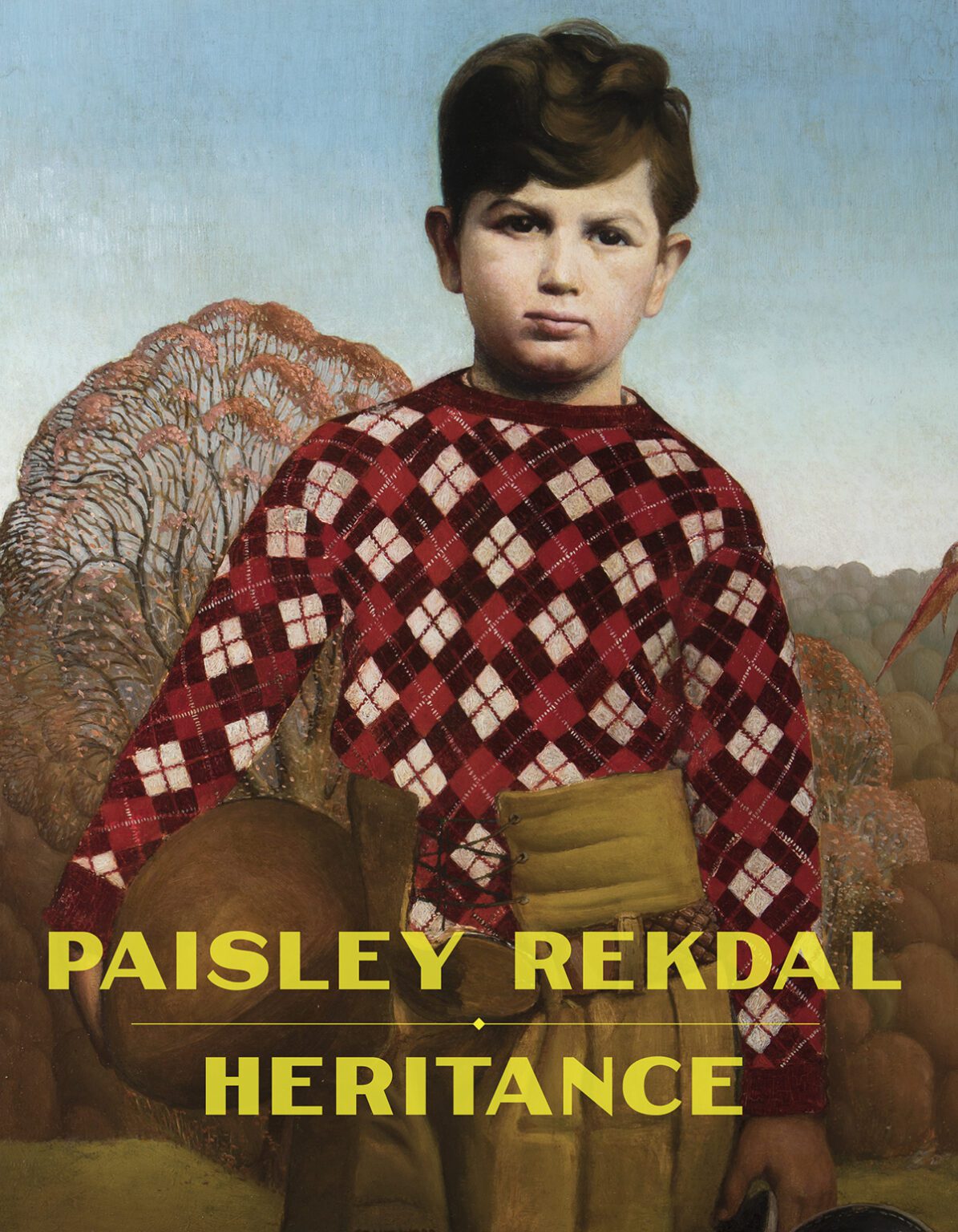
 The poems in Paisley Rekdal’s most recent collection are united around the theme of heritance— a word reminiscent of “inheritance” or “heritage” that Rekdal uses to include memories, emotions, stories, mysteries, and physical objects that are left behind after someone leaves or dies. The book is dedicated to Rekdal’s father, who is eulogized by the opening words from Emily Wilson’s translation of The Odyssey: “Tell me about a complicated man.” In the title poem, her dying father, suffering from memory loss, imagines himself rich enough to leave his only child a fortune, though in reality he has little money. Instead he leaves a string of ghosts. The poet writes, “He has become so beautiful, who has been so many different fathers, I have had a village of them, a platoon, a nation.”
There is a lot of death in these poems, but death energy is balanced by life energy so that sadness and horror don’t dominate. For instance, one kind of heritance is art displayed in museums, which can have powerful associations with memories of time and place. The cover illustration is a painting, Grant Wood’s “Plaid Sweater” (1931), which pops up in the poem “Dulce et Decorum.” In Rekdal’s telling, her father, as a child, read Wilfred Owen’s horrific anti-war poem of the same name and misunderstood it to be simply patriotic. Amusingly annoyed, she huffs, “I don’t understand what the point of literature is/ if people are such terrible readers of it.”
A standout is “Whistlejacket,” an ekphrastic poem about a painting of a horse by George Stubbs (ca .1762) that hangs in the National Gallery in London. In this narrative, an art professor who is pompously skeptical of beauty somewhat maliciously sends his student to view a painting he hates. Since museum workers are on strike, the student can only glimpse it through a crack in the door, so that, “Everything/ invisible in the painting/ becomes present/ to the mind.” Again, the writing describes what arises from absence, which is not blankness, because something is always left behind.
Rekdal’s ethnic heritage is mixed Chinese and white, and several of the poems tackle race head on. In “Memento,” heritance is represented by a racist Aunt Jemima doll that Rekdal receives from the wife of a Jamaican friend who has died from cancer. She speculates on why he owned such an uncomfortable object. Who is supposed to be the butt of the joke? The doll reminds her of a time when her own (white) relatives gave her a Japanese doll, a confusing mistake, as if, they, of all people, thought all Asians look alike. The Aunt Jemima doll ends up shoved into a closet, because the poet cannot display such a thing and cannot trust who else would want it. But now here it is, exposed to daylight in writing.
Another poem I keep re-reading is “Lake Effect,” which originally appeared in Orion Magazine. It relates Utah’s ongoing drought and the dying Great Salt Lake to the death of James Dudley Barker, a mentally ill Salt Lake City man who was killed by the police while trying to earn money shoveling driveways during a snowless winter.
I guess I’ll have to wait for snow, is the next-
to-last-thing James, my neighbor, said,
manic before the cop shot him.
It has not snowed in weeks.
Rekdal deftly condenses the pith of the story and then writes around a refrain of James’ last words, “I’m not telling you anything.” The heritance from James is a tragic story that arose from the absence of snow, and now, a skillfully written poem mourning own absence.
Heritance
Paisley Rekdal
Copper Canyon Press
2026
126 pp.
$17

Amy Brunvand is an award-winning poet and an associate librarian at the Marriott Library at the University of Utah.
Categories: Book Reviews | Literary Arts