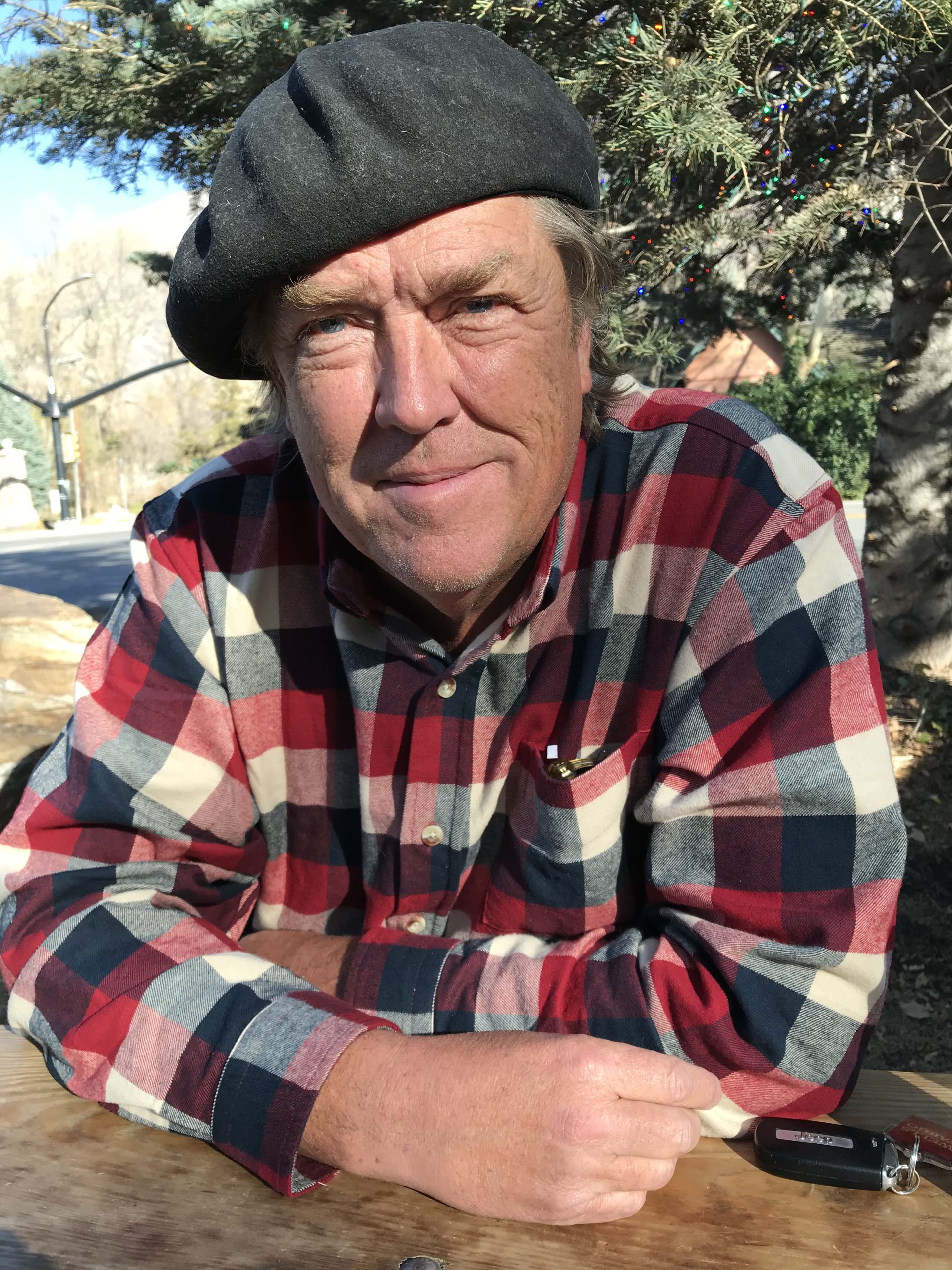
He was a painter of vivid, luminescent wildlife paintings and energetic plein air works, but James Kirkland will probably be best remembered for three major mural projects he executed in Salt Lake City. The Utah artist died July 20, 2026, at the age of 66. His niece, Amy Talbot, said he had health problems in recent years, including a stroke.
Born and raised in Bountiful, Kirkland made his way to New York where he began his professional life as an illustrator in New York City, training under illustrator Kim Whitesides, a fellow Utahn. He began in airbrush before later moving into Photoshop. He created the American flag livery for Union Pacific locomotives and produced work for Mercedes-Benz, Porsche, Audi, Delta, United, GM, AT&T, and ExxonMobil, along with a MAD Magazine cover and regular editorial illustration for GQ, New York, and Esquire. He was included in the Smithsonian’s “Walk Across America” (1998) and a Mad Magazine retrospective (1998).
Utah artist Carel Brest van Kempen met Kirkland in the 1980s, before he left for New York. “I liked him right away because of his unique view of the world and his sense of humor (also unique),” van Kempen said. “In those days, his artwork was quite good, but by the time he’d returned from his twelve-year stint in the crucible of the Manhattan advertising scene, it had advanced to something quite sublime.”
Kirkland returned to Utah in the late ’90s to help take care of his mother, and stayed. He didn’t mind New York City, Talbot said, but missed his family and the West. “He had a special bond with the natural world and wanted to be more in it,” she said.
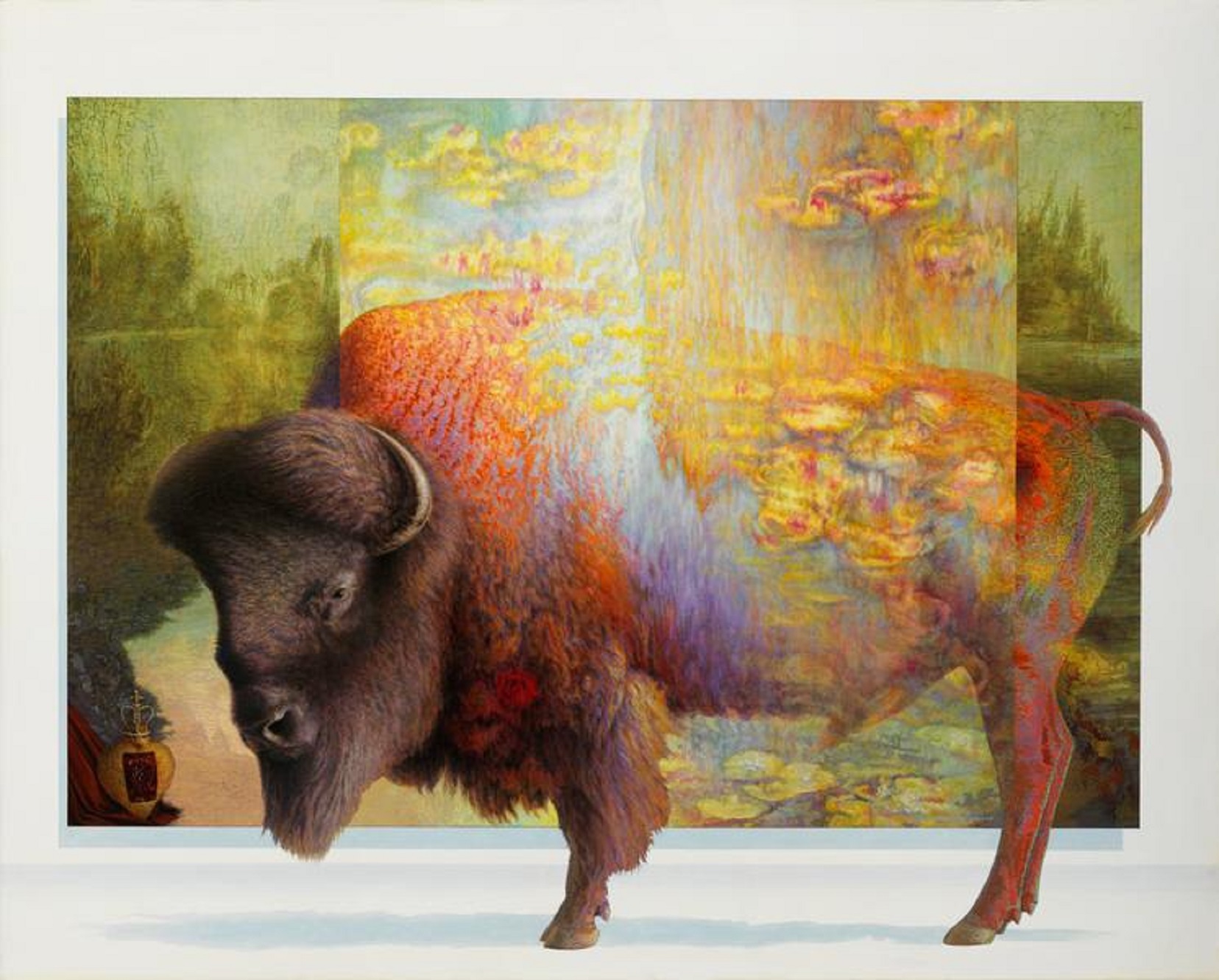
“Tanka Golden Heart” by James Kirkland.
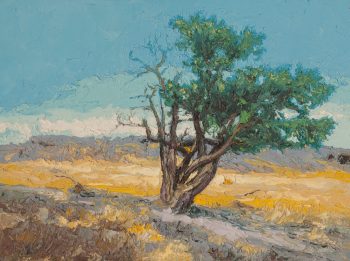
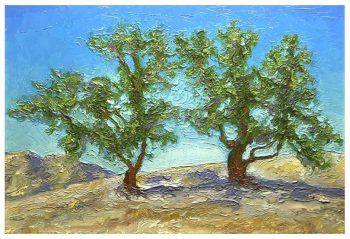

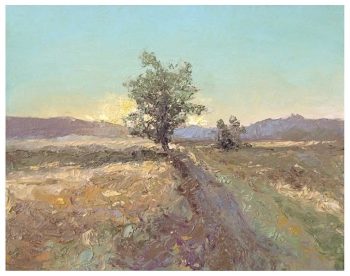
(Plein air pieces by James Kirkland, courtesy Amy Talbot)
In Utah, he continued to take on illustration work, but increasingly focused on his fine art. He had an exacting studio practice that included grinding and mixing his own pigments in the manner of the old masters. In his more elaborate paintings he would use these to build up dozens of layers of thin, transparent oil. His fine art ranged from historical realism to Western subject matter, especially wildlife paintings (inspired by summers spent at a family cabin in Jackson, Wyoming). He was also a serious student of the brushwork of past masters, becoming something of an amateur scholar in the field and doing occasional authentication work; that knowledge shaped pieces like “Tanka Golden Heart,” which sets a bison against a backdrop built from details of paintings by Leonardo, Dalí, and Monet, with the brushwork on each section of the animal mimicking the corresponding artist. In 2019, he spent two years painting a series of nine Victorian-style portraits of the Meredith family, commissioned for the Magnolia Network’s home-renovation series “Home Work”—an episode that went on to win a Daytime Emmy. He exhibited with Trailside Gallery in Jackson Hole and Coda Gallery in Park City, and was most recently represented by Faust Gallery.
Kirkland was also an avid plein air painter. “He loved nothing more than spending an entire day painting landscapes on site, and was particularly enamored with sagebrush steppe country,” van Kempen said. He spent his winters in the studio he had at the Positively Fourth Street building in Salt Lake City, but spent his summers in a camper in the hills east of the city. “He liked to get away from civilization,” Talbot said. Plein air work was, in her words, “his way of detoxing and letting go from those detailed paintings.”
In 2008, long before street murals began to dot Utah’s urban landscape, Kirkland began work on the outside wall of Wasatch Touring in Salt Lake City (700 East and 100 South). The original mural stitched together seven separate landscapes and outdoor activities across one long wall. (He later repainted the mural.) Around the same time, he painted a mural on the side of Milo Sports on 3300 South, which has since been covered over.
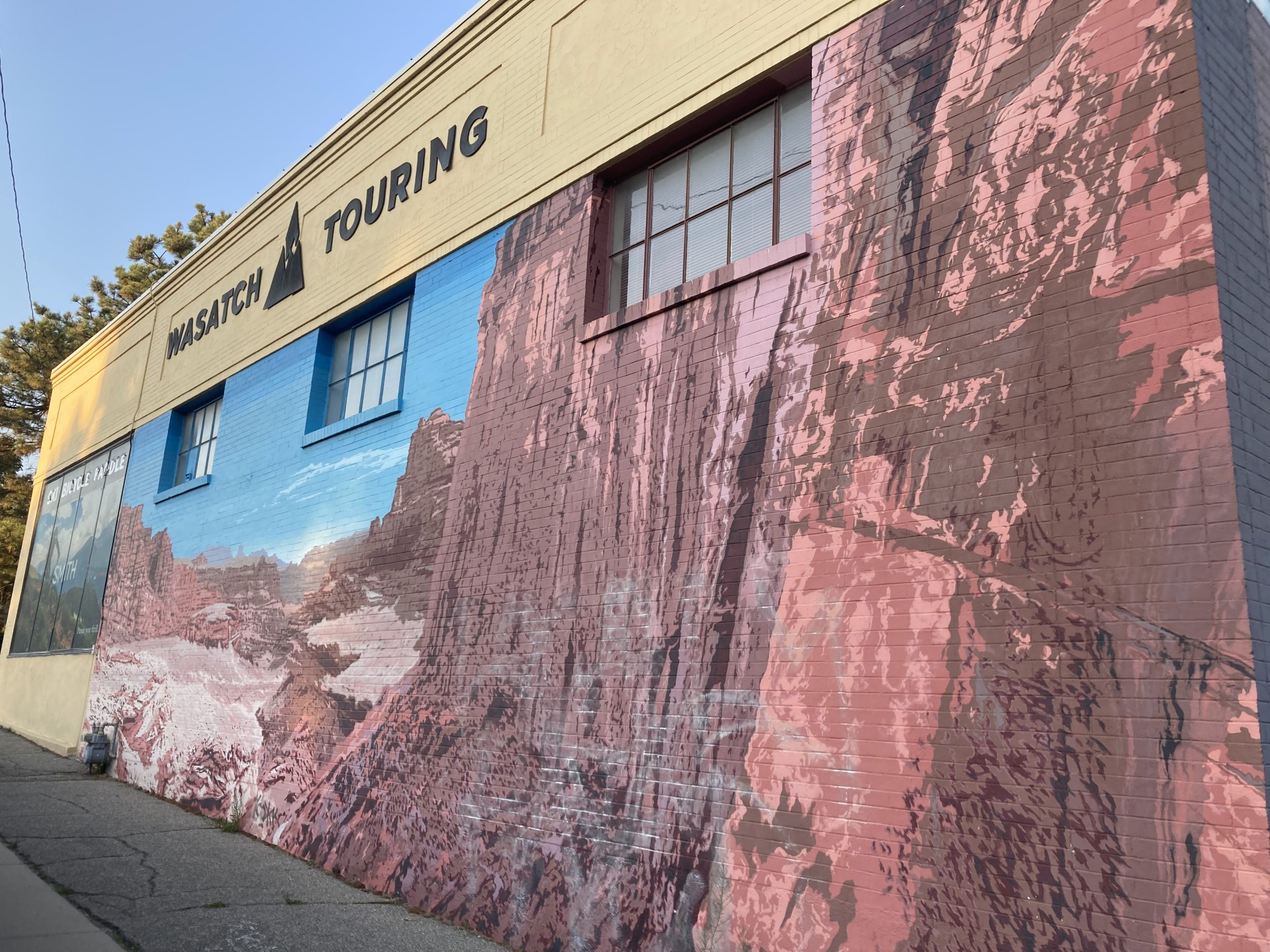
Kirkland’s current mural on Wasatch Touring, 700 East 100 South, Salt Lake City.

Positively 4th Street Mural. The Blocks SLC recently posted an interview with Kirkland about this mural.
-
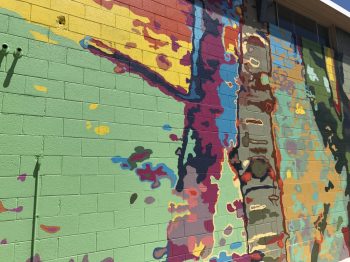
- Completed in 2018
-
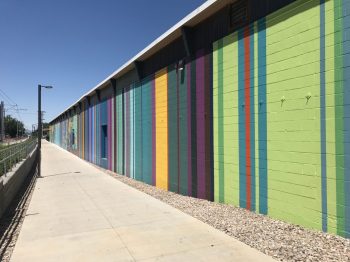
- on th side of the Kimball Building
-
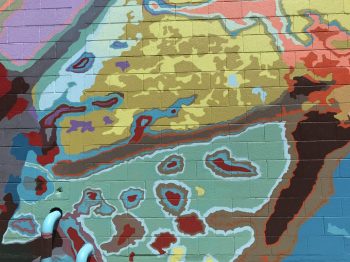
- 300 East and S-Line in SLC.
In 2015, on the back of the Positively Fourth Street music practice space near Salt Lake City’s Pioneer Park, he painted a large-scale illusion piece known as “Calling Our Ancestors”—four children and a mascot cat descending or peeking around a set of stone steps, meant to represent the people who came before, set against the backdrop of a building standing since 1904. A painted gilded frame within the mural opens onto an interior scene, a painting-within-the-painting titled “Beyond Eden.” Kirkland created the piece with co-creator Marinette Wagner.
A third major mural sits at the Kimball Building along the S-Line’s 300 East station. Painted in 2018, it’s an 18-by-330-foot wall that starts as minimal bands of color and gradually resolves into a swirling stand of aspens—an abstraction that stands apart from the illusionistic and representational work he was otherwise known for. It was a massive and intimidating undertaking. His longtime partner Trudy Day says he was afraid of the scaffolding (this was before scissor lifts became standard practice) and constantly worried about falling. He received help from Larry Dustin, Ben Higbee and Brest van Kempen. Brest van Kempen remembers he and Kirkland working the scaffolding seven days a week through the hottest two months of that summer.

Kirkland in his Positively 4th Street Studio. Image courtesy of Terry Joel LaBrue.
“Two out-of-shape, sixty-year-old men lugging heavy tubs of paint up and down scaffolding all day in 100-degree heat,” is how Brest van Kempen describes it. “As we worked, I enjoyed listening to James’ tales of unscrupulous clients and alien abductions. Towards the end of that project, with only about 15 feet of wall left to paint, we sat on the scaffolding, hot and exhausted, sweeping our brushes in a motion that had become practically involuntary, and James turned to me, saying, ‘If somebody came up to me right now and asked me to paint another mural this size, offering to pay me $100,000, I’d just start to cry.'”
Yet he continued to chase light: in the west desert he loved to paint, in the luminous layers of his studio work, and across the walls of the city he called home. His paintings and murals continue to reflect the qualities friends remember most: an exacting eye, a wry sense of humor, and an enduring love of the landscapes and wildlife of the American West.
Kirkland is survived by his brothers Stephen, Michael, and David Kirkland; his sister Suzanne Kirkland; and eight nieces and nephews. He was preceded in death by his sister, Kimberly Kirkland. No plans for a memorial have been announced.
*an earlier version of this article, based on promotional material about Kirkland from 2023, indicated Kirkland was a Salt Lake City native and studied at Cal Poly and the University of Utah, and that he spent 12 years in New York City.
A gathering of family and friends to celebrate the life of James will be held at 5597 South Avalon Drive, Salt Lake City, Utah on Saturday, September 19, from 4-7 PM. In keeping with James’s unique spirit, guests are invited to wear one of the following: a beret, anything relating to space or extraterrestrials, a favorite paint-covered shirt, or something colorful.
Related posts:

The founder of Artists of Utah and editor of its online magazine, 15 Bytes, Shawn Rossiter has undergraduate degrees in English, French and Italian Literature and studied Comparative Literature in graduate school before pursuing a career in art.
Categories: Artist Profiles | In Memoriam | Visual Arts





That’s a wonderful tribute to his work. I always appreciate artists who engaged directly with their communities through murals.
It was with profound sadness that I learned of James Kirkland’s passing. Several years ago, I commissioned a portrait of my dog Banjo and me after seeing his outstanding and insightful portraiture on the Magnolia Channel television series. It is a triumph, like all of his paintings, portraits and illustrations. There was only one imitable James Kirkland who will certainly will be mourned by fiends, family, clients and other Utahns who appreciate his talents.
(Correction: I took the images of James used in the article, not Amy.)
Sorry. Friends not fiends.
We were lucky to know him personally. He had such a sense of humor. He was so very kind and looked at people through the lens of kindness and forgiveness. What a gift to the planet. We will miss him dearly. His pictures are outstanding. He was a Kirpal Singh initiate and was very spiritual as well.
James was born and raised in Bountiful (Davis County) and therefore wasn’t really a native Salt Laker. As a teen, he enrolled in special education, and didn’t finish high school, nor did he attend Cal Poly nor U of U. The stint in Manhattan lasted 4 years and 2 months (not 12 years). The mural information is accurate, although there are a couple of additional murals not mentioned. He liked to listen to late night radio hosts like Art Bell, Rush Limbaugh and Alex Jones.
Such an incredibly touching tribute to your own brother, David.
Thank you, Shawn, for highlighting and sharing what an exceptional person my uncle James was. He was so dear to me and I was grateful to have an uncle who loved and cherished me so much. Thank you for allowing people to read about his talent, his intellect, his passion, and his contribution to the beauty of Salt Lake City. I want people to know and remember that he was incredibly intelligent, funny, quirky, sensitive, and thoughtful and will be forever remembered by those who were lucky enough sit with him and hear all his grand stories. He was truly special.
Your uncle was something of a father figure to me.. I’m 30 years old and we have had the room next to James at positively 4th the past 5 years. I had been worried having not seen James this past month as I really have enjoyed any time, any conversation, or any wild story that James was willing to share. Russ (Positively 4th) told me this week that James “has moved on to a new room” and I haven’t cried that hard in a long time… James was loved by our whole band, he was a teacher and a loving mentor that was will to challenge me. I will hold that inspiration with me the rest of my life.
He recently showed us a painting he claimed was the best thing he has ever painted. He was trying to recreate the magic he captured in the first one. I think he must have paint four or five “copies” at that time already. James was so dedicated to his arts. So dedicated that he seemingly avoided all the musicians and truly anyone else in the buildings when he was inspired. It reminded me of something Mozart or any great “master of art” would do. And in my perception, James Kirkland was the definition of a master artist.
I managed to keep him up long enough one night (I played loudly until 8am one night before I realized he’d sleep there too.) and that ironically sparked our entire friendship. We laughed it off and somehow his incredible paintings creeping through the doorway spiked my interest, next thing he’s showing me all his works, telling me stories of New York and Beverly Hills, his properties he’s go paint on. He told me he’d tell his friends about me and frankly my friends were begging me to shut up about how cool James was. He was a best friend, a brother figure, a father figure, and just a great mentor and guide in my own pursuits with art and music. I am so grateful I got to experience James. I feel spoiled that I got to live next door to hims and I wish I could just tell him that one last time.
My mom stayed at the Air b&b James painted the front entry of (years before meeting James), my old partner lived across James mural on the 2100 s. Trax, and I admire often Jame’s piece “Calling our ancestors” on the back of Positively 4th. He was a brilliant creator and an even brighter soul. We all love and miss ya James, Trevor & The Sexdolls.
Trevor, I’m really touched by your kind words and regard for my uncle, James. I’m so glad to hear how he inspired you and I’m so glad you got the chance to become friends. He was truly a special and unique human and my heart misses him tremendously, every day. We are having a memorial/wake on September 19th from 4-7pm at 5597 South Avalon Drive, Murray, UT. Steven (Russ’s son) has the details as well.
We had the room next to James at positively 4th for the past 5 some years now. I really have enjoyed any time, any conversation, and any wild story that James was willing to share with us. Russ (at Positively 4th) just told me this week that James “has moved onto a new room” and I haven’t cried that hard in a long time… I was really hoping he was on one of his own adventures, and I guess ironically he is. James was loved by our whole band, he was a teacher and a mentor. With his honesty, he was willing to challenge our dedication in ways no one else would. I will hold that inspiration with me the rest of my life.
And it’s undoubtable, James was dedicated to his arts. So dedicated that he seemingly avoided all the musicians and truly anyone else in the building whenever he was truly inspired. It reminded me of something Mozart or any great “master of the arts” would do. And in my own humble perception, James Kirkland was the definition of a master artist.
I managed to keep him up long enough one night (I played guitar loudly until 8am) and that somehow sparked our entire friendship. It was an honest mistake and we had sort of just laughed it off together. I saw a few of his incredible paintings (in progress) creeping through the doorway and my interest was spiked. Next thing he’s showing me all these works of his, telling me stories of when he was around my age in New York and Beverly Hills, and then places he’d out into nature to just paint freely these days. It was truly eye opening for me.
He later told me he was telling all his friends about me and frankly my friends were begging me to shut up about how cool I thought James was. Haha. I am 30 and he was 66. But he was a best friend, a brother figure, a father figure, and just a great mentor and guide in my own pursuits with art, music, and genuinely my own mind & happiness in life. So I am extremely grateful I got to experience James Kirkland.
I feel spoiled that I got to live next door to him and I thank him for the huge impact he left on my head, heart, and the rest of the world. He was a brilliant creator, a beautiful mind, and one bright soul. We all love and miss ya James, Trevor Eichelberger & The Sexdolls.