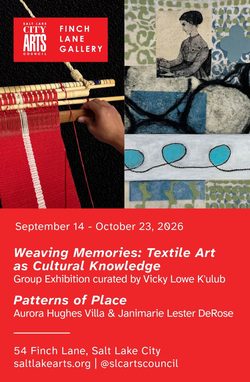
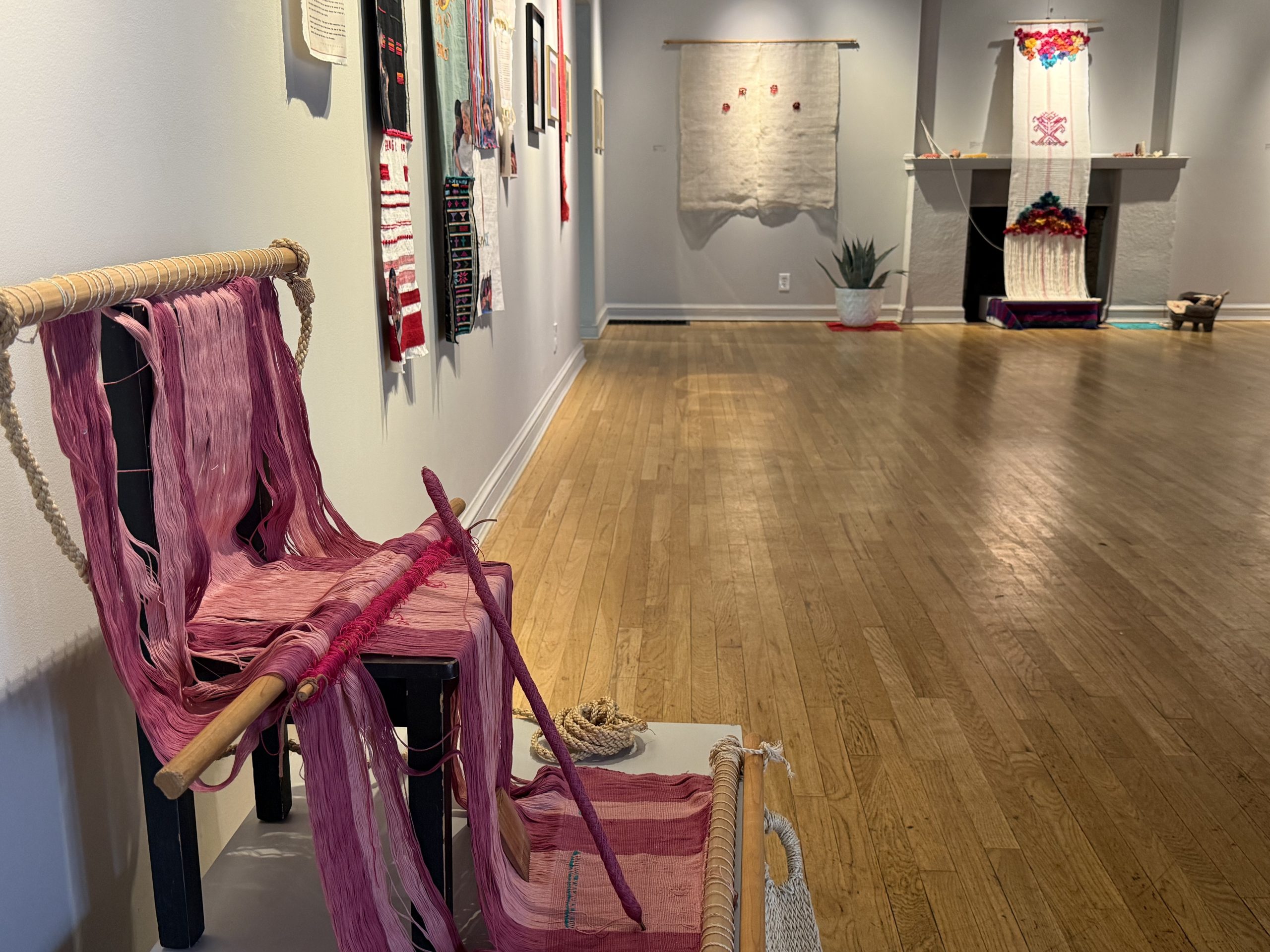
Installation view of Weaving Memories: Textile Art as Cultural Knowledge at Finch Lane Gallery.
Looms sit threaded and incomplete, the shuttles hanging in a cross overhead. Threads drape off cacti and railings and a nearby tree; shirts hang as if in your closet, runners and shawls ready for an evening with family at the dining room table. Shawls hang like ancestors on shoulders, above shrines at their feet with offerings of corn and reverent photos of elders. The majority of pieces in this textile showcase, curated by Vicky Lowe K’ulub, break the fourth wall, reaching beyond their frames. K’ulub foregrounds process alongside the finished pieces, making the work feel more personal, less for the passerby’s gaze and more about honoring the process and hands behind it.
At Finch Lane Gallery, Weaving Memories: Textile Art as Cultural Knowledge brings together fiber practices rooted in places from Central and South America to Crete, connecting disparate histories, peoples and traditions across borders. Backstrap and wool weaving, fine needlepoint lace, beading, embroidery and natural dyes become vessels connecting these artists to their homes, their cultural identities and peoples beyond their own time and place. The energy is rich with reverence, honoring artisans who uphold tradition and heritage through the knowledge they weave for rising generations. The artists in the show are not exclusively women, but the feminine energy is palpable among the stewards of fiber traditions across cultures.
Allison Martínez Arocho’s “Abuela Square” is, as the name suggests, a granny square made with tube yarn that twists and knots itself into a crocheted square fit for a baby giant’s quilt. Its title summons an elder woman, an abuela whose presence seems to inhabit the piece even without an accompanying artist statement. It’s reminiscent of my own mother’s crocheted blankets for the babies in the family—square by square, color by color, sewn together in a mosaic of uniform comfort, ready to keep a little one warm.
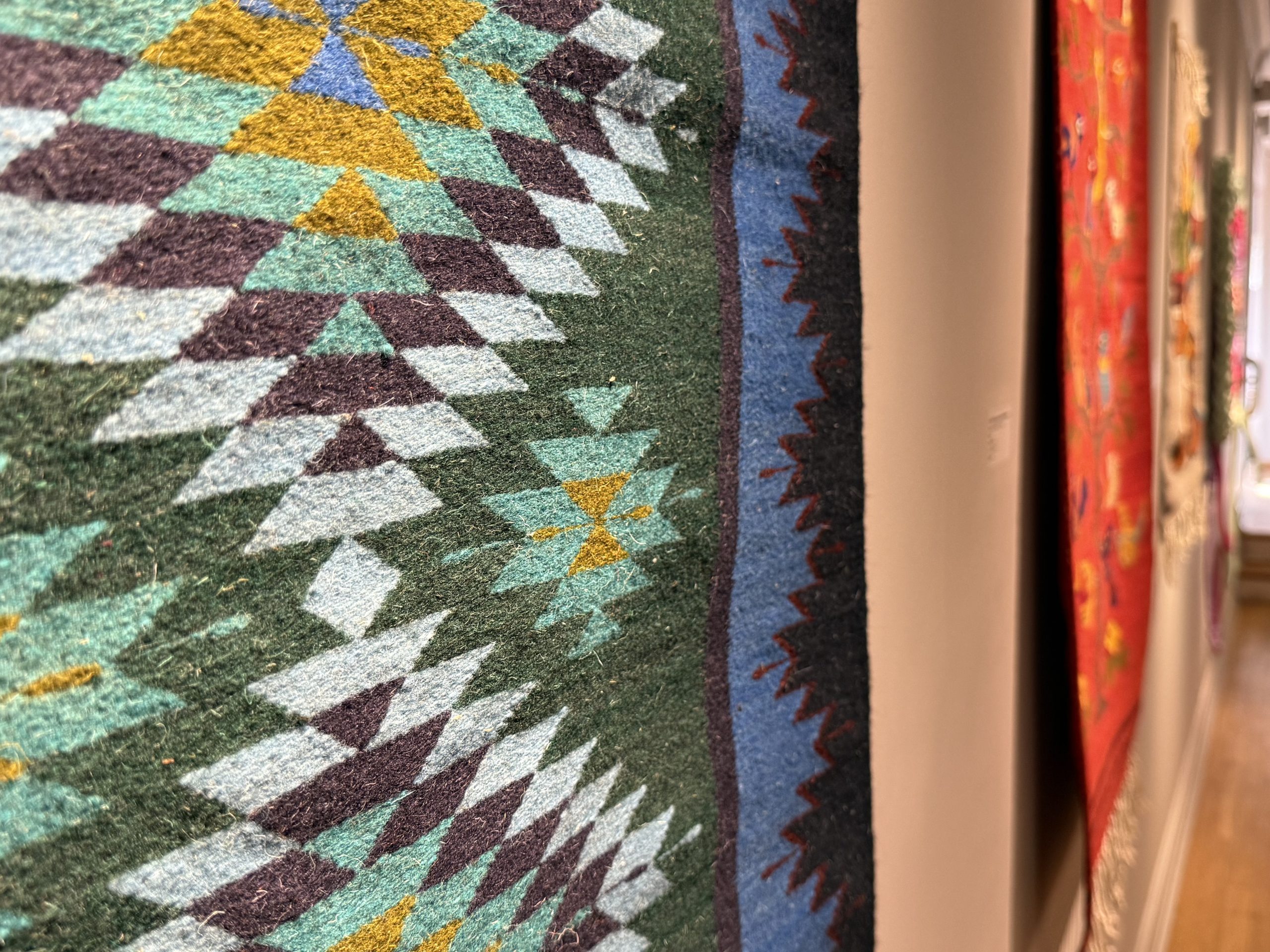
Rugs by Calixta Chávez and Gerónimo Bazán.
Calixta Chávez and Gerónimo Bazán’s rugs draw on Zapotec designs from Teotitlán del Valle, Oaxaca. The pair continues their family legacy by teaching the traditional wool-weaving practices of their home to the next generation—a reminder that fiber practices are living traditions that take tending to keep alive.
Elpitha Tsoutsounakis learned filet crochet from her elder aunt in Crete, a fine, intricate style of crochet resembling delicate doily work. You can almost feel the Mediterranean breeze billowing the apron as her aunt prepares the day’s lunch in the kitchen. Flower designs in smaller, tighter crochet stitches reveal a subtle pattern on the apron front, with a ribbon to tie around the waist. Ceramic sherds are pinned in an arrangement that may seem ambiguous to an outsider, yet to her family, it’s a map. For her young boys, the sherds are monuments in town that they can use as a reminder of how to get home. Go past this church, take a right at this house, but if you go past this tree, you’re too far. The whole piece honors family, lineage and home, from the stitches to the composition.
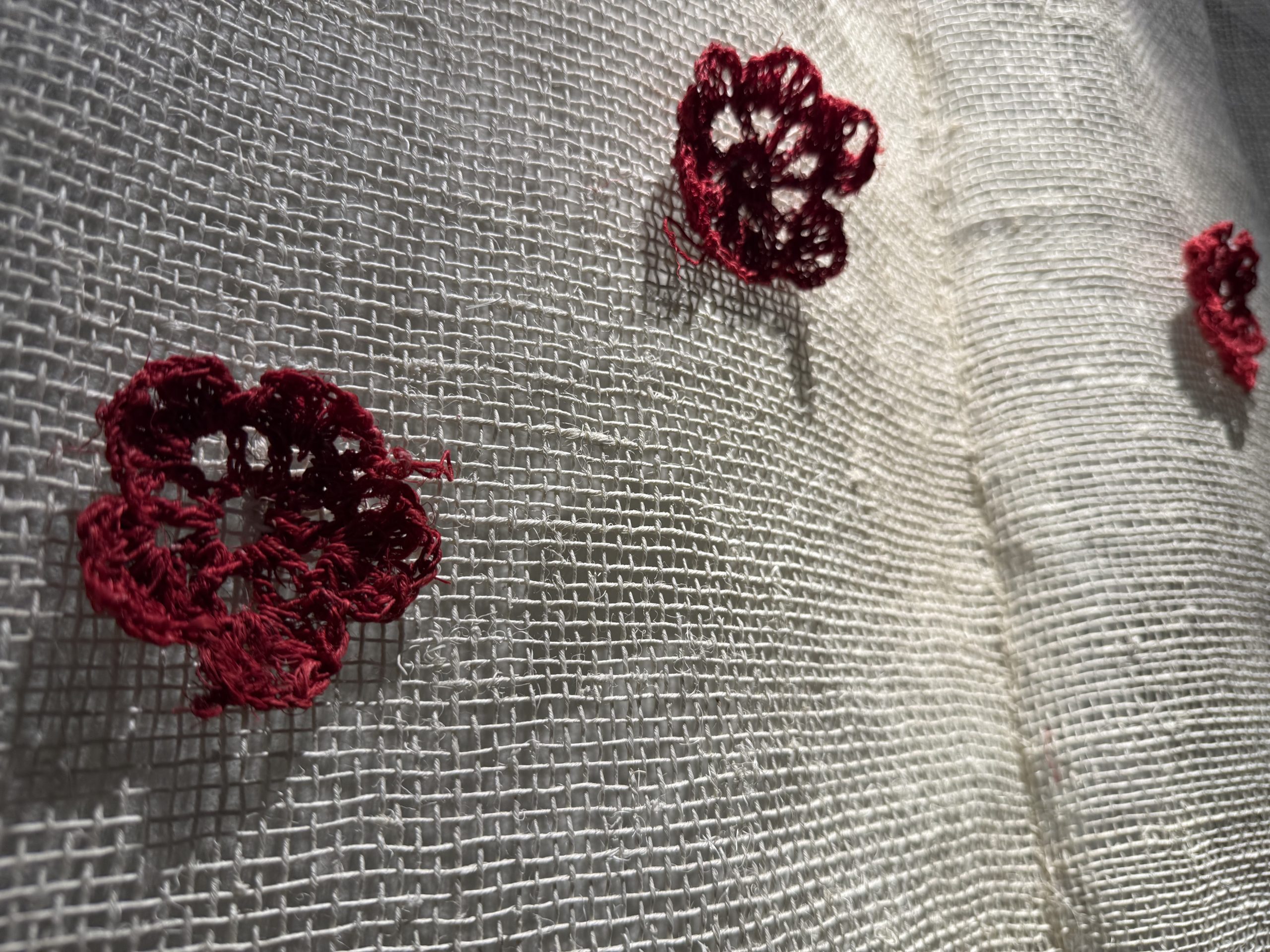
Detail of Deyanira Cerrito Hernandez’s “Ayate,” 2026, Maguey fibers, 47×47 in.
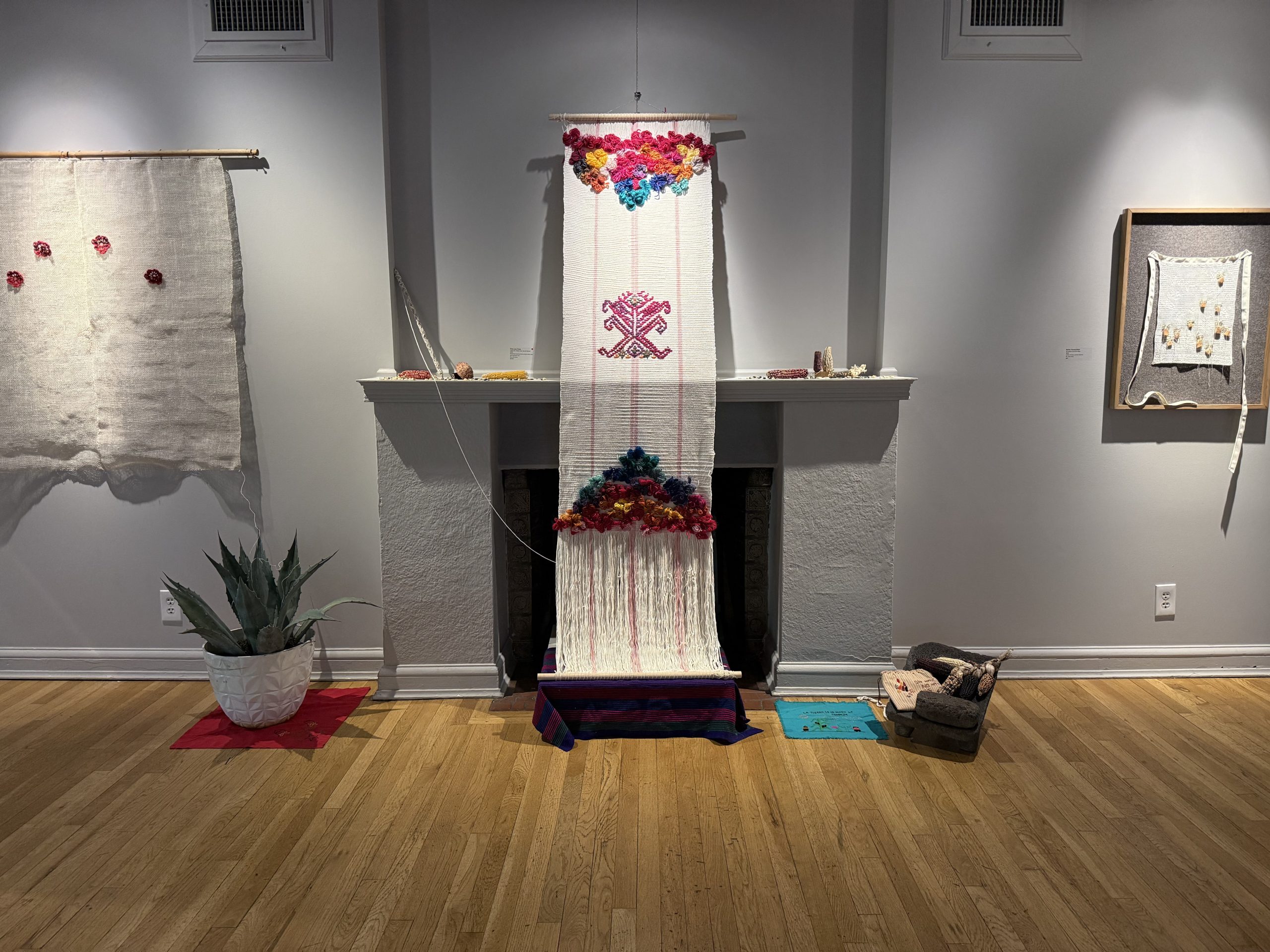
Installation view of Weaving Memories at Finch Lane Gallery with, from left, Deyanira Cerrito Hernandez’s “Ayate,” Vicky Lowe K’ulub’s “Jchul jme, Madre Sola, Sacred Mother,” and Elpitha Tsoutsounakis’ “Our Body is an Ochre Body.”
On the other side of the fireplace hangs Deyanira Cerrito Hernández’s large maguey-fiber weaving, made from fibers of the agave plant. Loose, airy and naturally cream-colored, the weaving is exposed, air moving through the striations of each row, with red crocheted flowers running in a line. It’s a simple composition, but one that holds a regal quality, its openness allowing the fibers to speak for themselves. Hernández upholds her grandparents’ legacy by continuing what they taught her about ixtle weaving and teaching the history of ayate weaving here in Utah.
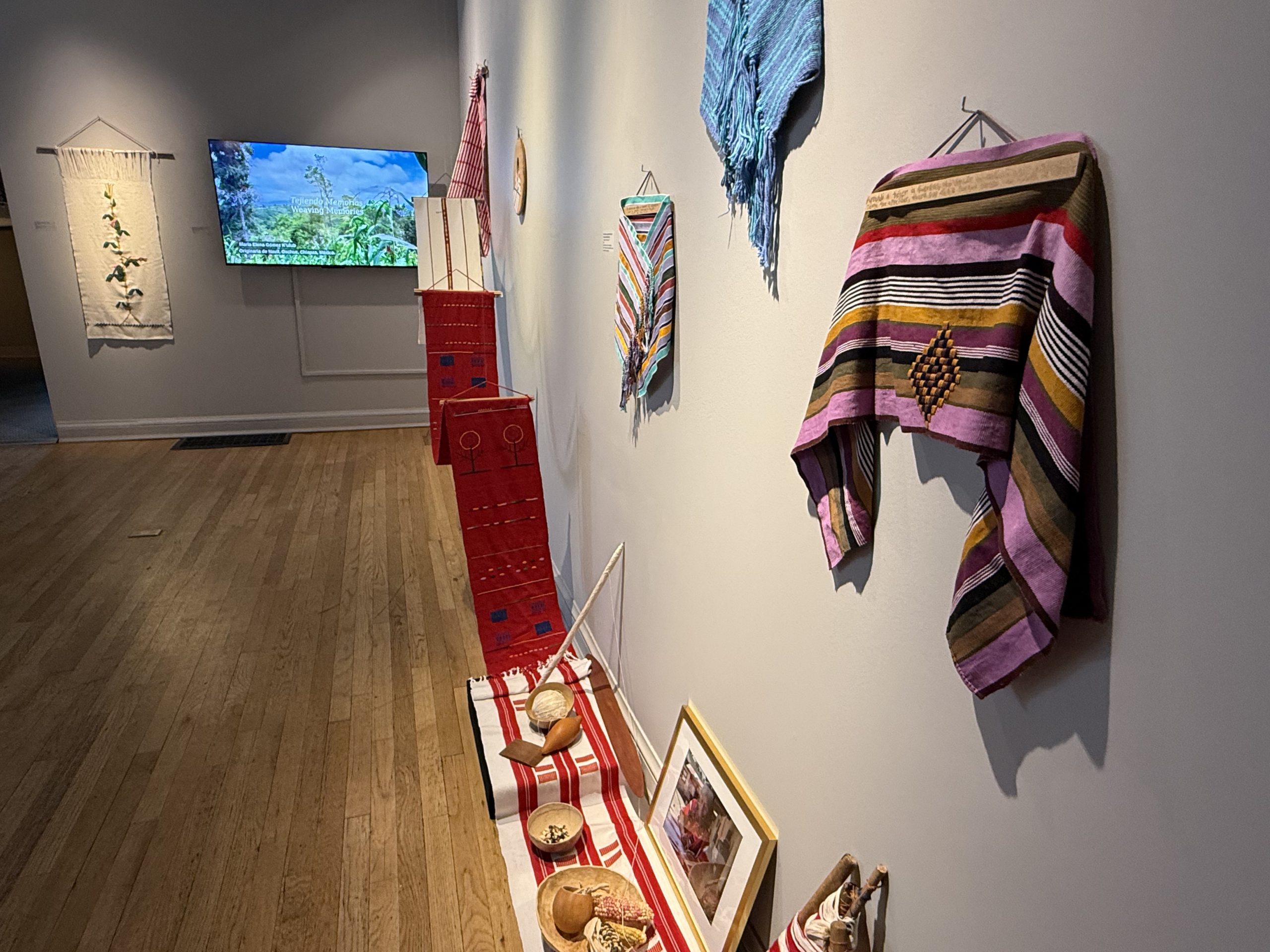
Although pieces like the rugs are woven into meticulous geometric compositions that feel too precious to walk on, the runners too precious to spill sauce on, the shirts too glamorous to wear, these are functional pieces, meant to be used and enjoyed. Traditional Guatemalan shirts by Maria Garcia hang ready for a weekend on the dance floor. Runners by Fanny Guadalupe take digital media to fiber, with photos of elder Mexican Indigenous women printed on fabric and collaged among patterns and embroidered statements, bringing elders to the table.
No matter the country or time period, fiber arts have connected people through their power to represent, honor and carry on the traditions of a place. Techniques might differ, color palettes could be worlds apart, but fiber remains a means of carrying knowledge from one generation to another. The artists in Weaving Memories honor the processes and traditions of their homes while stewarding this generational knowledge. In the woven threads, those who came before remain present for the generations to come.
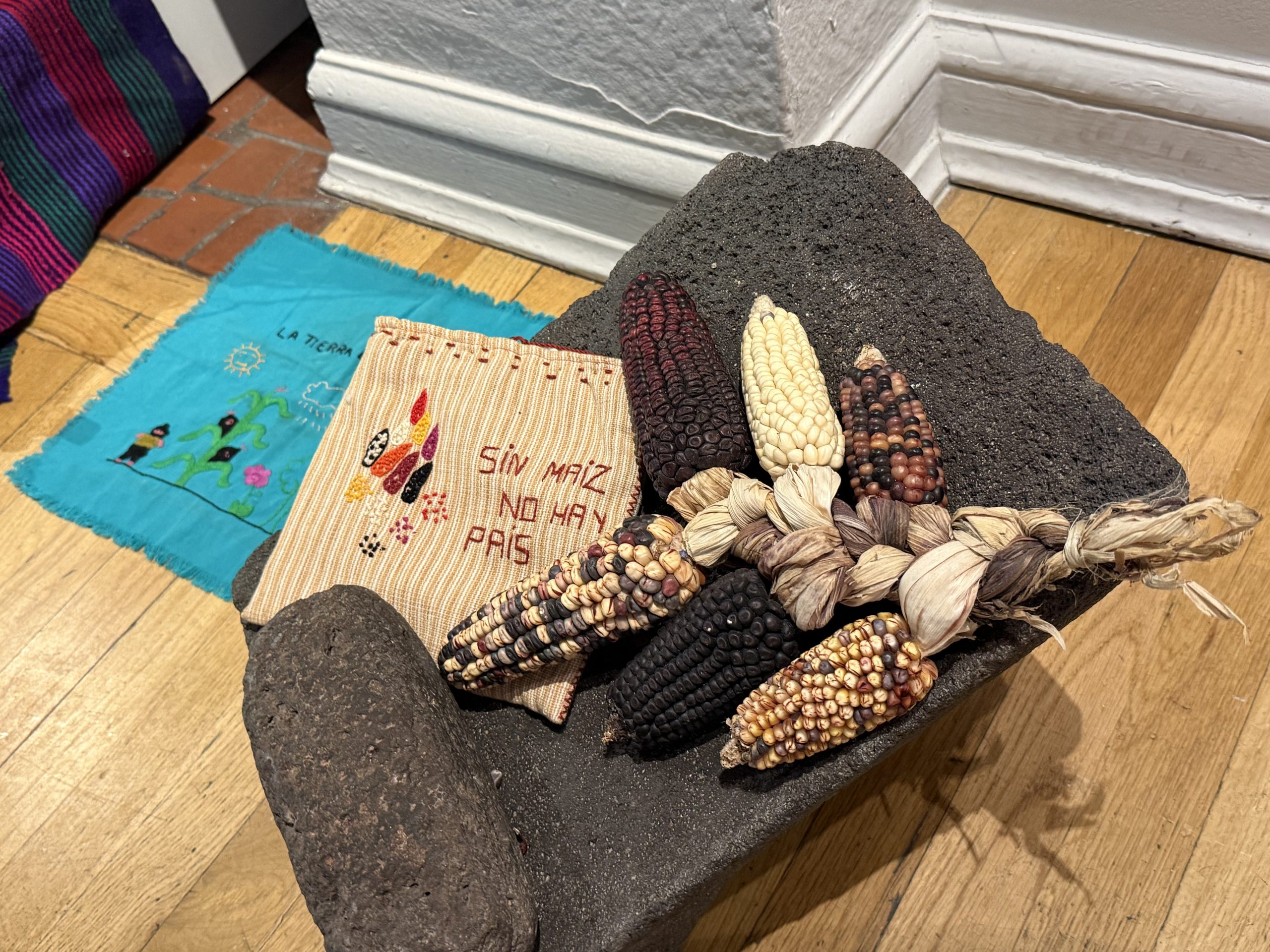
Detail of Vicky Lowe K’ulub’s “Jchul jme, Madre Sola, Sacred Mother,” 2026.
Weaving Memories: Textile Art as Cultural Knowledge, Finch Lane Gallery, Salt Lake City, through Oct. 23.

Genevieve Vahl is a writer, farmer and artist from Milwaukee, Wisconsin. Her writing focuses on how art and community intersect, how to bring access to food and covering climate solutions around the Salt Lake Valley. She also writes poetry, binds artist books, makes paper and runs cyanotype prints from film.
Categories: Exhibition Reviews | Visual Arts