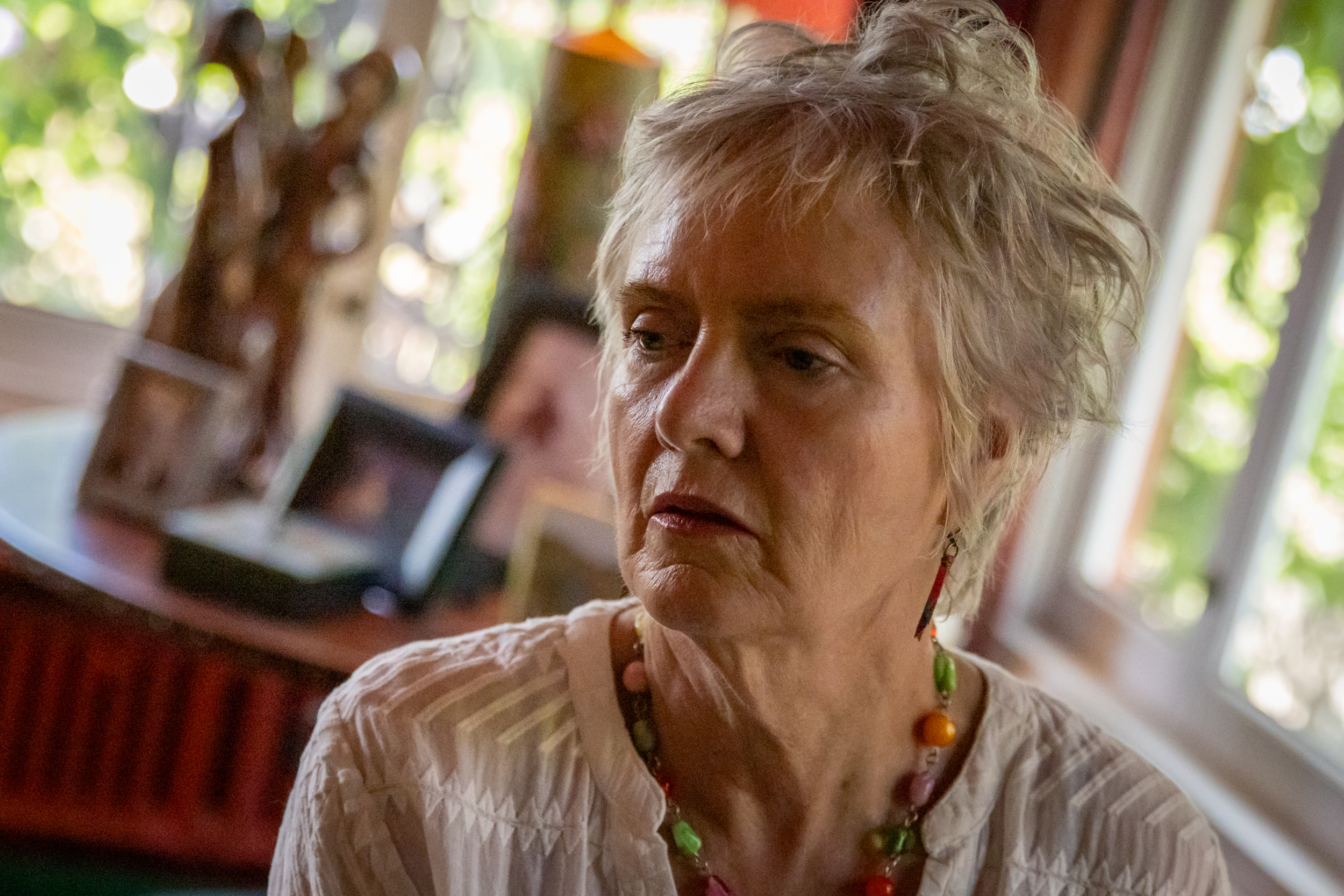
Pilar Pobil’s daughter, Monica Pasqual, has launched a go-fund me campaign to preserve her mother’s home as Casa Pilar.
Monica Pasqual left for Salt Lake City the day an earthquake shook the valley—the same week the world shut down for COVID-19, the same week her brother lay dying of the virus. She drove from the Bay Area, where she’d spent decades as a music producer and recording artist, releasing her sixth solo album just months before. She expected to stay a few months at most, long enough to be with her mother and grieve her brother. She did not expect to fall, slowly and then completely, into the orbit of a house.
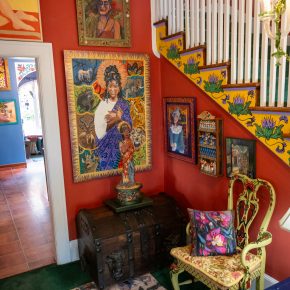
That house is Casa Pilar, the longtime home and studio of Pilar Pobil, the Spanish-born painter and sculptor who filled the rambling Avenues property with a lifetime’s worth of work and a particular way of living that treated art-making and hospitality as equally important. Pasqual had grown up in the house, and she remained there after her brother died, to care for her mother, who was in her nineties. When Pobil died in 2024, she left the house to Pasqual and her sister Maggie, who lives in Spain.
It was only after her mother died that Pasqual came to appreciate the importance of the house, and the need to preserve it. “I don’t know if the spirit of the house jumped into me after my mom died,” Pasqual says, “but it’s just like, oh my god, this has to happen.”

Pilar Pobil in her Salt Lake City home, 2019, photo by Simon Blundell
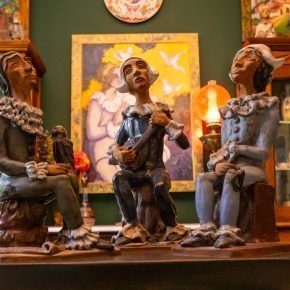
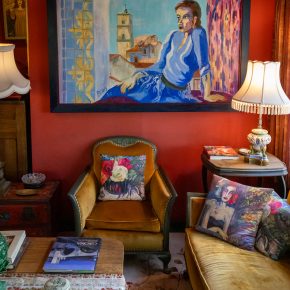
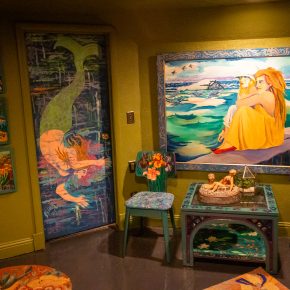
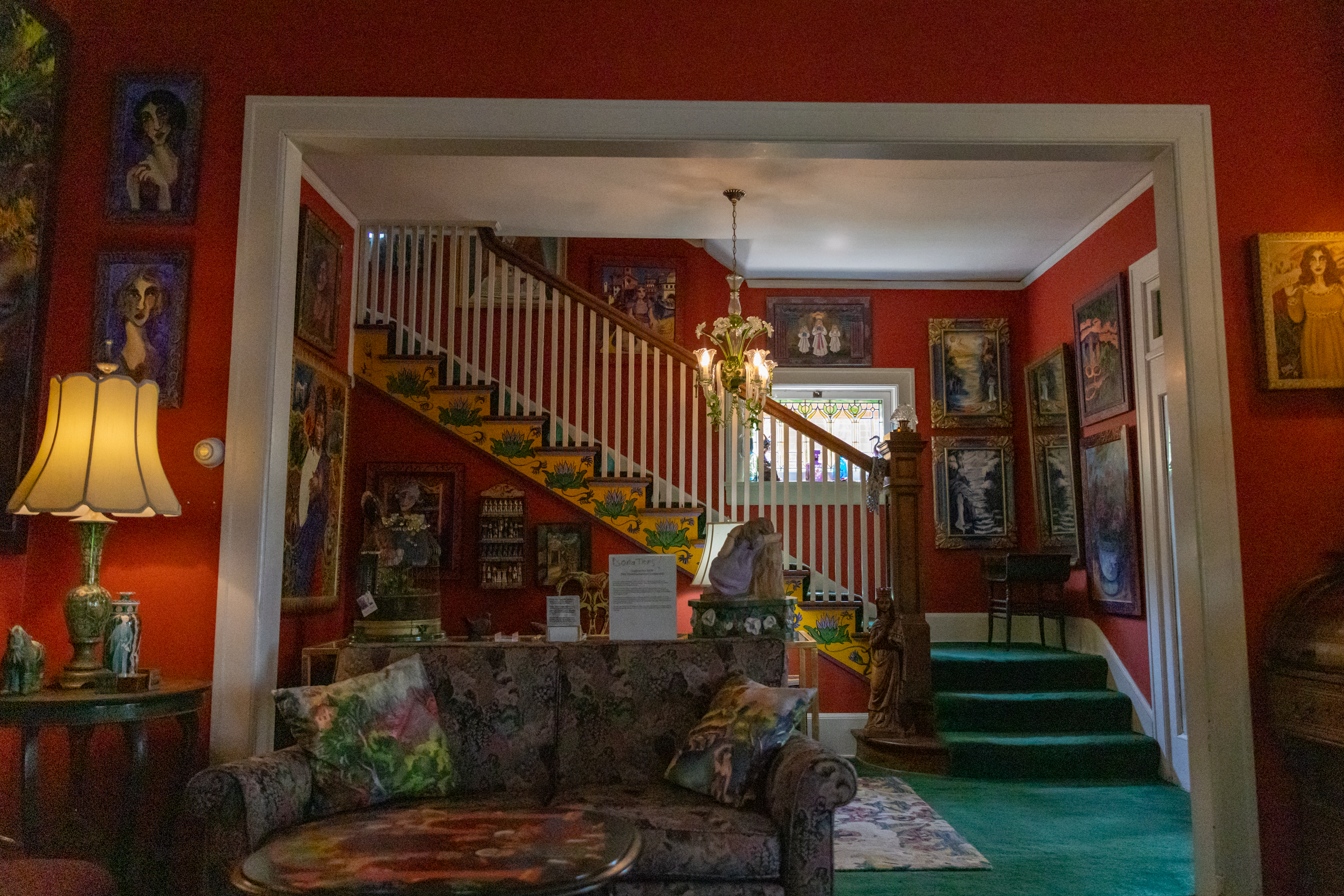
Pasqual’s mother was born in Madrid in 1929 and spent her childhood on the island of Mallorca, until the Spanish Civil War forced the family into exile. She immigrated to Utah in 1956, and began painting seriously after 1973, when her children were grown. She considered herself self-taught, which freed her from the obligation of a signature style: her canvases—vibrant, figurative, emotionally direct—sit alongside sculpture, mosaic, and three-dimensional clay works. Paint migrated from her canvases onto frames, furniture, fireplaces, and walls; the house became continuous with the work.
Over the following decades, Pobil exhibited widely across the U.S., Mexico, and Spain, received the Cruz de Oficial de la Real Orden de Isabel la Católica—a royal honor signed by King Felipe VI—for bringing Spanish culture to the United States, and built Art in Pilar’s Garden into one of Salt Lake City’s most beloved annual art events. By the time 15 Bytes named her one of Utah’s most influential artists in 2019, the house had long since become what she had always intended: a place, as she put it, where “regular people can have extraordinary experiences.”
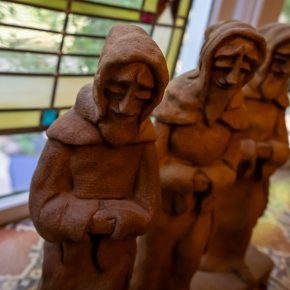
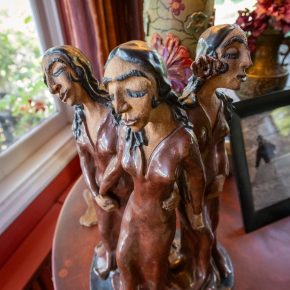
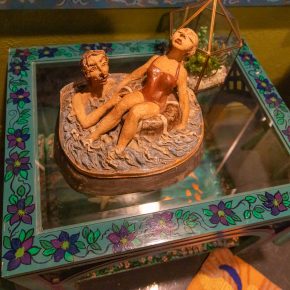
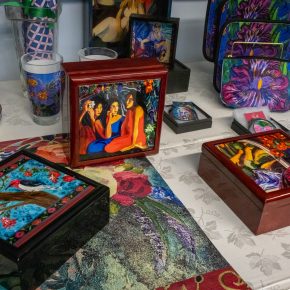
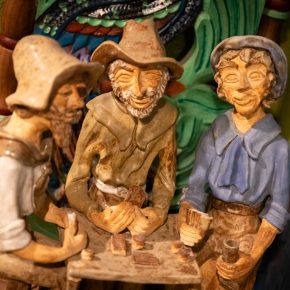
The effort to preserve the house has its own history. In 2013, friends and supporters of Pobil—among them Patrick Hoagland of Patrick Moore Gallery and foundation president Monica Whalen—incorporated the Pilar Pobil Legacy Foundation with exactly that aim: to eventually acquire the house and operate it as a community arts resource, with artist residencies, educational programs, and the annual Art in the Garden as cornerstones. Pobil had agreed to donate the house’s contents, including the artwork on its walls, to the foundation. Over the following years, the foundation delivered programming as it raised funds toward its goals. But purchasing the house proved out of reach. In June 2023, the foundation committed $100,000—the bulk of what it had raised, including $11,000 in proceeds from Art in Pilar’s Garden—to establish the Pilar Pobil Humanities Scholarship at the University of Utah’s College of Humanities, supporting first-generation students transferring from Salt Lake Community College into Writing and Rhetoric Studies. Six months later, in January 2024, it secured naming rights for the art gallery at the Utah Cultural Celebration Center in West Valley City, donating works by Pobil to be displayed there permanently. With those funds committed to lasting but achievable ends, the foundation closed.
After her mother passed in November 2024, Pasqual planned to stay only long enough to wrap up her affairs. She had a life to return to—or to rebuild. Her long-term partner had died of MS during those same Covid years; she had given up her flat in the Bay Area. She was thinking about starting over in Mexico, where her music career had taken root.
Then the ceramics group came through.
In March, while the National Council on Education for the Ceramic Arts held its annual conference in Salt Lake City, someone asked if they could bring a tour group to the house—about 30 people who’d never heard of Pobil, who knew nothing of its history. They left stunned. Pasqual ran into them later at a restaurant on their last day in the city; they told her it was the best thing they’d done in Utah. It happened again with the Salt Lake Lunatics, an arts collective mostly in their twenties and thirties, none of whom had set foot in the house before a storytelling event sold out twice over. It happened during Avenues Open Studios, when, Pasqual says, young queer kids and older Mormon couples found themselves standing in the same rooms, struck by the same thing: a life fully, visibly devoted to creativity, “in such contrast to the sterile and online world that’s being offered to this country right now.”
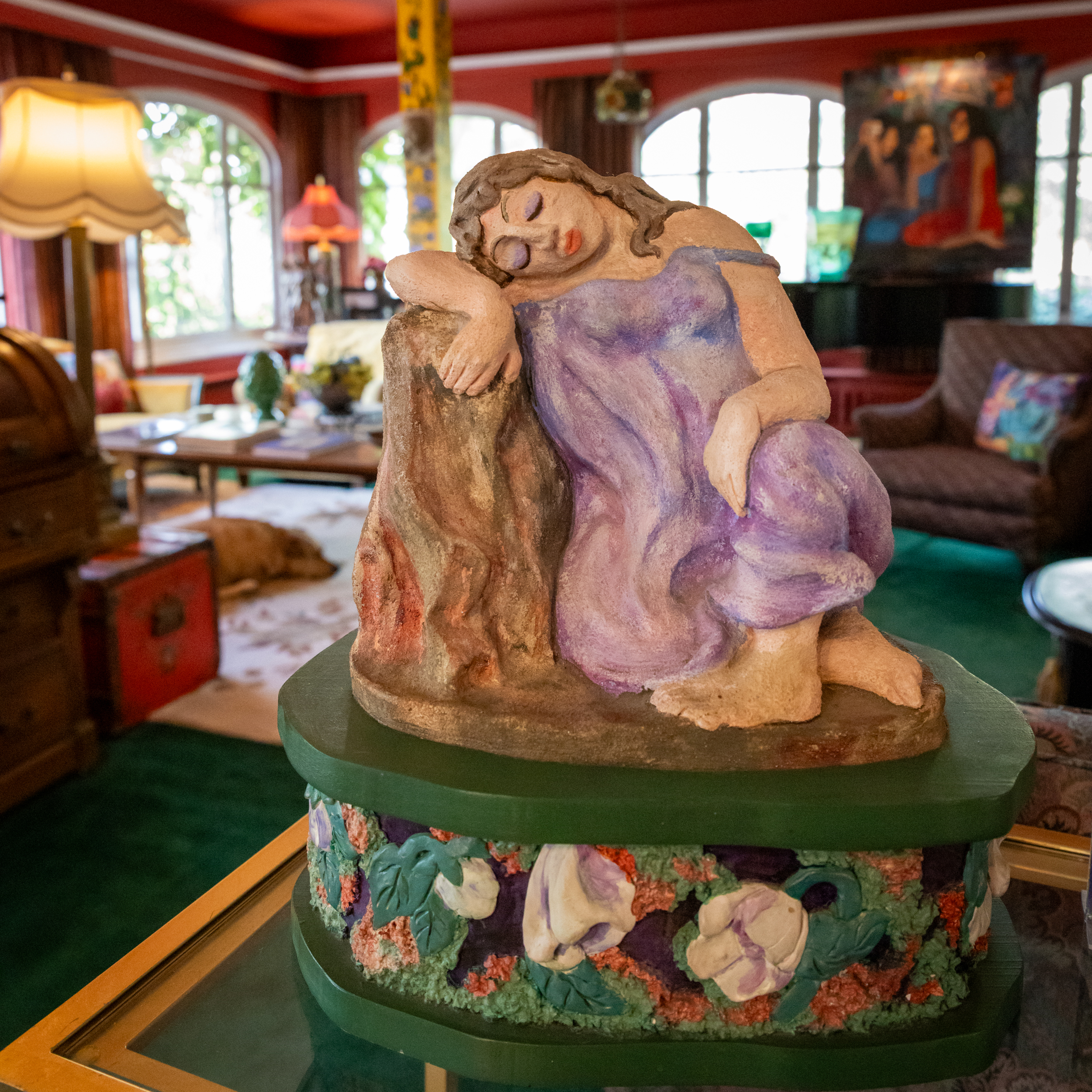
“The house itself is something above and beyond the paintings on the wall,” she says. “It is an artistic expression too, and when people come through here, they’re transformed by it.”
Since last August, when Pasqual relaunched the house’s programming in earnest—concerts, workshops, a storytelling night, the 34th annual Art in Pilar’s Garden—she estimates more than a thousand people have come through. Two concerts sold out and were extended to two days each. This summer’s Art in Pilar’s Garden sold roughly 480 dinner tickets alone.
“This is a treasure for the city,” Pasqual says, comparing it to Casa Azul, Frida Kahlo’s house-turned-museum in Mexico City. “It’s not something people see every day—a house that’s so fully immersed in a person’s creativity.”
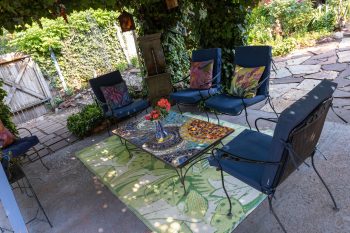
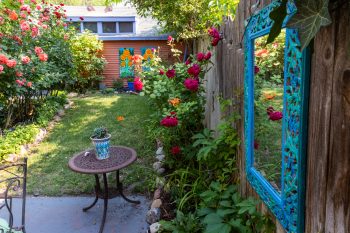
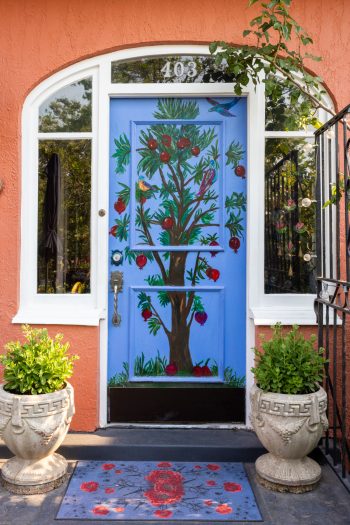
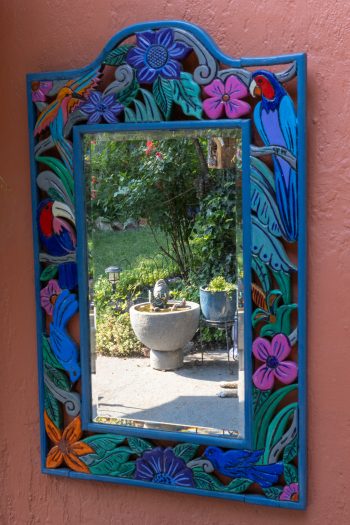
This week, Pasqual launched a GoFundMe campaign paired with an application for new 501(c)(3) status. It is a bridge to the longer-term goal of preserving the house and its programming for the city. The campaign sets a first milestone of $50,000 toward an overall goal of $200,000, which Pasqual estimates would sustain the house and its programming for roughly two years while the nonprofit infrastructure is built. Near-term needs are immediate: electrical repairs, garden upkeep, and sustaining the programming she has run almost entirely on her own—design, writing, gardening, marketing, performing, and managing the small shop of Pobil-inspired goods called Pilar’s Garden, which she has operated since 2020.
The longer-term goal is for a reconstituted nonprofit to eventually purchase the house from Pasqual and her sister and establish the kind of endowment that could outlast any single person’s stewardship—including Pasqual’s own. Pasqual is hoping to reach a sustainable footing within a year or two. She is, by her own account, not interested in running the house alone indefinitely. She and her sister have lives to live. She’s clear-eyed that there’s a version of this story where the effort doesn’t succeed, where she and her sister ultimately sell. But she’s equally clear about what’s pulling her forward: a house that has become a home. For an entire art community.
“This has to keep going beyond me and beyond my mom,” she says.
All images by Steve Coray, unless otherwise indicated.
DID YOU ENJOY THIS ARTICLE?
Help make more like it possible.
VENMO us a donation at artistsofutah

Or use PayPal to MAKE A DONATION.
15 Bytes is published by Artists of Utah, a 501 (c) 3 tax-exempt nonprofit.

The founder of Artists of Utah and editor of its online magazine, 15 Bytes, Shawn Rossiter has undergraduate degrees in English, French and Italian Literature and studied Comparative Literature in graduate school before pursuing a career in art.
Categories: Featured | Visual Arts