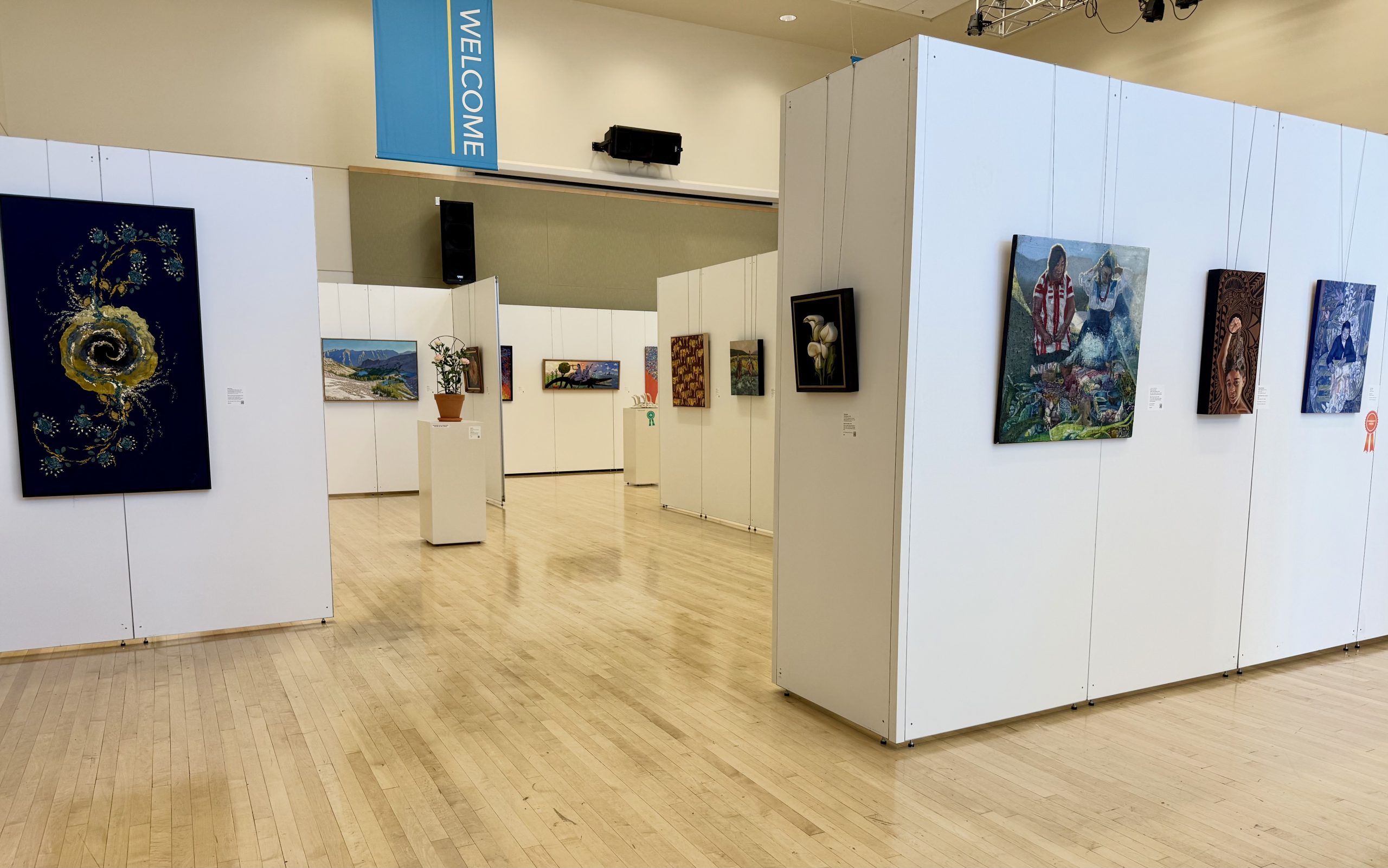
32nd Annual President’s Art Show at Salt Lake Community College South City campus.
What do 103 artists, 465 submissions, and a $5,000 award pool have in common? They’re all part of the 32nd Annual President’s Art Show at Salt Lake Community College. Impressive numbers, certainly. But if you think that’s what makes this exhibition worth your time, think again. What you’ll find is something much more interesting: a lively cross-section of Utah’s visual arts, filled with diversity, imagination, and some genuinely thought-provoking work. And the best part? There’s something here to engage just about everyone.
“It’s one of the things I like most about this show,” says James Walton, Gallery & Art Collection Manager for the college. “Any individual in the state of Utah can enter; you get a great diversity of media, of themes, and of people.”
And that’s exactly what makes this exhibition so interesting. You’re not looking at a collection of artists working toward a single theme or style. Instead, you’re getting a glimpse of what Utah artists are thinking about, experimenting with, and creating right now.
“Obviously,” Walton continues, “there are a lot of artists who aren’t in this show, but I think it’s a great sampling, a great way to get a snapshot of what’s happening in the art scene today.”
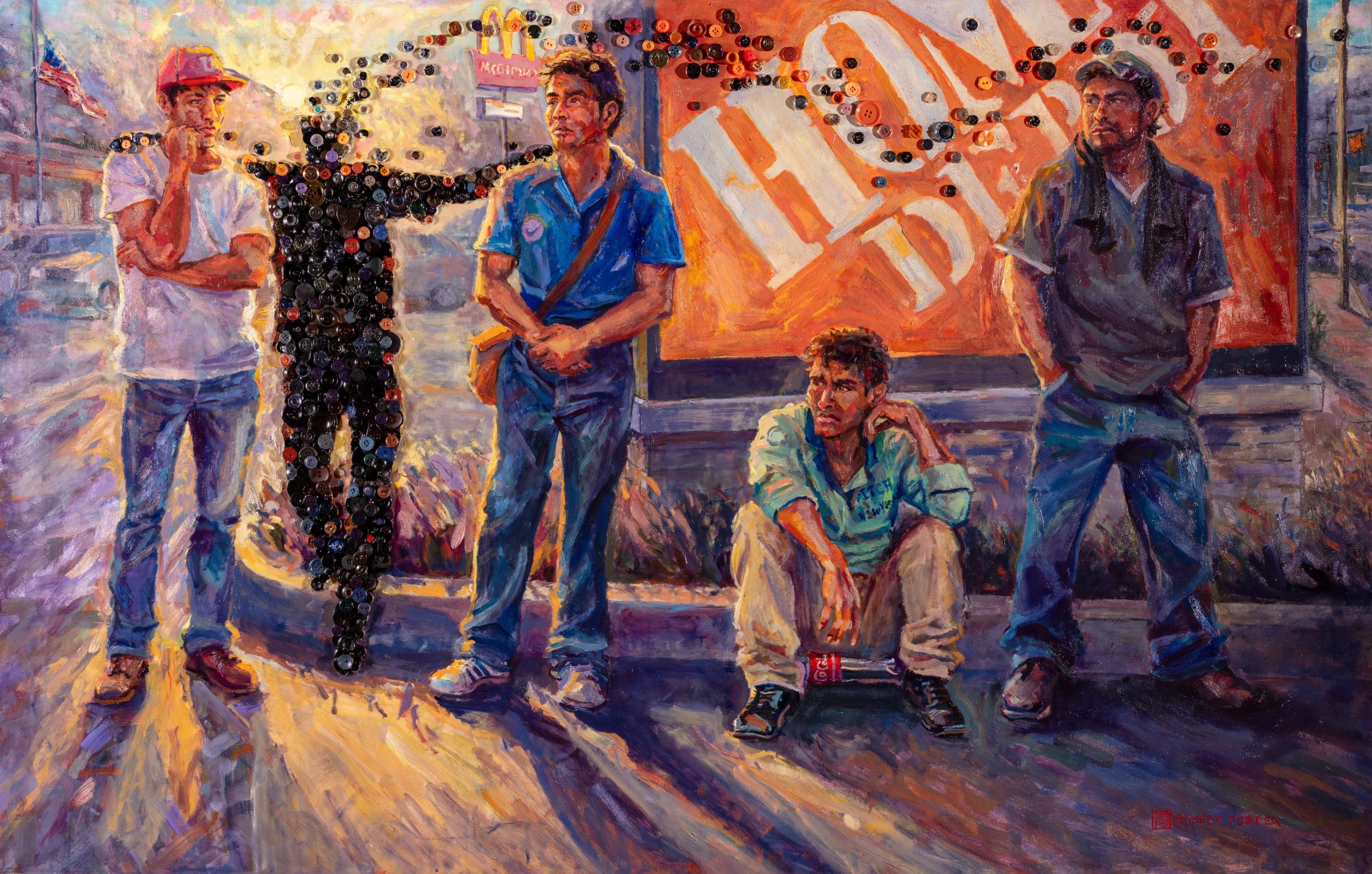
Robert Fuerer, “Empty Chairs at Empty Tables,” 2026, buttons and oil paint on panel
It’s a snapshot worth taking a closer look at. The show’s jurors were an accomplished mix of practicing artists, visual arts managers, consultants, curators, collectors, and instructors. They were also joined by Dr. Greg Peterson, the college’s 9th president and an advocate for the institution’s support of the arts.
Let’s take a look at a few works that caught my attention.
Ky Bates’s three-dimensional work, “It Blew in From the West” is a good place to start. It depicts a faceless character being pelted by sandy debris from the salty lake. Take a moment with this one. Is that raised hand protecting the figure from existing lake toxins, or are we looking at a protester being silenced by commercial developers? Perhaps both? Bates leaves the interpretation to us. Whatever you decide, there’s something haunting about the image.
Then there’s “Following the Thread, the Veins, the River,” by Erin Coleman Serrano. Don’t expect fashion or anything that adorns the body here. Instead, the body seems to have disappeared, leaving behind something closer to the essence of the spirit. Its redness is visually disarming, while the technical execution is beautiful to behold. It’s one of those works that rewards a little extra time.
-
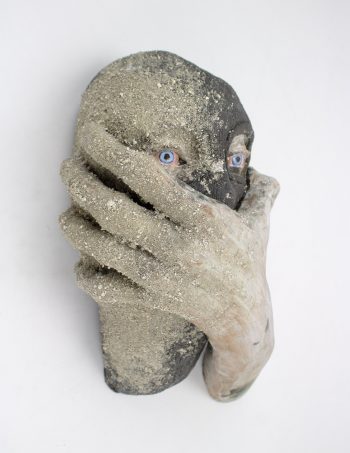
- Ky Bates, “It Blew in From the West,” 2025, earthenware and salt from the Great Salt Lake
-
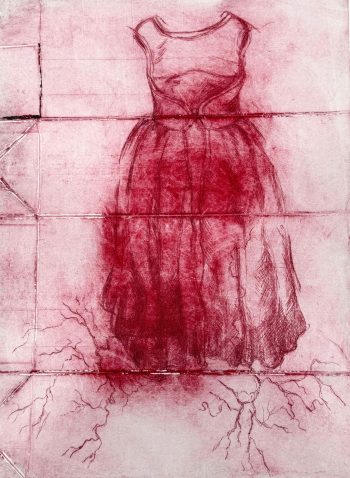
- Erin Coleman Serrano, “Following the Thread, the Veins, the River,” 2025, drypoint intaglio
Robert Fuerer’s “Empty Chairs at Empty Tables” takes us in another direction. The work, by this SLCC alumnus, gives shape to the absence of a worker removed through immigration—a particularly timely subject. Notice the buttons. It’s a clever visual touch, one that brings to mind the personal consequences of community issues, including families separated by immigration. What might otherwise remain an abstract political discussion becomes something considerably more personal.
If you’re drawn to non-objective abstraction, Juan Gasca’s small work, “New Beginnings,” may be just the ticket. Get up close. Let your eyes wander. Form, shape, volume, and line begin to play off one another, sending your attention in one direction and then another. It’s like a dollop of whipped color on a slice of exhibition pie.
-
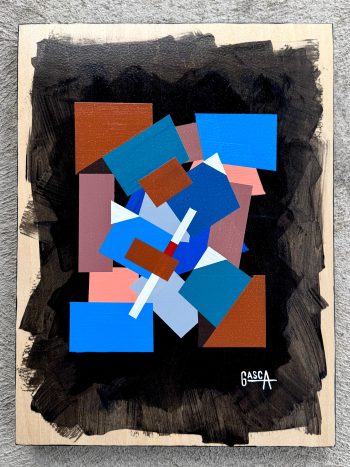
- Juan Gasca, “New Beginnings,” 2026, acrylic on wood panel
-
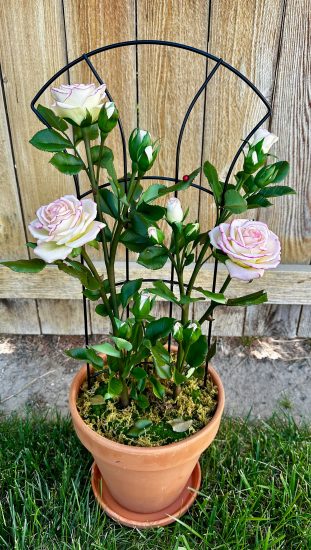
- Anna Kijek, “The Climb,” 2026, air-dry clay colored with oil paint and pan pastels
And who doesn’t enjoy a little visual trickery? Anna Kijek’s mesmerizing three-dimensional work, “The Climb,” is sure to delight anyone who stops to study it. This is a powerhouse of sculptural realism—according to the exhibition statement, “transforming an inherently fragile subject into a lasting sculptural form, the piece explores themes of perseverance, beauty, and permanence.” Look closely and you’ll understand what they mean. Kijek tricks the eye with marvelous conviction, rewarding the kind of close attention every gallery-goer should give it.
Michelle Nixon’s “Something Will Come of This” (watercolor on 140 lb. cotton rag paper, 2026) is beautifully rendered and confidently composed. Its sentiment, however, may not appeal to everyone. Some viewers might find it oversentimental, preferring a harder, more graphic touch. And that’s perfectly fine. We don’t all have to respond to a work in the same way. Still, the watercolor represents another facet of the community’s artistic voice, and kudos to the jury for making room for that diversity.
-
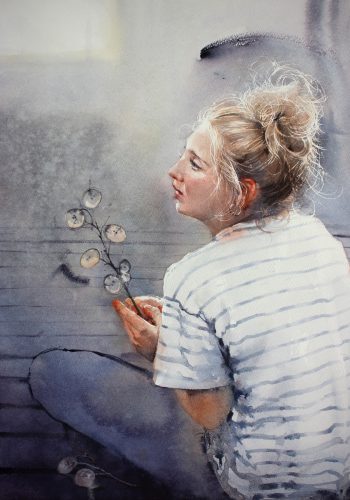
- Michelle Nixon, “Something Will Come of This,” 2026, watercolor on 140 lb. cotton rag paper
-
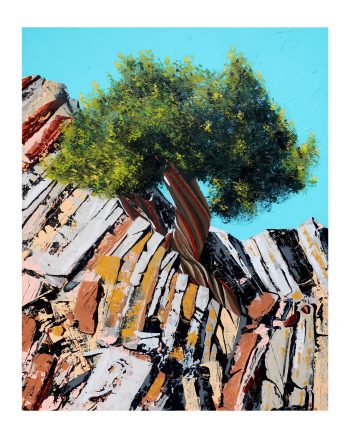
- Miguel Pabon, “Whitebark Pine,” 2025, acrylic on canvas
For something quite different, take a look at Miguel Pabon’s “Whitebark Pine.” Here, traditional landscape painting meets bold palette-knife swipes that suggest a rocky cliff. The two approaches blend beautifully, giving the painting an arresting presence. The rocks look almost touchable. In fact, you might find yourself wanting to drag your fingers across those faux surfaces. (Resist the temptation, of course.)
At first glance, Stephanie Southwick’s “Heliotrope” may leave you scratching your head. A curious-looking horse skull, pierced by a dagger, is trapped, along with the remainder of its skeleton, by a shrub. Strange? Certainly. But there’s a compelling assurance in the starkness of the image, its design, and its rendering. Sometimes a work doesn’t need to explain itself to hold your attention.
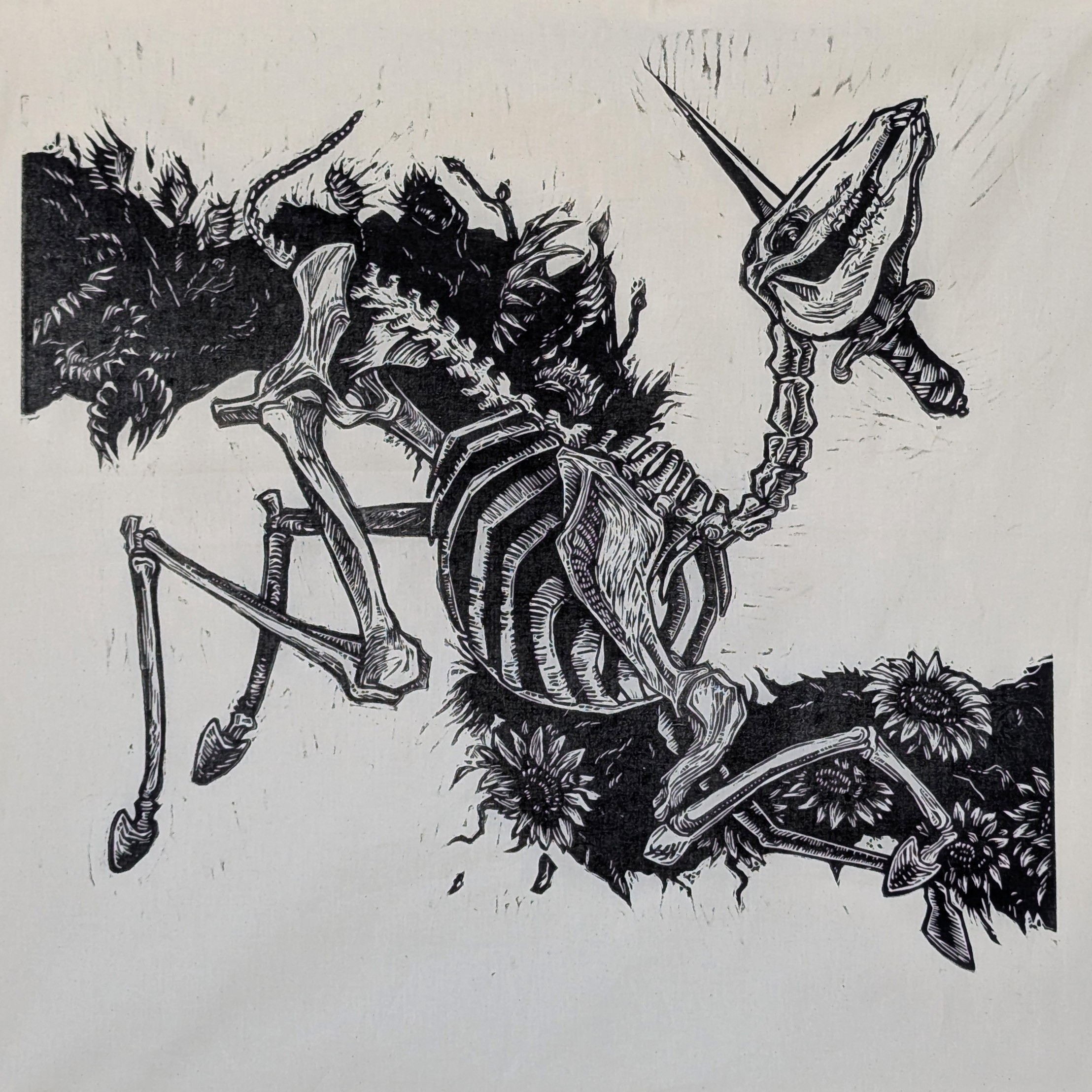
Stephanie Southwick, “Heliotrope,” 2025
And there’s plenty more where these came from. The exhibition includes high-caliber painting, photography, printmaking, sculpture, mixed media, and collage, covering dozens of subjects and artistic styles. You may find yourself agreeing with some of the artists, questioning others, or wondering what on earth a particular piece is trying to tell you. That’s part of the fun.
After all, art isn’t meant to be hurried past or simply admired from a distance. It’s meant to be looked at, questioned, debated, and occasionally argued over. You don’t need an art degree to participate, and you certainly don’t need to agree with me. Bring your curiosity, take your time, and decide for yourself.
That’s the real pleasure of the 32nd Annual President’s Art Show. It’s an opportunity to see what Utah artists are creating, discover something unexpected, and perhaps leave with a new appreciation for the artistic community right here in our state.
32nd Annual President’s Art Show, SLCC South City Campus Multipurpose Room SCM 1-030/1-032, 1575 South State Street Salt Lake City through November 19. Gallery hours: Monday–Thursday, 10 a.m.–7 p.m. Friday, 10 a.m.–3 p.m. Closed Saturday and Sunday.

Dave Gagon has been writing for more than 30 years, including 19 years as the visual arts writer and editor at the Deseret News in Salt Lake City. During his tenure, he reviewed the work of more than 100 artists from across Utah and received multiple writing awards from the Associated Press and the Society of Professional Journalists. Gagon is the author of Honorable Release (Signature Books 1992), a young adult novel, children’s stories and picture books, and songs that he has written and recorded. He also pursues photography through his ongoing A.I.P.S. (Abstraction In Plain Sight) project.
Categories: Exhibition Reviews | Visual Arts