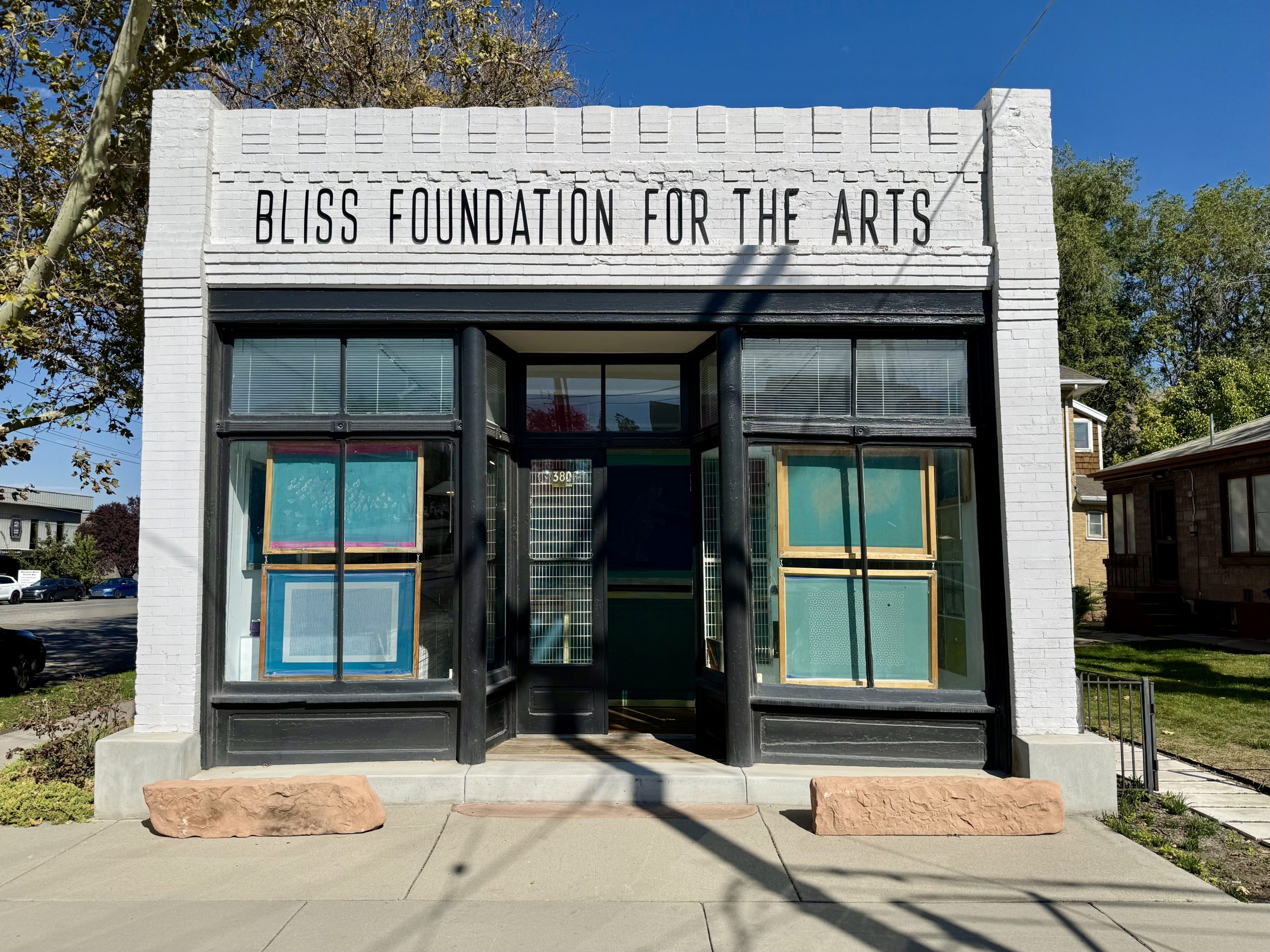
If you’re new to Utah’s art world, right now the work of Anna Campbell Bliss may feel like one of those odd vocabulary words you’ve only just learned and suddenly hear everywhere. Her geometric compositions, built from color and repetition and carrying a glowing, mesmeric power, have been appearing in exhibitions all over the state: at the Southern Utah Museum of Art, the Utah Museum of Fine Arts and Salt Lake Community College, to name a few. That’s largely the work of the Bliss Foundation for the Arts, the organization that since her death in 2015 has spent much of the past decade preserving and documenting Bliss’s work and, increasingly, finding new homes for it. The foundation is working against a clock: the trust that governs her studio and its contents expires in about two years. This week, as part of Salt Lake City Design Week, the foundation has opened the artist’s longtime studio in the Marmalade district to reveal a stunning exhibition pairing Bliss’s prints with the silkscreens used to make them.
If you’ve been around Utah’s art world for a bit, however, Anna Campbell Bliss will hardly be new to you. She and her husband, architect Robert Bliss, arrived in Utah in the 1960s steeped in a postwar Modernism that treated art, architecture and design as interconnected disciplines. Robert was hired to lead the University of Utah’s Department of Architecture and would spend the next 27 years at the university, eventually serving as dean of its Graduate School of Architecture. Anna had studied art history and mathematics at Wellesley and architecture at Harvard, and went on to study color and design with some of the central figures in 20th-century visual theory, including György Kepes and Josef Albers. In Utah, she developed a practice that moved among printmaking, painting, architecture, public art and emerging computer technologies.
Color in her work became structural—something that could be organized, measured, repeated and altered to change how a viewer perceived a form or space. For the University of Utah’s LeRoy Cowles Mathematics Building, for example, her “Numbers and Measure” installation used 18 plates to explore the connections between mathematics, art and culture. She also pursued those same questions more intimately in prints and other works. By the end of her career, she occupied a distinctive position in Utah art: simultaneously artist, designer, color theorist and architectural thinker. In 2015, shortly before her death, Bliss was selected by her peers as one of Utah’s 15 most influential artists in Utah’s 15, a project of this magazine’s publisher, Artists of Utah.
Her death that year, followed by Robert’s in 2018, left behind the studio Anna had worked in for decades, their home and its furnishings, objects collected over a lifetime, Robert’s furniture and a substantial body of Anna’s artwork. There were also 10 beneficiaries—five individuals and five institutions—and a trust intended to extend Anna’s artistic legacy.
The trust document offers little direction. Trent Smith, one of the trustees and a Salt Lake City architect, says there is essentially one line governing the studio: put Anna’s work on display in the hope of creating an interest in her art. “That’s our guidance.” The Blisses appear to have imagined something resembling a museum. “What was in her will was this idea of the museum, and then we charge admission,” Smith says. “Well, that model doesn’t really work. Anna is not famous enough.”
The trustees have had to invent much of the model themselves, moving between the interests of the nonprofit foundation and the estate. The same people oversee both, Smith explains, which can make their role difficult to define. “We’re always with the sort of thing of like, are we a foundation or is this the estate?” The foundation may be primarily interested in exhibiting the works and keeping the studio as a museum of community art space. The estate may be interested in selling the work and distributing the proceeds.
Smith estimates that approximately 2,000 works by Bliss remain in the hands of the estate and the care of the foundation. Over the past two years, the trustees have donated about 330 works to 18 institutions. Salt Lake Community College recently exhibited some 40 works together, effectively creating a small monographic presentation of Bliss’s career. Discussions continue with other institutions, including the Utah Division of Arts & Museums, and Smith hopes the growing institutional interest could eventually lead to a substantial exhibition.
Getting several hundred works into public collections, however, is not as simple as calling a museum and asking whether it wants an Anna Campbell Bliss. First the trustees had to document the work. Then they assembled presentations for institutions showing what was available. Museums made selections. Their boards had to approve gifts. The Bliss board had to approve them. Works had to be picked up, transported and, in some cases, sent to framers. That helps explain why the foundation has been relatively quiet publicly. “The last two years, part of the reason we haven’t done a lot of public-facing stuff is we’ve been working to donate 10 percent of the work we have here,” Smith says.
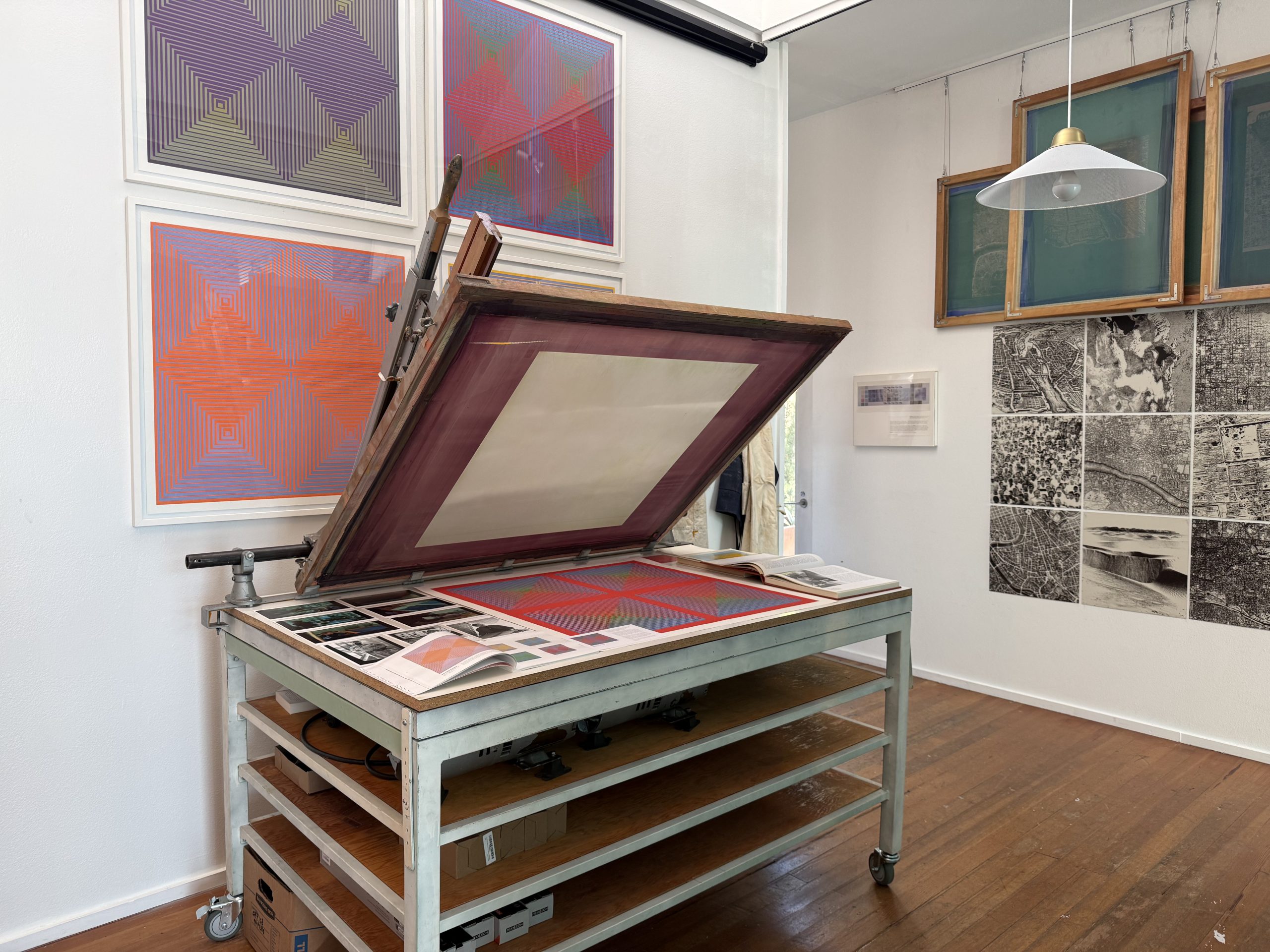
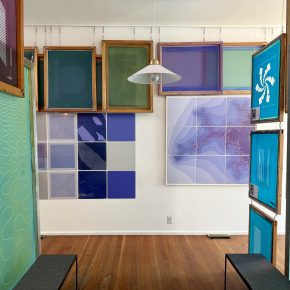
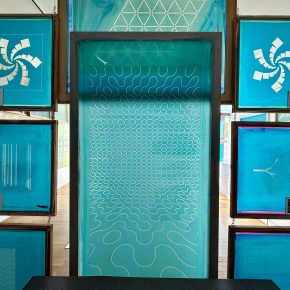
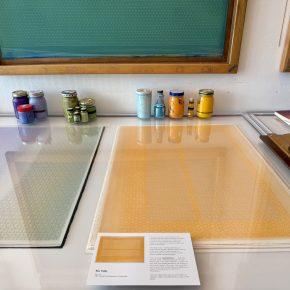
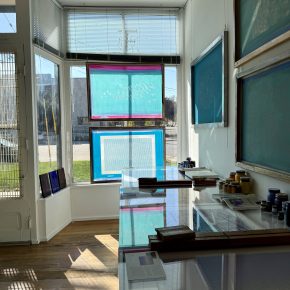
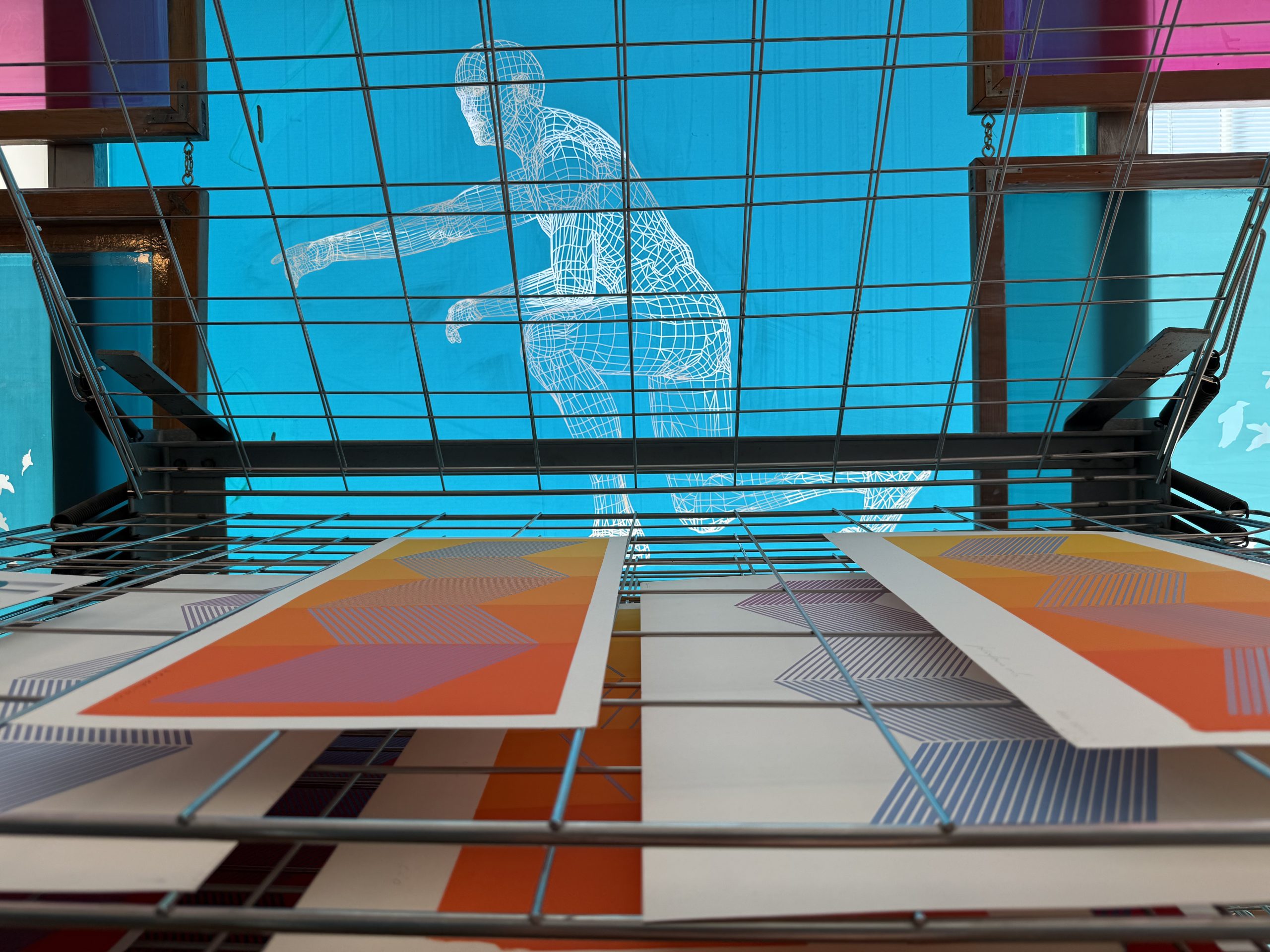
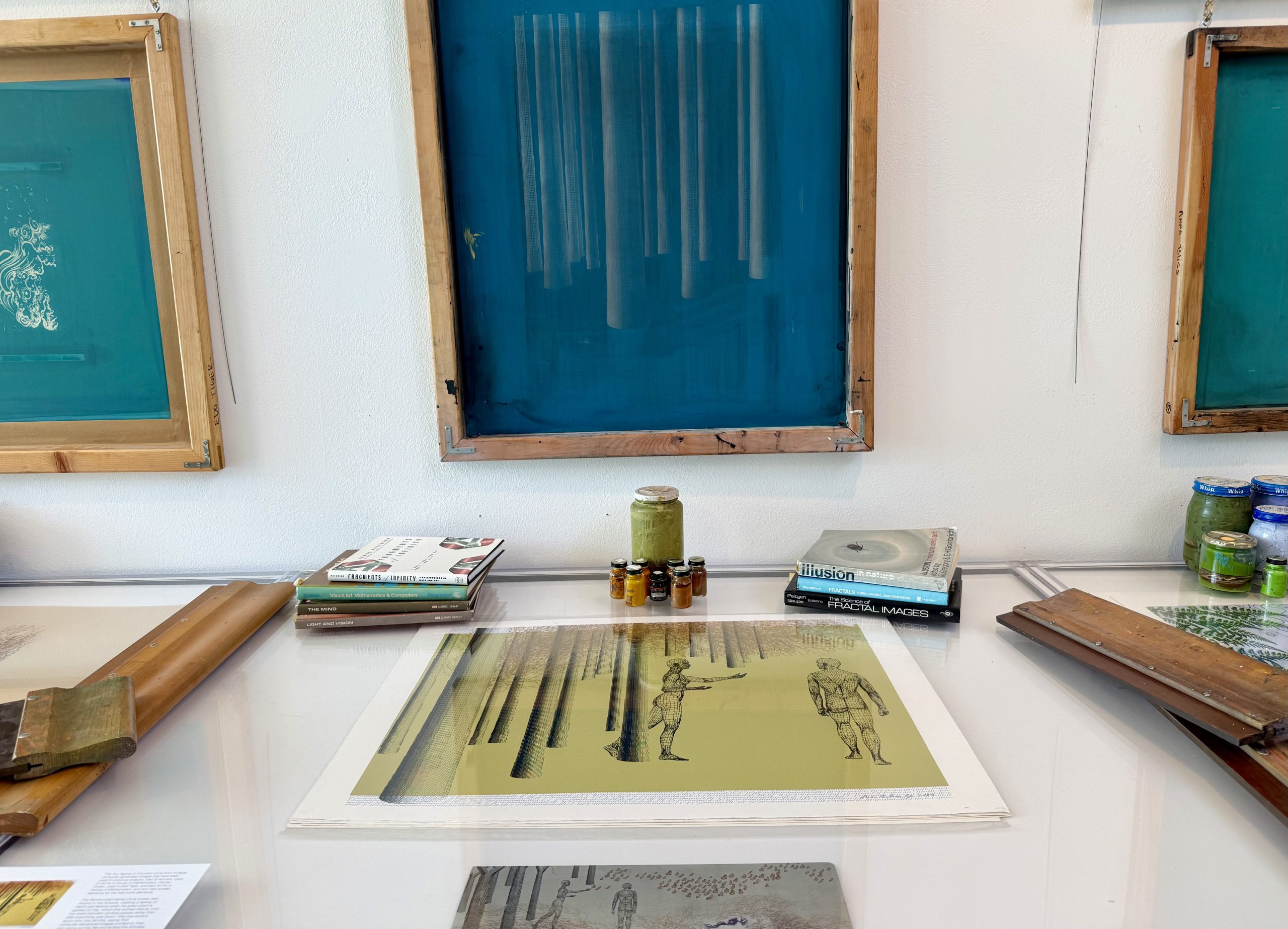
Now, with that round of donations completed, the foundation is becoming more visible. The Design Week exhibition is part of that shift. The exhibition celebrates the individual print while exposing some of the physical evidence of how her work came into being. Forms that appear crisp and inevitable on paper can be traced backward through the physical apparatus that produced them. The screens are particularly compelling—hanging in the studio, where sunlight from the south-facing windows passes through their translucent surfaces, they create a glowing, physical installation that vies with the artworks themselves for attention. For an artist so interested in perception, it seems fitting: the thing you are supposed to look through becomes the thing you look at.
Exhibiting them also serves a practical purpose. “Part of the reason we put things here is because we’re paying for storage, and so part of the show is an excuse to clean it out and try and get things organized.”
The building itself was Bliss’s studio for roughly 50 years. Before that, it was a neighborhood grocery. Upstairs, the foundation has recreated something of the Blisses’ library, using the books, furnishings and objects that surrounded them at home. It is less an attempt to reconstruct a room precisely than to evoke the intellectual and domestic world in which the two lived and worked. “We’ve got a handful of older folks who come and sit,” Smith says. “We just reminisce and just hang out.”
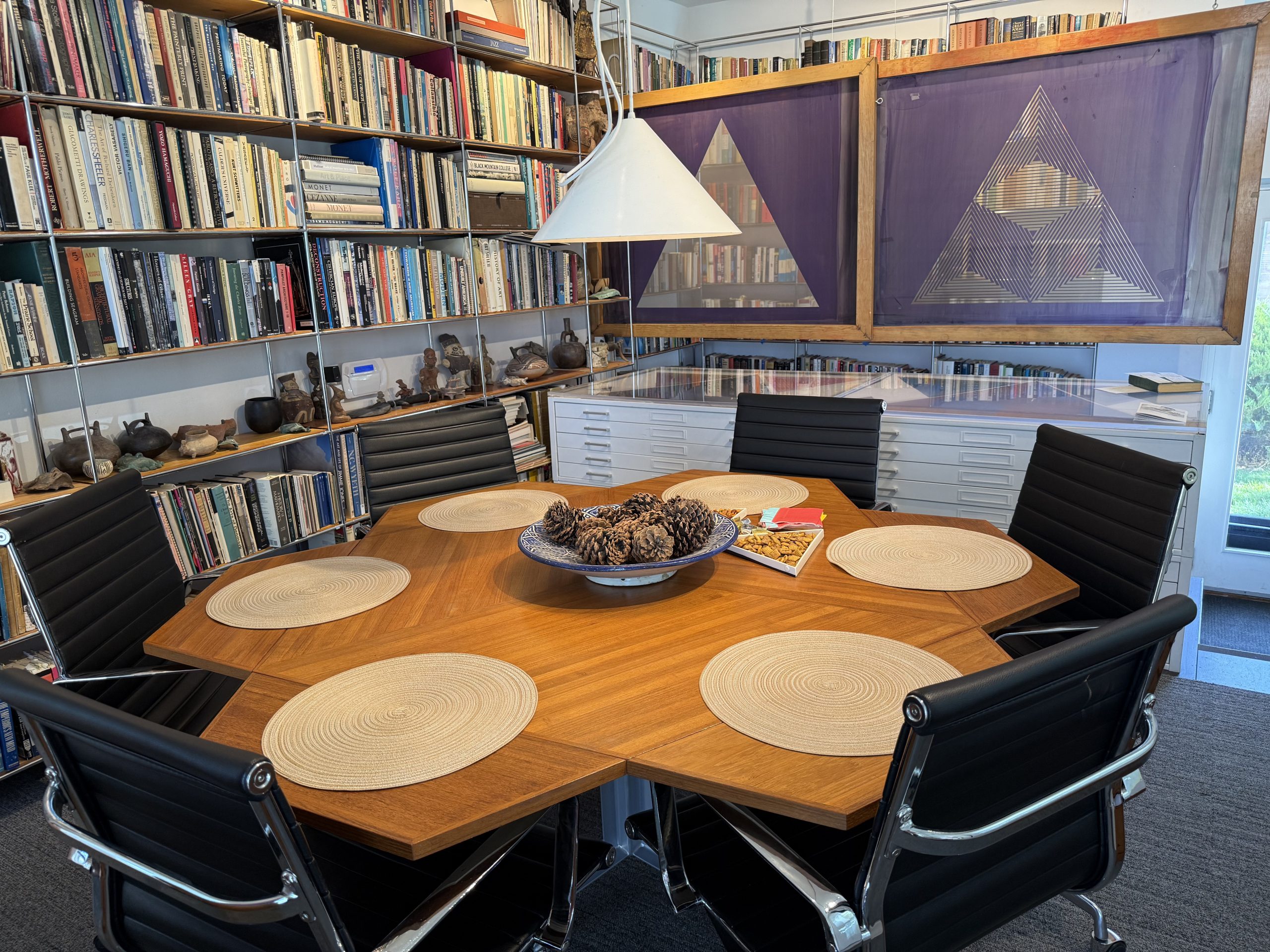
According to Smith, the studio trust terminates 10 years after Robert Bliss’s death. With roughly two years remaining, the trustees have to determine what ultimately happens to the art, artifacts and other material still in their care. The trustees are volunteers, balancing the foundation’s mission to sustain the Blisses’ legacy against obligations to the estate’s beneficiaries and the practical limits of what a small group of people can reasonably accomplish. Even giving things away takes time. “All the people they loved are gone, retired or dead,” Smith says. A conversation begun with one person sometimes has to be started again with someone who has no personal connection to the Blisses at all.
The model of a museum for Bliss’s work may not be feasible long-term. But in the meantime, there is plenty of work to do, and the former grocery store is home base. Smith rents space in the building for his own architecture practice and says someone is there most days. After Design Week, you’re welcome to make an appointment to see the exhibition, or drop by and knock on the east side door. The exhibition will remain up for several months. Smith says they are considering joining a Gallery Stroll this winter and continuing to open the building to visitors. In the meantime, trustees still have to work their way through what remains. “Right now, it’s pull it out of the archives, out of storage, do a thing, put them on a show,” Smith says. “Try to keep their memory alive, and then ask the bigger question of what is the good final resting place for these things.”
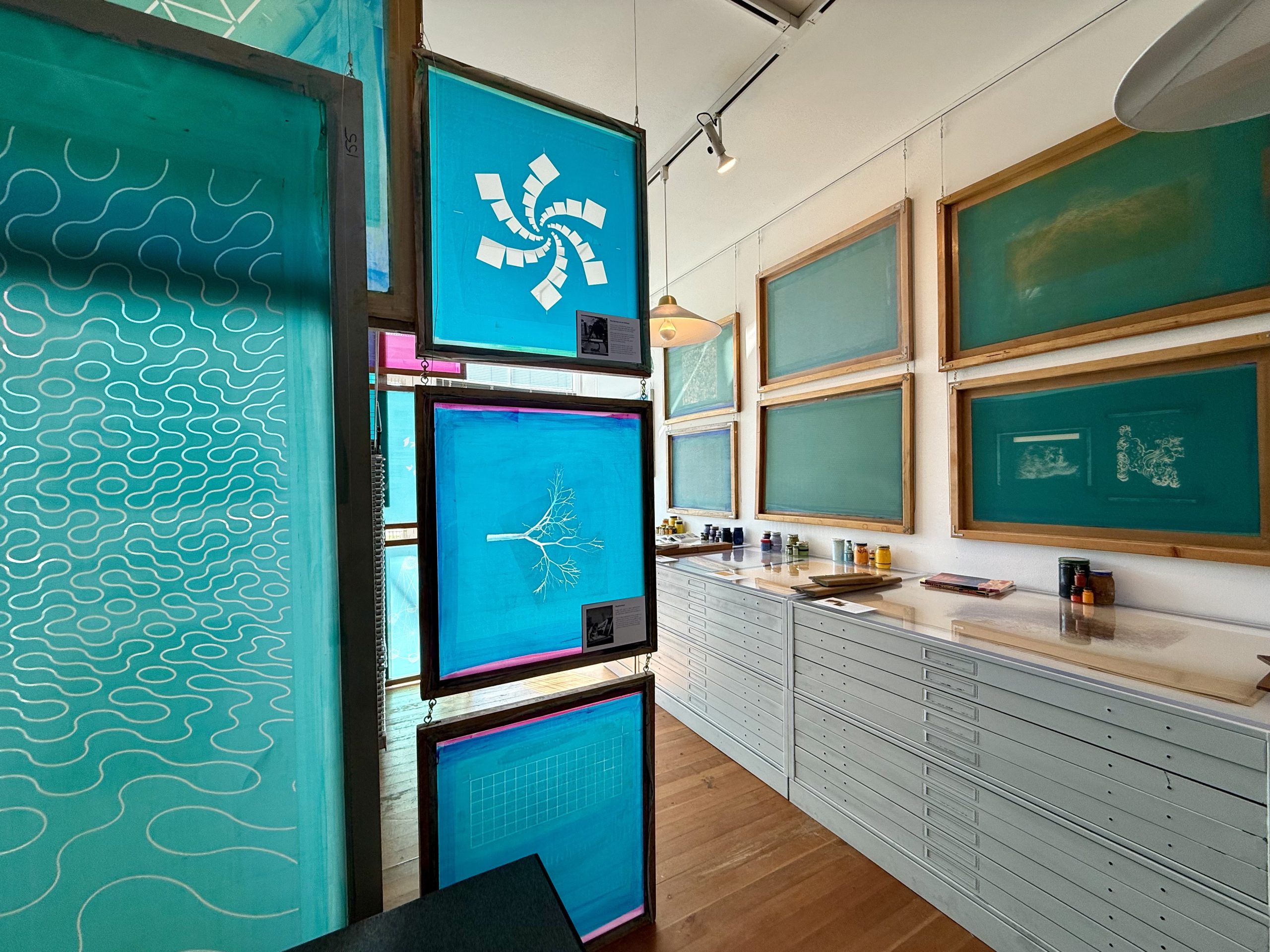
Making Of at the Bliss Foundation for the Arts (380 W. 400 North, SLC), is open Monday through Friday, 10-4 pm, through Oct. 8. Afterwards, contact Trent Smith at trent@modernoutwest.com for an appointment, or stop by Mon-Fri, 10-4 pm.
The founder of Artists of Utah and editor of its online magazine, 15 Bytes, Shawn Rossiter has undergraduate degrees in English, French and Italian Literature and studied Comparative Literature in graduate school before pursuing a career in art.
Categories: Organization Spotlight | Visual Arts