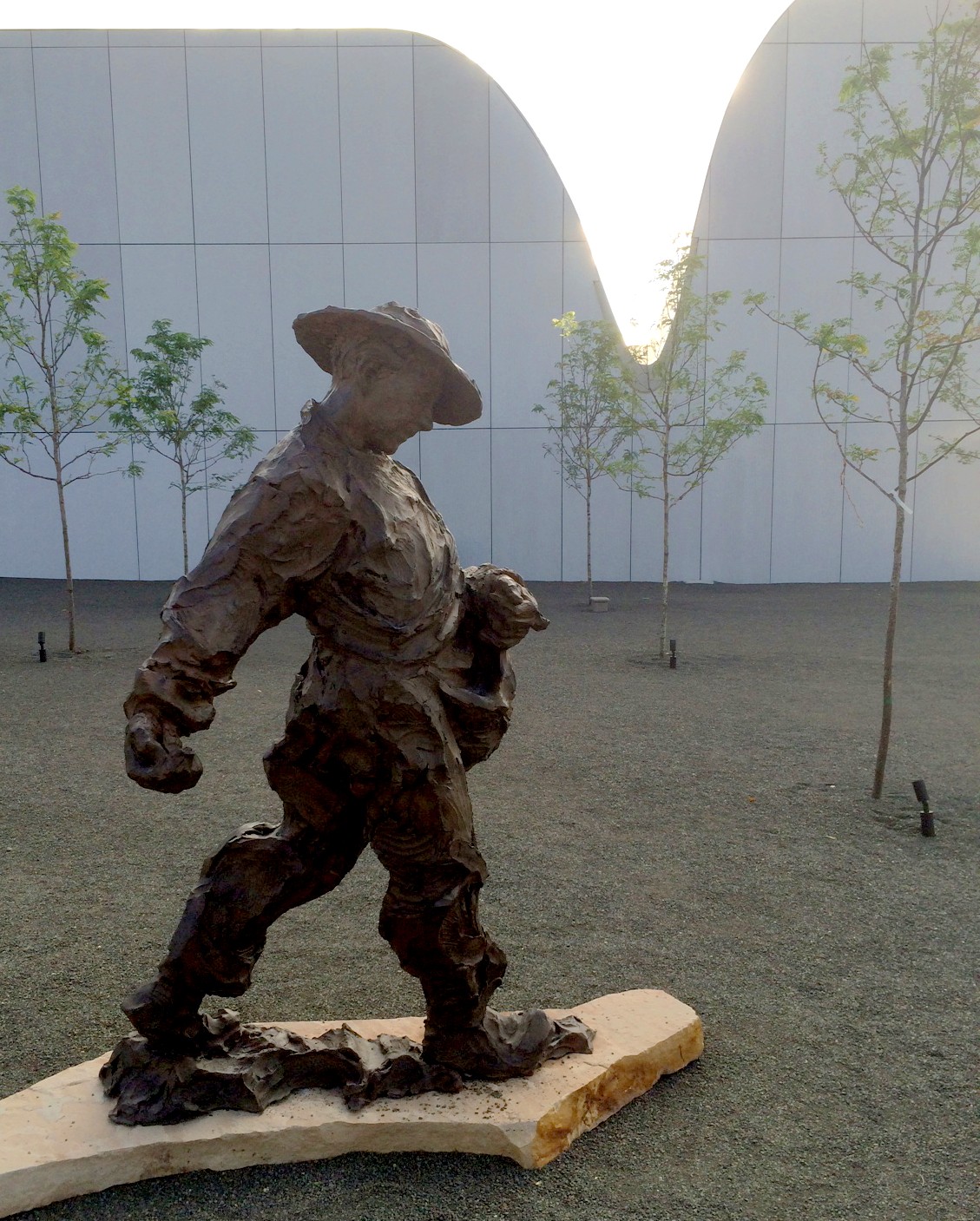
Jane DeDecker’s “The Sower” (2016) in what would become the Stillman Sculpture Court, in July 2016.
When the Southern Utah Museum of Art opened in Cedar City in 2016, the sculpture court east of the building was more promise than reality. During the summer, a single bronze figure—Jane DeDecker’s “The Sower”—stood alone in a field of gravel, an apt symbol for a collection that had only just been planted. By the museum’s official dedication of the court on October 12, two additional works had joined it: DeDecker’s “Threshold” and Marvin Nelson’s “Seedlings,” forming the nucleus of what would become the Stillman Sculpture Court.
The court remained a work in progress until 2019, when support from Iron County, Southern Utah University, and the Stillman family transformed the gravel lot into a landscaped garden. Following Larry Stillman’s death that year, Liane Stillman continued the project, working with SUMA Executive Director Jessica Kisney to realize the family’s original vision. Four additional sculptures—David Phelps’ “Pastoral Dreamer,” Lorri Acott’s “Conversation with Myself,” Nnamdi Okonkwo’s “Jubilation,” and Allan Houser’s “Raindrops”—completed a collection intended to represent “many variations of the human form,” encompassing different ages, emotions, body types, cultures, and experiences.
The placement of the works creates a subtle narrative as visitors move through the space. Near the entrance, Threshold frames a view deeper into the court, where “Seedlings” and “The Sower” come into sight—a progression that echoes the court’s own history of beginnings, growth, and cultivation. Beyond them, works exploring introspection, celebration, and quiet contemplation fulfill the Stillmans’ vision of a garden where multiple perspectives on the human experience coexist. A decade after “The Sower” first stood alone in the gravel, the promise of that first sculpture has blossomed into one of Utah’s more thoughtfully curated outdoor collections.
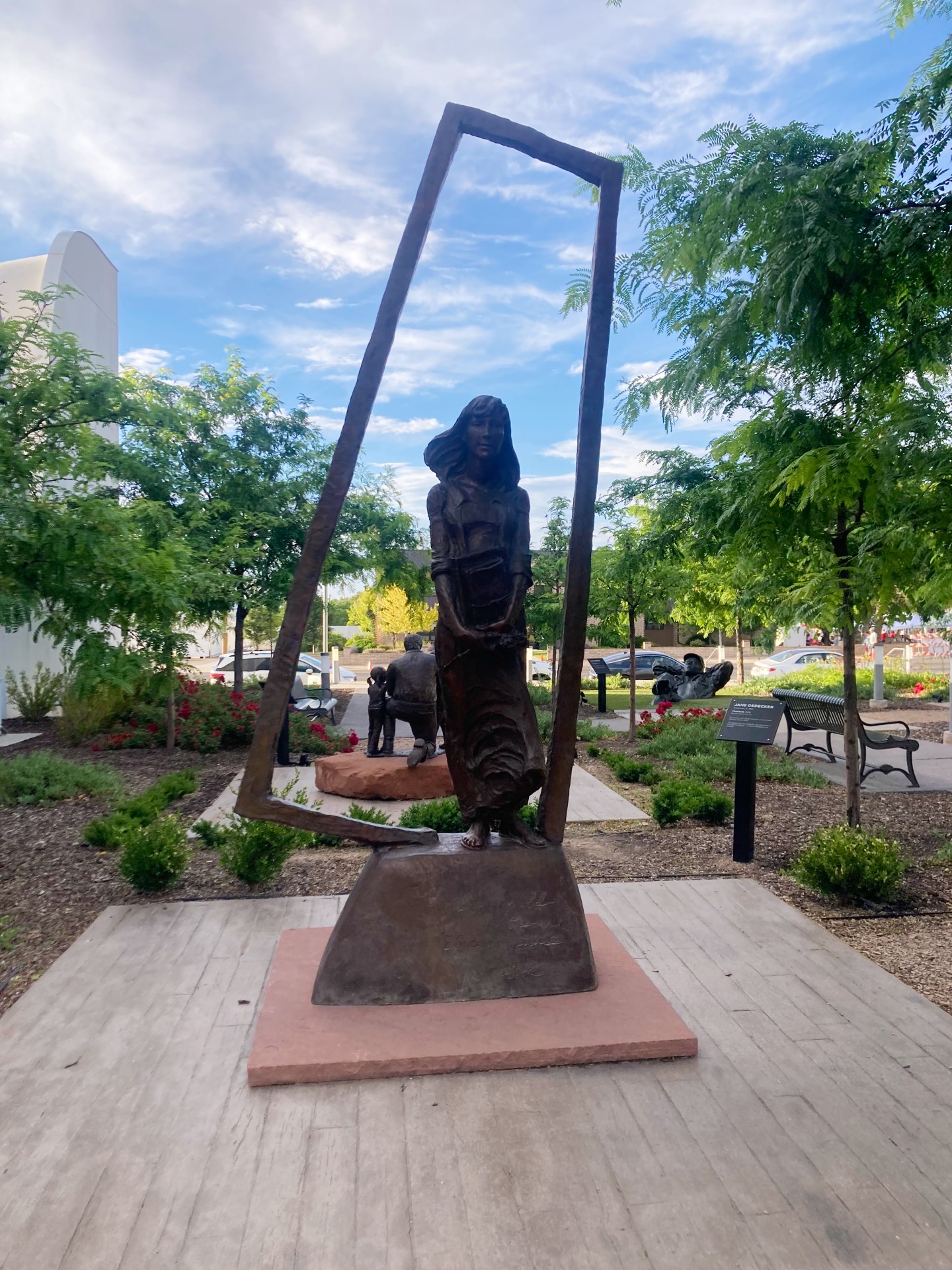
Jane DeDecker, “Threshold,” 2016
Part of the original installation, “Threshold” complements “The Sower.” DeDecker frequently explores transitional moments in life through expressive figurative sculpture, and the title suggests crossing from one stage to another. At SUMA it can be read as an invitation into both the sculpture court and the museum experience itself.
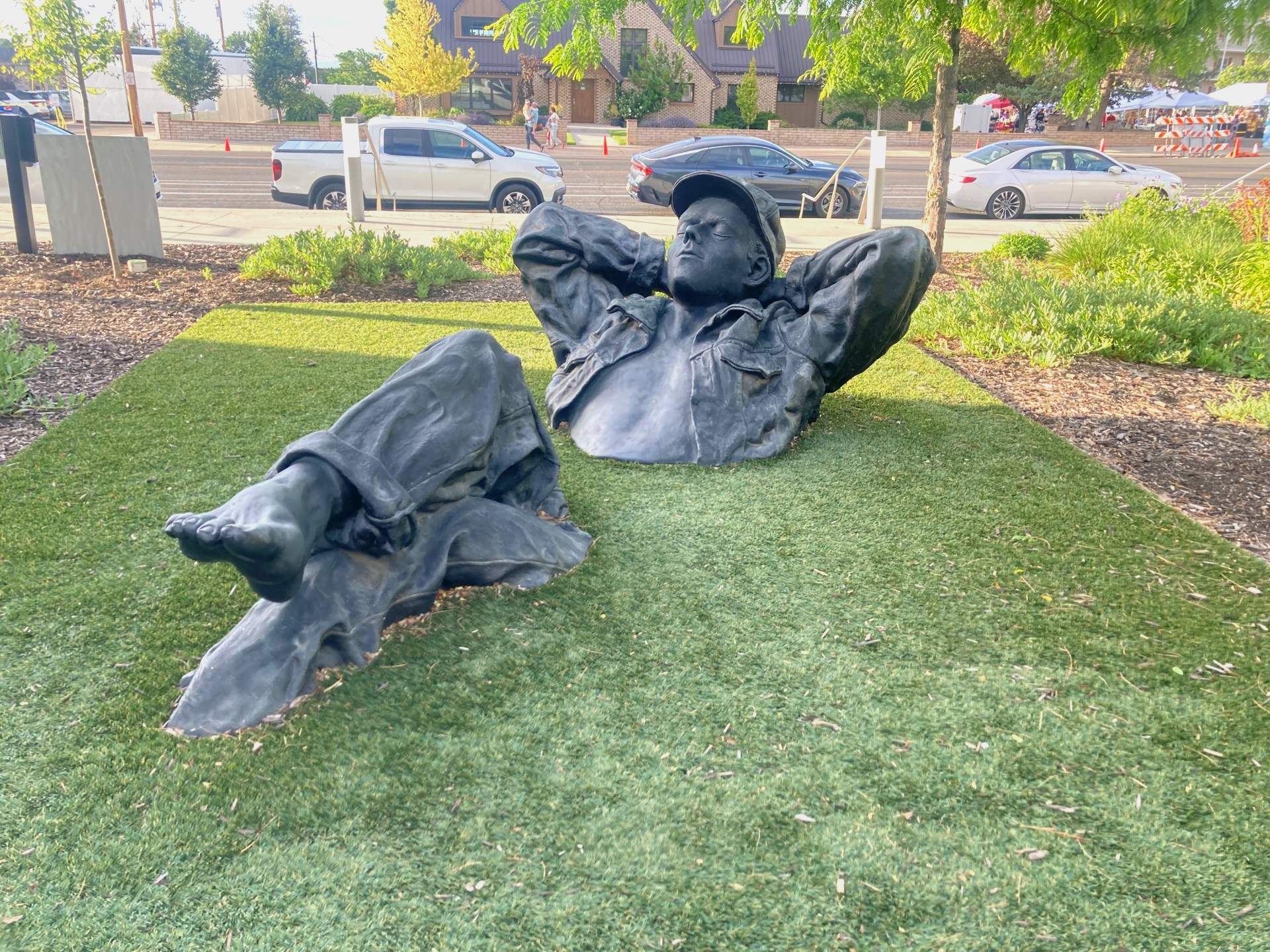
David Phelps, “Pastoral Dreamer” (2012; acquired 2022)
Grass replaced gravel and concrete for “Pastoral Dreamer,” which was added as part of the final phase of the court. The work presents a contemplative figure whose relaxed pose evokes reflection and imagination. Phelps is known for highly realistic bronze figures that celebrate everyday humanity rather than heroic monuments, making the work a natural fit for the Stillmans’ desire to represent varied human experiences.
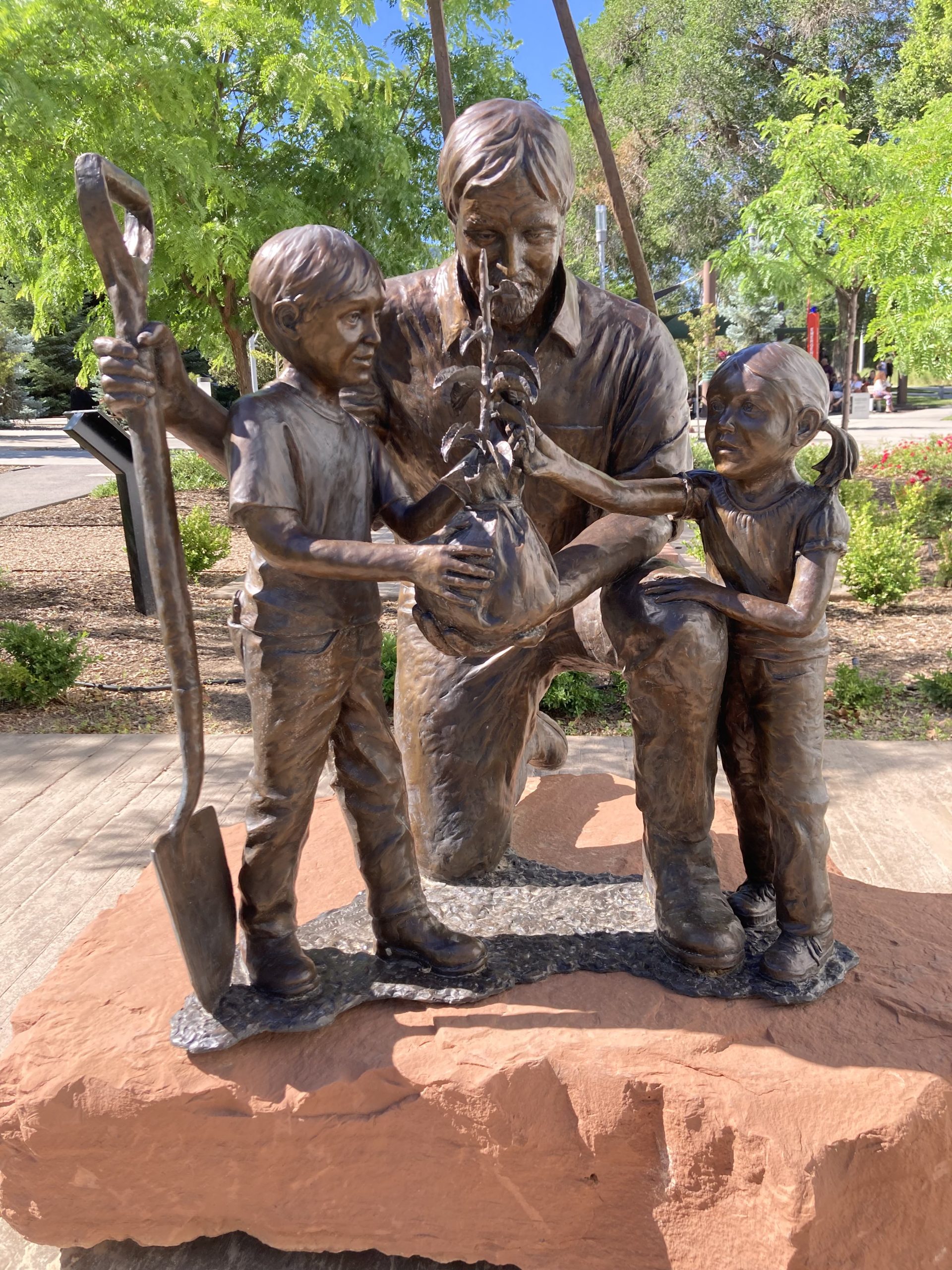
Marvin Nelson, “Seedlings”
A kneeling gardener and two children carefully cradle a young plant, transforming an everyday act into a meditation on stewardship and renewal. The sculpture celebrates the passing of knowledge between generations, with each figure participating in the shared task of nurturing new life. Within the history of the Stillman Sculpture Court itself, Seedlings serves as an especially fitting reminder that lasting landscapes—and lasting collections—grow through patience and care.
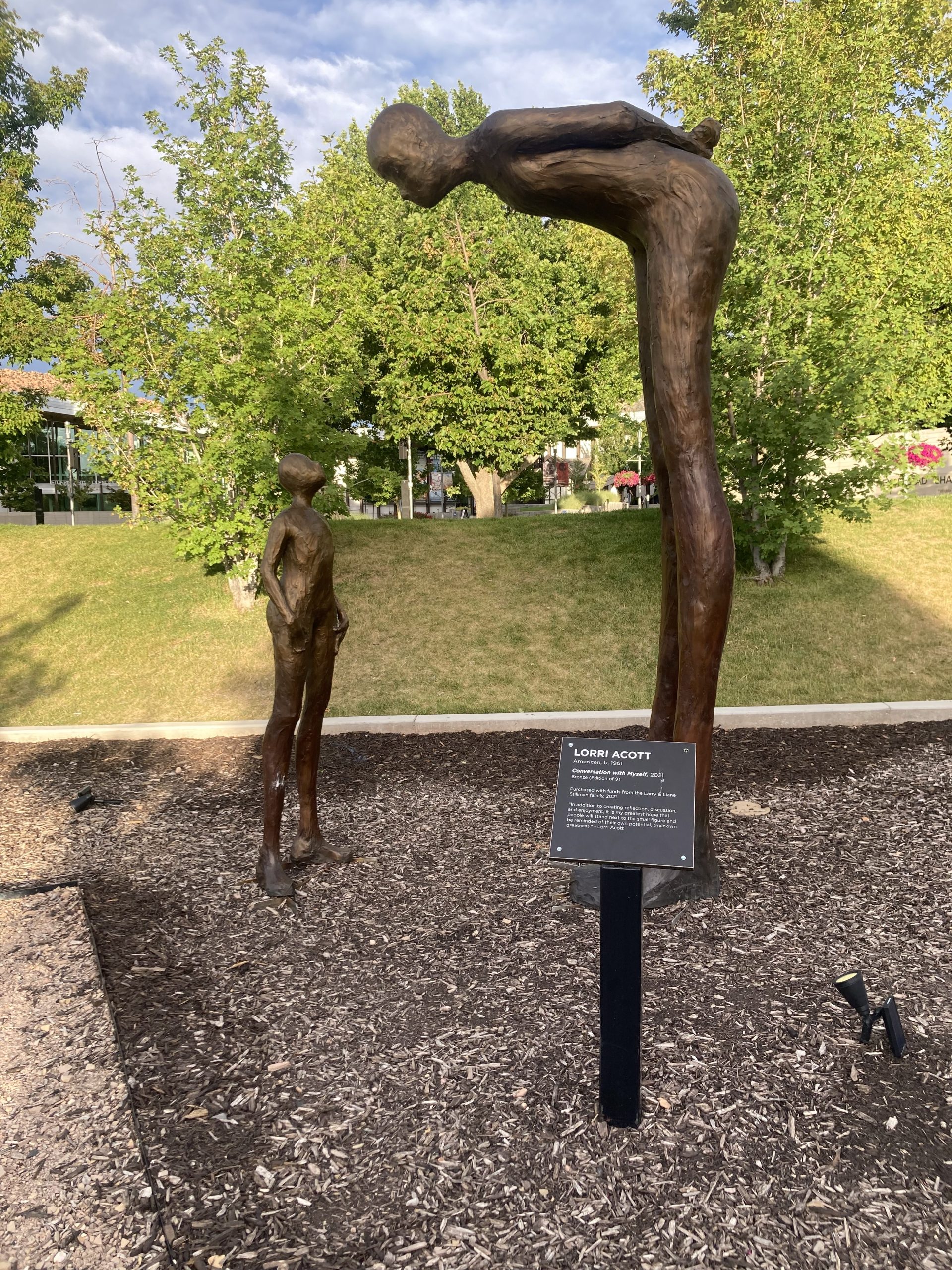
Lorri Acott, “Conversation with Myself”
Acott’s sculptures often explore introspection, emotion, and the inner lives of their subjects. Even from its title, “Conversation with Myself “ suggests quiet self-reflection rather than outward action. Within the garden, it provides one of the collection’s more psychologically intimate moments, reinforcing the court’s role as a place for contemplation.
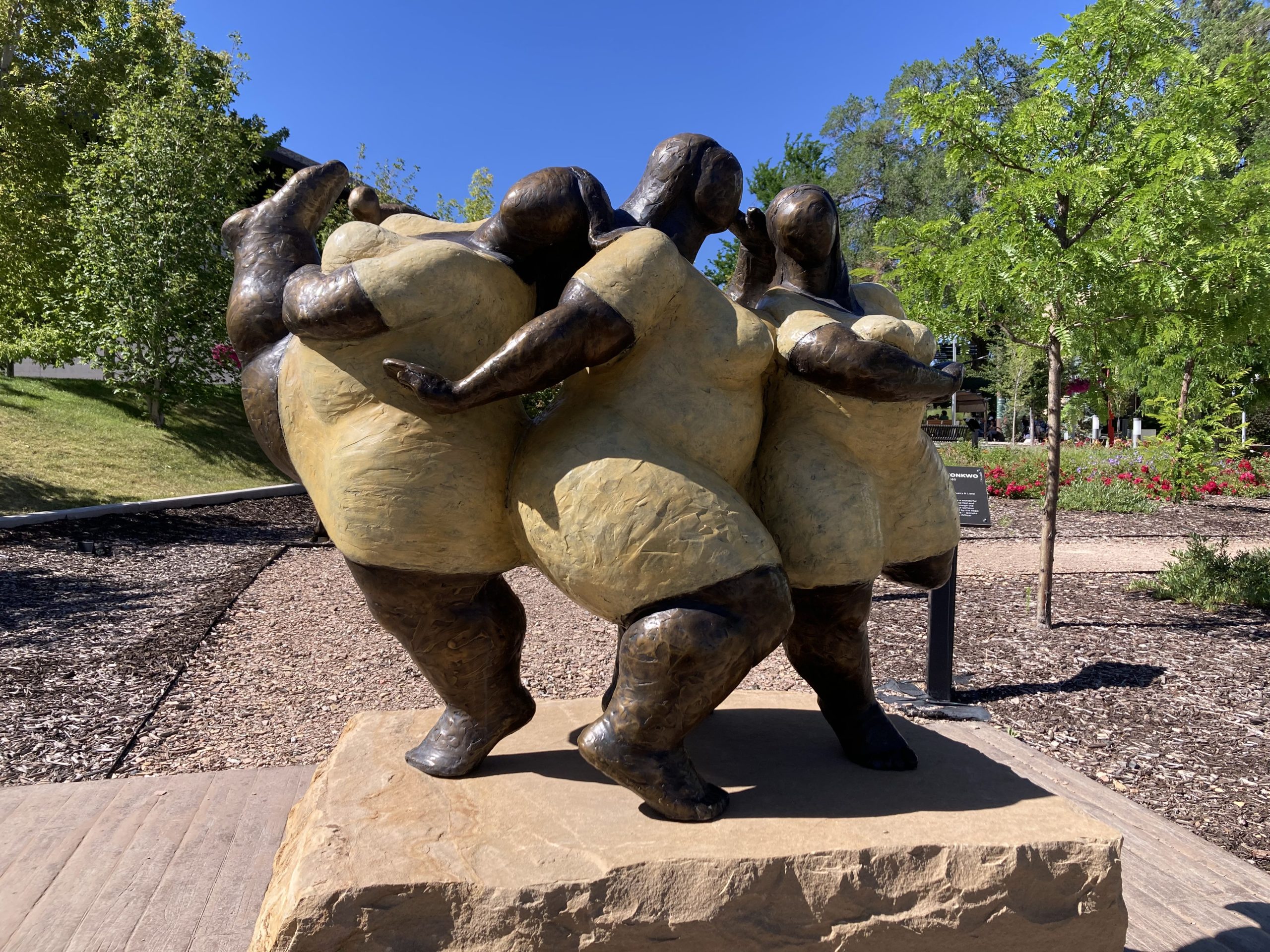
Nnamdi Okonkwo, “Jubilation,” 2021
One of the garden’s most exuberant works, Jubilation reflects Okonkwo’s signature style: elongated figures with graceful movement and polished bronze surfaces. Born in Nigeria, Okonkwo often creates sculptures that express joy, dignity, and spiritual vitality. The work introduces a distinctly international voice into the collection while embodying one of the emotional states the Stillmans hoped the court would represent.
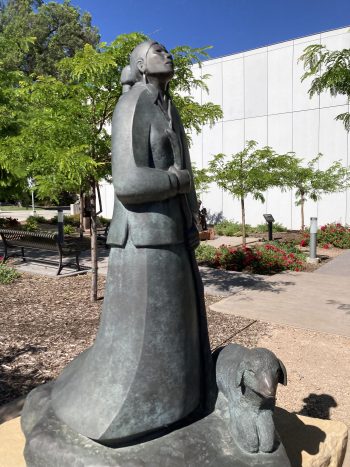
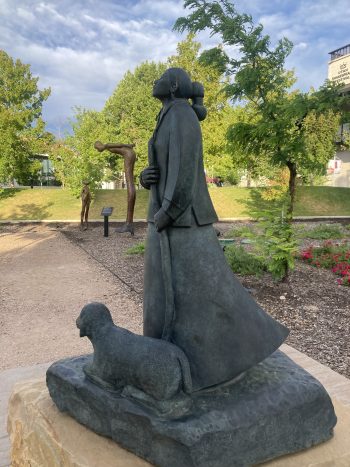
Perhaps the collection’s most significant acquisition from an art-historical perspective. Houser (Warm Springs Chiricahua Apache) is widely regarded as one of the most influential Native American sculptors of the twentieth century. “Raindrops” depicts a standing female figure with Houser’s characteristic blend of modernist abstraction and Indigenous subject matter. When the sculpture was acquired, Cedar Band Corporation described it as a figure that would “watch over this special place as both a historical and modern-day guardian woman.”
Find more public art in Cedar City, and the rest of Utah:
DID YOU ENJOY THIS ARTICLE?
Help make more like it possible.
VENMO us a donation at artistsofutah

Or use PayPal to MAKE A DONATION.
15 Bytes is published by Artists of Utah, a 501 (c) 3 tax-exempt nonprofit.

With our In Plain Site byline we feature publicly viewable art, both official and street art, throughout the state of Utah.
Categories: In Plain Site | Visual Arts