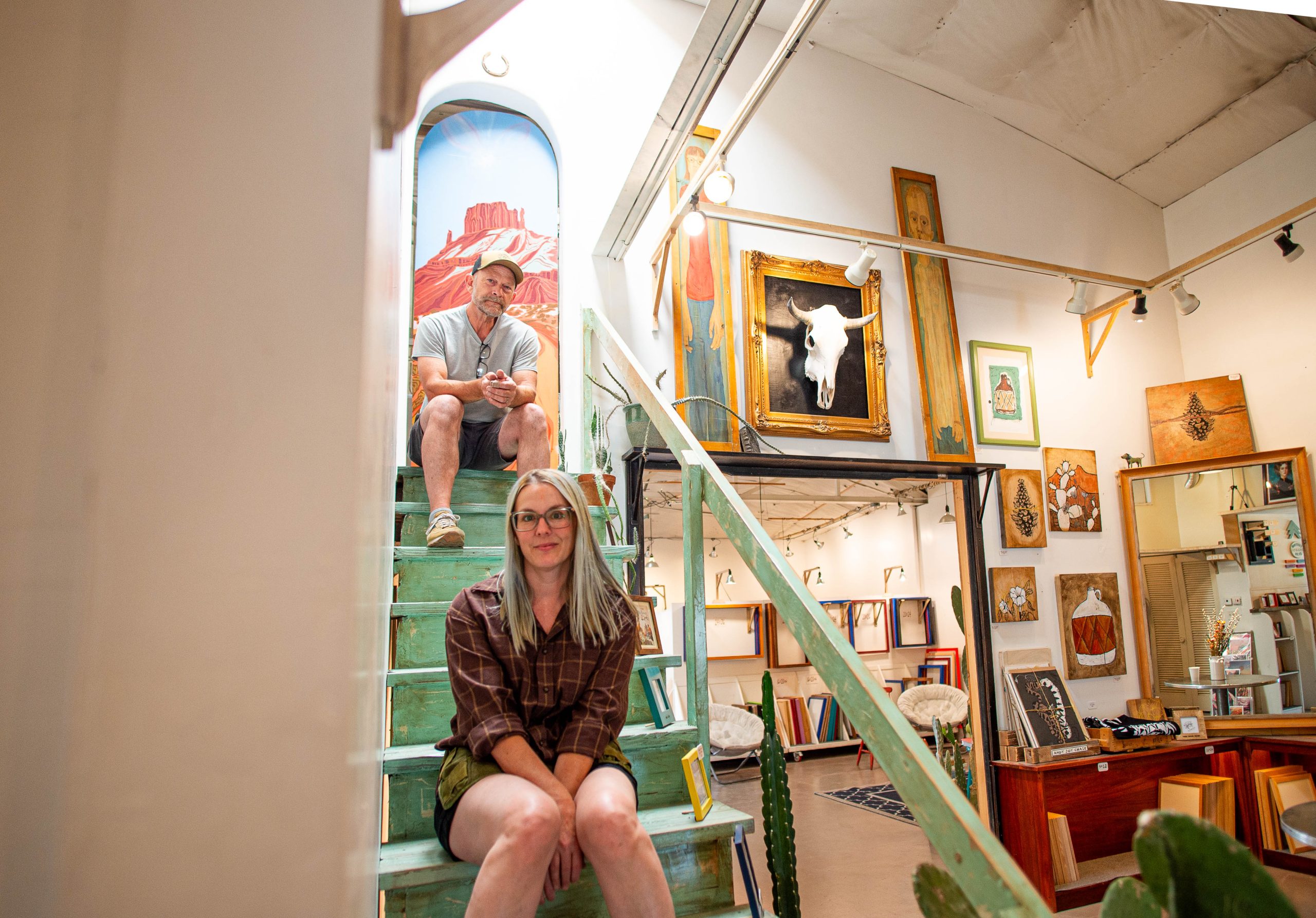
Phil Sherburne was born a carpenter, building since he made a chair for his sisters when he was 5 years old in the south end of the Salt Lake Valley. Inspired by French spoke-shave technique built by proletariats for their friends and family, Sherburne was charmed by the rustic, handmade feel of well-crafted pieces that were accessible to the working class.
“Working people’s furniture appealed to me instead of Bourgeois furniture—somewhat rustic and clearly handmade without it looking fire damaged either, so people on our level can access it,” Sherburne says. “How do we bridge that so we can make a living as crafts people while people we know can access it. That’s the furniture I build.”
Using an unclaimed $2000 he found at a coffee shop, Sherburne opened his first woodshop in the late ’90s down an alleyway in Salt Lake City. He started opening up the space to his friends and other local bands to play shows at the makeshift venue next door. What was once an inconspicuous alleyway in an uncharted area of the city turned into one of the city’s most infamous all-ages venues, Kilby Court.
“It happened accidentally and it took off,” Sherburne says. Salt Lake didn’t have an all-ages venue and it was a way to bring other misfits together over a shared passion for music and art. “At the beginning it was called Kilby Court Gallery because we thought it was going to be a gallery, but then the music took over.”
Sherburne was doing everything for the space while still making furniture on the side when a young woman from Tennessee became a regular at the venue. Leia Bell moved to Utah to study at the University of Utah, starting in photography before switching to printmaking. Hearing how spread thin Sherburne was and that he didn’t know how to market the events, she offered her artistic services.
“He built a press for me,” Bell says. “So I made all the flyers for Kilby Court from 2001-2008.”
“Printmaking is more about the process than the end product,” Bell says. “I like having multiples. I was always giving away art and it’s not just one painting that is super precious.”
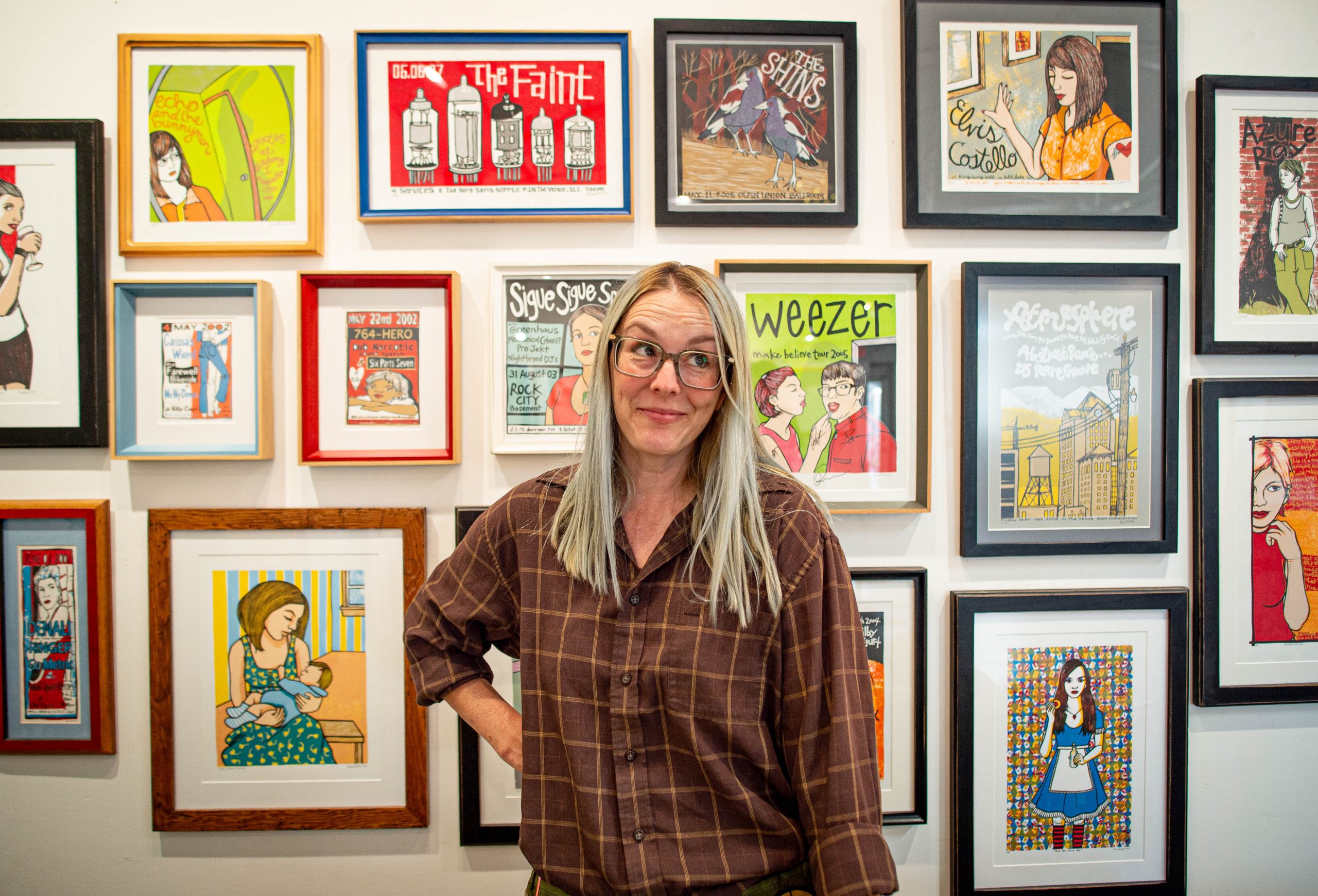
Her signature style soon graced the Salt Lake City streets to cater to small crowds and obscure bands coming through the venue. Bold black lines, cartoonish style, scenes caught in a still—Bell’s flyers became recognizable ephemera around the city, not unlike the fleeting handbill-sized posters for the Fillmore West floating around the Bay Area during the psychedelic heyday of the late ’60s and early ’70s.
“In those days, we would go to print stores and dumpster dive,” Sherburne recalls. “They would do a run of something and cut off the excess so all of her early posters were on whatever we could find.”
For years, Bell resisted getting internet, telling Sherburne it was an expense they didn’t need. In some ways, she says, she’s glad—never seeing what other poster artists were doing meant her style developed without outside influence. But when they finally broke down and got wifi, she found a website called gigposters.com. Not knowing whether she needed to be accepted or how to submit her work, she mailed a stack of posters to the site’s proprietor. He was floored. He put them all up immediately.
She also heard about Flatstock, a traveling poster convention that would pop up at different festivals around the country — most notably Bumbershoot in Seattle, Pitchfork Music Festival in Chicago, and SXSW in Austin, Texas.
“We saved up all our money and drove to Austin for SXSW with an infant…” Bell says. “I had no expectations. I brought everything I had made up until that point. It was 2003.”
With her archive hanging in the booth, collectors quickly swarmed. A man from San Francisco walked by a few times before stopping. How much did she want for all of them? Bell was stunned. She conferred with Phil. They settled on $1200. That was the first day of the festival.
“Then two guys from England wanted the rest on the wall when the show was over,” Bell says.
Leia Bell was officially on the scene. A group of collectors caught wind of her story and became a recurring client base, with at least 10-20 people pre-ordering on her ensuing print runs. “That’s how we survived doing Kilby for as long as we did,” Bell says.
“We weren’t making any money on the shows, but the posters she would do for the shows were what made us money…” Sherburne says. “The most we ever made in a year from the music venue was $9,000, doing two shows a night charging $5 to $6 a show, and no alcohol sales…So she became the breadwinner.”
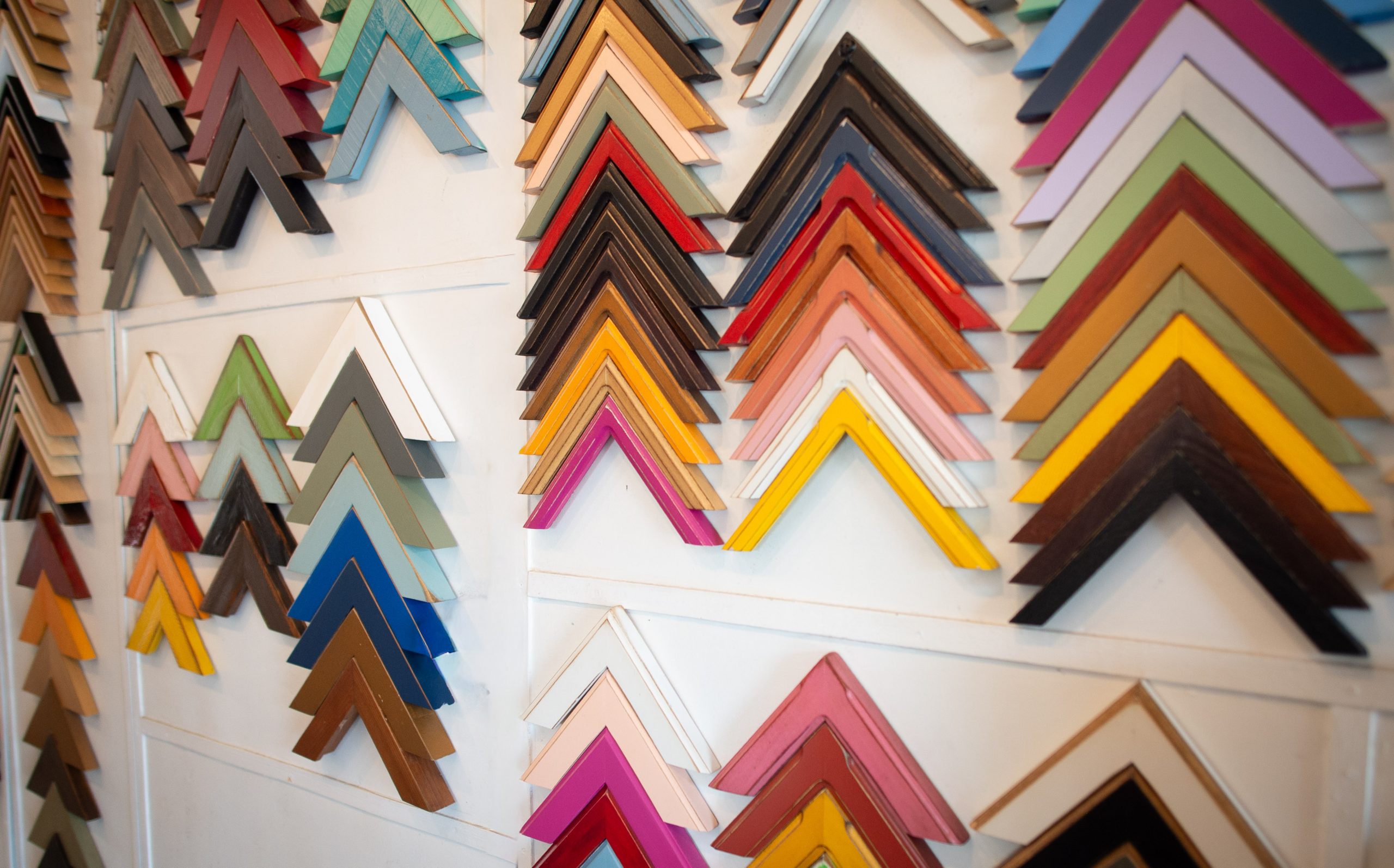
But as their family grew, the couple sold Kilby in 2008 to transition to daytime work. People would come looking for frames for the prints they bought, and being a carpenter, Phil offered to build them himself. “After a while it became what we do mostly,” Bell says. The genesis of their frame shop Signed & Numbered—named for the signed and numbered nature of prints in a run.
They opened their shop under the record store Slow Train for about a year downtown. Located on Broadway, the space had good momentum and it was on the gallery stroll route. “We had a group show with a Great Lebowski theme,” Bell says, “and it got written up in USA Today.”
But the literal and figurative nature of working under someone soon became difficult. “They didn’t ever want to stay open past nine o’clock, which is when pretty much everyone starts showing up on gallery stroll,” Bell says. Then the rent doubled after they had just fixed up the space with money from selling Kilby, and so they left.
They moved into what was once Blue Plate Diner’s corner coffee shop near 21st E and 21st S to sell their posters, despite no longer being on the gallery stroll route. But the space had good visibility—it was on a corner and had a sign. “We still have a lot of people coming to us since we were in that space,” Bell says. “But it was so small. I couldn’t even turn a piece of big glass. We had one small table in there and could only have one employee working at the time.”
Their woodshop was way out west, and commuting products from shop to storefront was, Bell says, “a logistical nightmare.” They took their frames to Etsy to fill in some gaps.
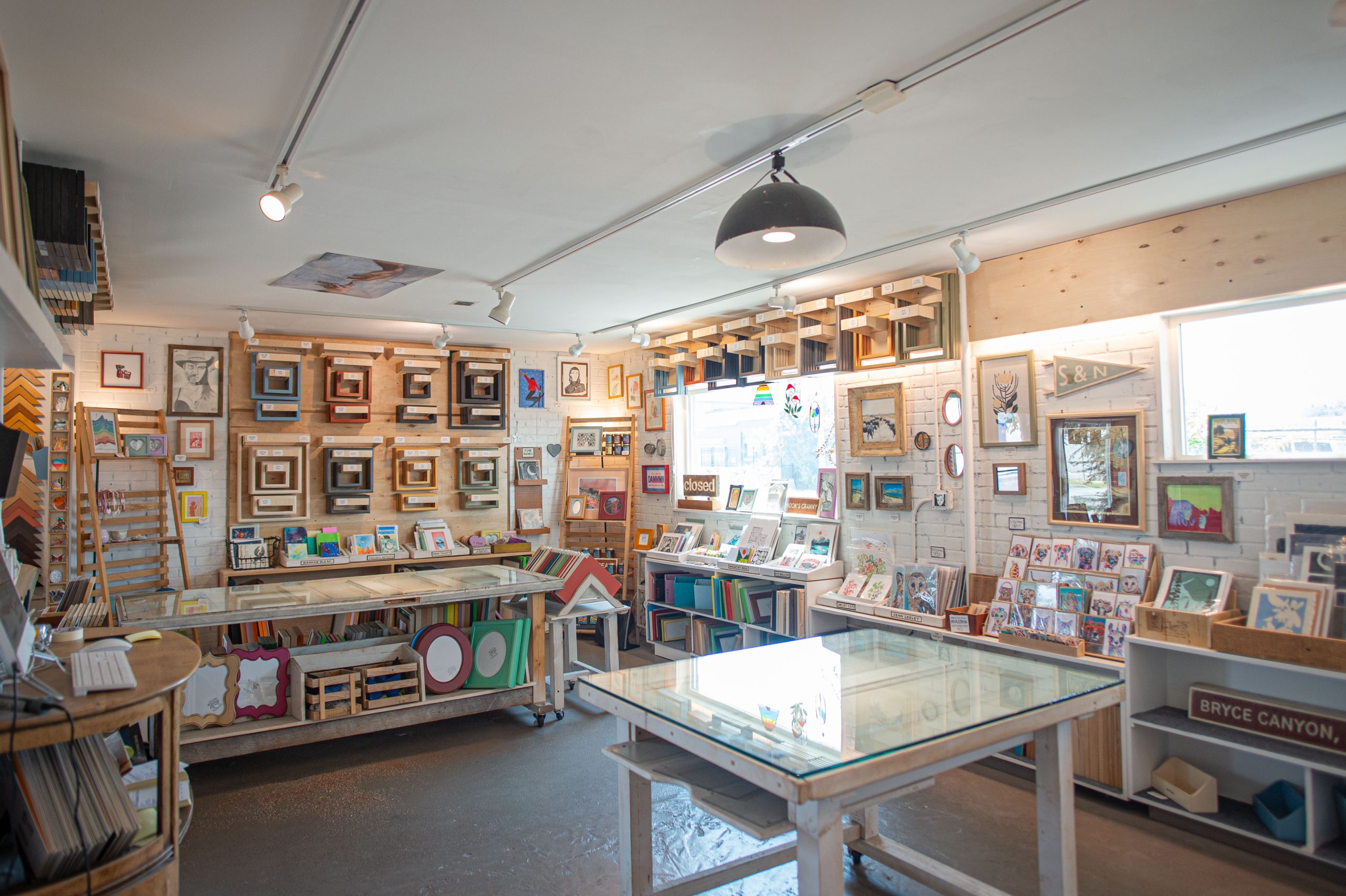
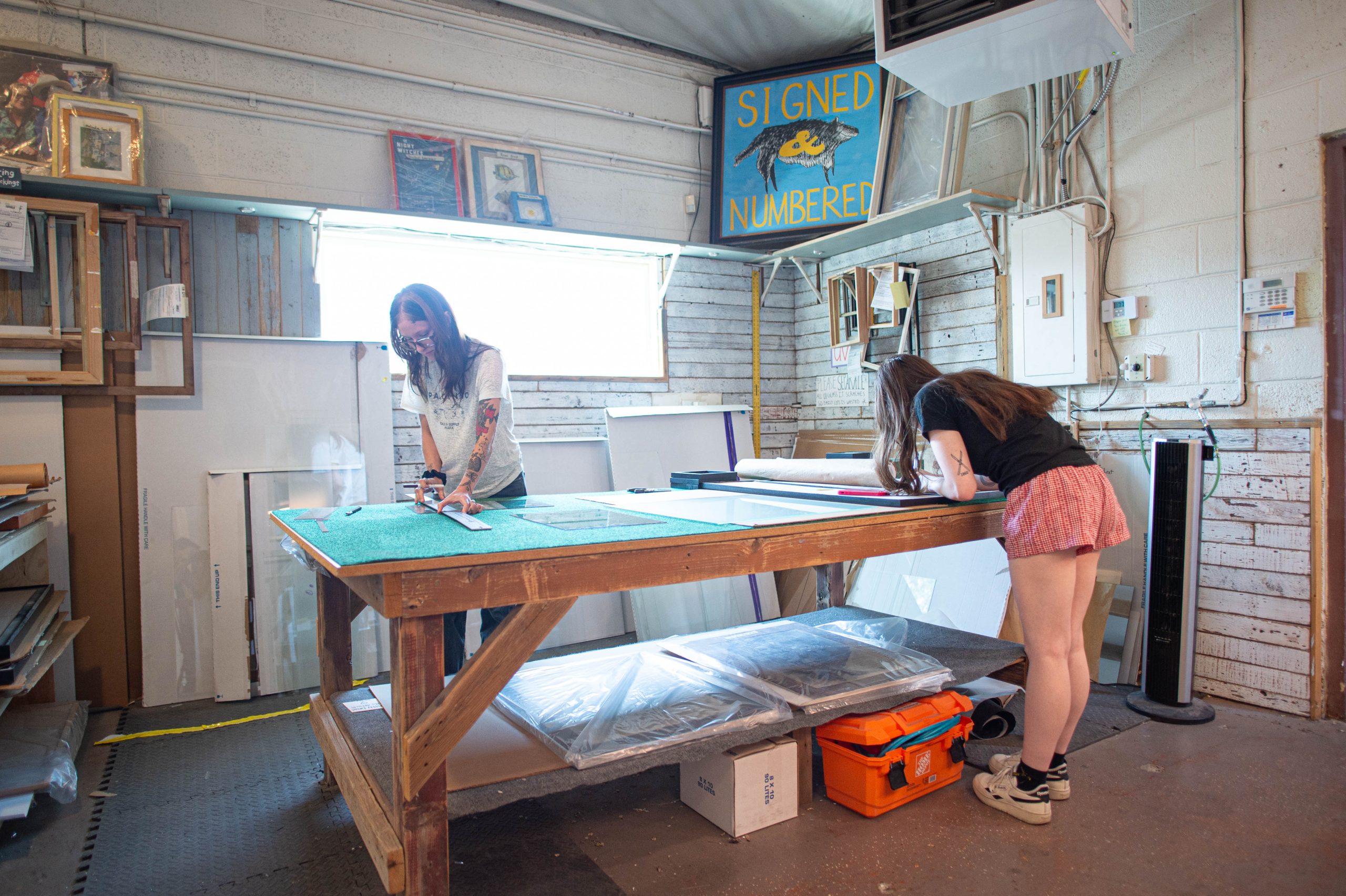
The commute lasted only so long before they wanted shop and store under one roof again. They found a space on the industrial West Side, on West Temple just past 21st South, separating the storefront from the woodshop in the back. (It was a return of sorts for Sherburne. Before Kilby, he was working out of a friend’s shop where Pat’s BBQ now stands. The very first night, he slipped with a chisel and hit an artery. His friend’s wife happened to still be outside and drove him to the hospital. He survived, obviously, and kept building.)
When their Etsy business blew up—now 80% of their revenue—the woodshop space was again too small to meet their needs. They currently run their woodshop at a different location from their storefront, where most of their 23 employees work daily. “Our oldest son started working for us when he was 14 to help with little things and now he pretty much runs the woodshop,” Bell says. “And our youngest son works for us, and our middle son works for us on and off,” Sherburne adds.
When it comes to hiring, they’ve learned to prefer workers without prior woodshop experience. Trained woodworkers come in with their own methods and are harder to bring around to Signed & Numbered’s way of doing things. A blank slate, it turns out, builds better frames.
They had a full roster of gallery shows booked for 2020. Then the pandemic hit. It was Phil and Leia working every day with their eldest son. “And it was busy,” Bell says. “The pandemic was boom time for us because everybody was working from home and renovating their home offices and they had stimulus money, so it was really easy, we didn’t have to try, and at that point we had 32 employees.”
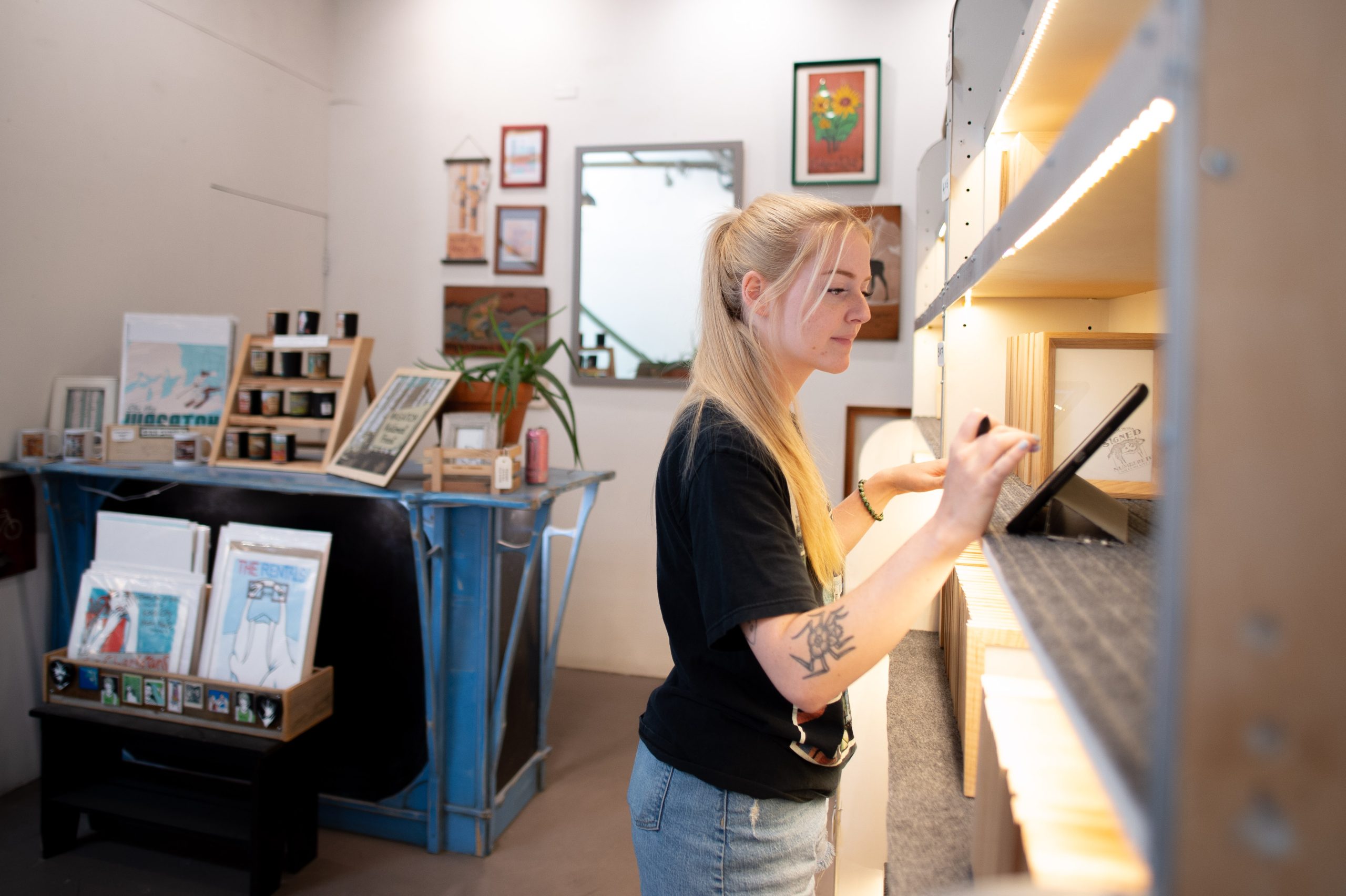
As things have leveled off over the past few years, the couple is channeling the energy of their young staff to realize old visions for the place. “We have a staff that is young and gung ho and want to do stuff,” Bell says. “We’re letting our employees take the reins. They have the energy. They’re the right age and know the people and have connections in the art scene.”
Every holiday season the shop hosts Art Adoption, an event organized by local mural artist Josh Sherman — who has been running it for eighteen years—that finds new homes for unsold works, with proceeds benefiting a charity. The shop carries work by other local artists, returning 90% of sales to them.
“We take such a small percentage because we don’t want artists to price their artwork a lot higher than they would normally, but also so someone will buy a print and want to frame it because it’s so affordable,” Bell says. “And it makes the store more interesting than just frames—that would be pretty boring,” Sherburne adds.
All of their frames are made from scratch, in house, from raw, reclaimed wood. “We’re more a woodshop than frame shop,” Sherburne says. All of their corners are finished corners—seamless, filled with putty—whereas traditional framing uses premade sticks that are cut and joined, their conjunction visible at the seams. “It’s more of a craft assembly. We don’t compete with other frame shops because we’re doing something different,” Sherburne says.
They use water-based finishes rather than oil-based, avoiding fumes and CFCs. They are 100% wind-energy powered and use fast-growing wood like poplar and alder. Their paints are very low or zero VOC. Each frame comes with plexiglass, acid-free foam core, plywood backing, and hanging hardware, with options to upgrade for specialty glass, mats, photo printing, and engraving. It’s a blend of rustic and refined—frames that don’t hide the evidence of being handmade while remaining polished enough for gallery walls.
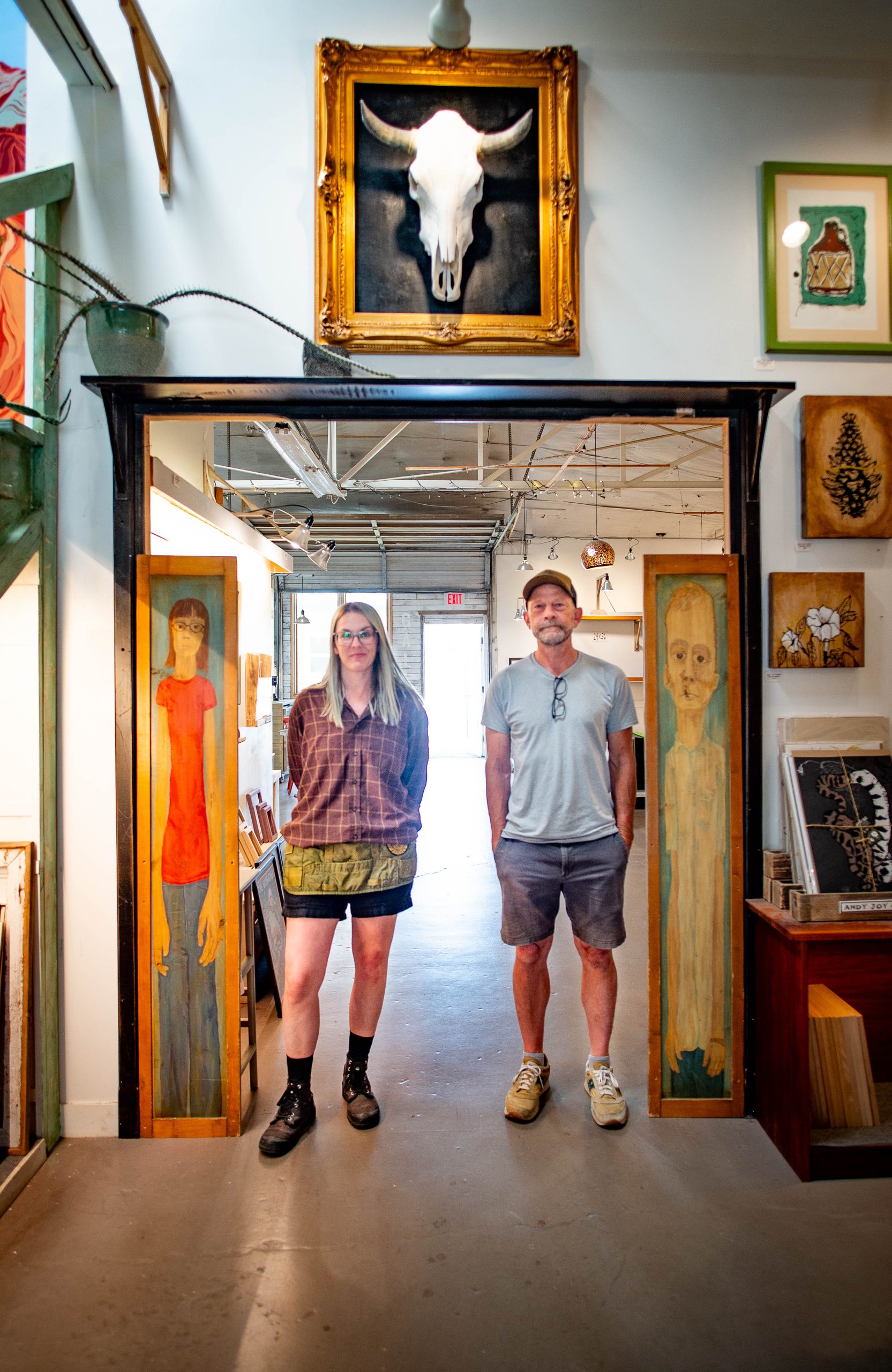 After 18 years, Bell and Sherburne are beginning to think about succession—when to hand the business off, step back, and return to making art. Bell does her personal work on an iPad now, zooming in to compensate for fading close-up vision she’s too stubborn to correct with bifocals. The work is still there. It’s just waiting.
That same ethos of making handmade work accessible—the one that informed Phil’s furniture and Leia’s printmaking—guides their framing business today. “I want art to be accessible to everyone, which I think is why we’re making frames from scratch,” Bell says. “Our frames are way cheaper than anywhere else that has to import moldings from places like Italy.”
“How do we do this in a way that’s quality but can be affordable enough for common people,” Sherburne says.
Bell recently found a career assessment from high school. It said she should go into art expression and sales.
Signed & Numbered, at 2320 S. West Temple, Salt Lake City, is open Mon – Fri 10:00 AM – 6:00 PM; Sat 10:00 AM – 4:00 PM.
All images by Zoe Rodriguez.

Genevieve Vahl is a writer, farmer and artist from Milwaukee, Wisconsin. Her writing focuses on how art and community intersect, how to bring access to food and covering climate solutions around the Salt Lake Valley. She also writes poetry, binds artist books, makes paper and runs cyanotype prints from film.
Categories: Art Professional Spotlight | Artist Profiles | Visual Arts